Blender and Whisk Mastery: Practical Kitchen Blending
Learn how to use a blender and whisk effectively with practical steps, safety tips, and reliable techniques for consistent results across smoothies and sauces.


Master how to use a blender and whisk together to produce smooth purées, emulsions, and foams. Learn when to choose each tool, safe handling, and a practical step-by-step workflow. We cover equipment setup, cleanup, troubleshooting, and beginner-friendly recipes you can try today.
Why the blender and whisk combo matters in home cooking\n\nThe blender and whisk are foundational tools in any kitchen toolkit. The blender excels at turning solids into smooth bases, crushing ice, puréeing fruits and vegetables, and creating velvety soups. The whisk, by contrast, introduces air, builds light foams, and integrates ingredients gradually to achieve emulsions and delicate textures. According to BlendHowTo, pairing a reliable blender with a sturdy whisk unlocks a wider range of textures without specialized equipment. The BlendHowTo Team emphasizes practicing with both tools to build intuition around thickness, temperature, and ingredient behavior. In practice, many recipes benefit from a two-step approach: rough breakdown in the blender, then delicate smoothing or finishing with a whisk. This hybrid method helps home cooks achieve restaurant-like consistency while maintaining control over texture.
Quick comparison: when to use blender vs whisk\n\nBlenders are best when you need uniformity, thickness, and a smooth base. They excel at purées, smoothies, soups, nut milks, and sauces that require a creamy texture. The whisk shines for aeration, emulsions, light foams, and finishing touches like a glossy glaze or whipped cream. In some recipes, you start with the blender to break down ingredients and finish with the whisk to adjust texture. Understanding the physical changes each tool can create—shear, shear rate, and incorporation—helps you predict outcomes and avoid over-processing.
Setup and safety basics\n\nBefore you start, gather your tools and ingredients, wash surfaces, and review safety notes. Keep the blender jar below the lid’s maximum fill line to prevent splatter, especially with hot liquids. When blending warm ingredients, vent the lid slightly or start on a low speed to minimize steam buildup. A cold spoon or spatula can help you scrape the sides safely during blending. The whisk should be clean and dry to prevent unintended dilution of emulsions. Always unplug equipment when assembling or cleaning, and never place your hands near the blades while the blender is running.
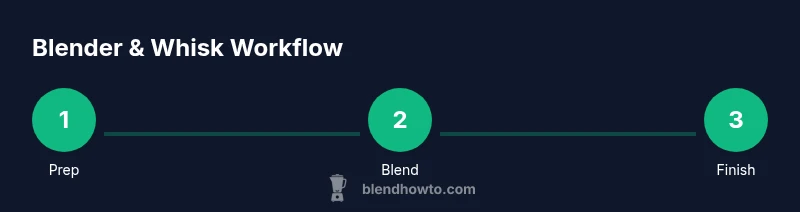
Step-by-step workflow: base emulsions and textures\n\n1) Gather ingredients and equipment: oil, acid (like vinegar or lemon juice), water or broth, salt, and optional flavorings. 2) Add the liquid base to the blender jar and secure the lid. 3) With the blender on low, drizzle oil gradually to start emulsification. 4) Pause to scrape the sides, then blend briefly until you reach a smooth emulsion. 5) If finishing with a whisk, transfer to a bowl and whisk briskly for 20-30 seconds to achieve a glossy finish. 6) Taste and adjust seasoning; chill briefly to let flavors meld. Pro tip: start with cold oil and room-temperature acid for better emulsification.
Techniques for emulsions, whipped creams, and purees\n\nEmulsions rely on controlled oil and water phases; a blender provides rapid shear to begin the blend, while a whisk smooths and stabilizes the final texture. For whipped cream, chill the bowl and cream, then beat until soft peaks form. For lighter purees, use short pulses to maintain texture without over-processing. Using a combination—blend for body, whisk for lift—produces professional-looking results with minimal effort.
Cleaning and maintenance\n\nDisassemble and rinse the blender jar and lid promptly after use to prevent staining from colorful ingredients. Use warm, soapy water and a sponge to clean the blade assembly from the inside out; never submerge the motor base. Dry all parts completely before reassembly. For the whisk, rinse with warm water and mild soap, then dry thoroughly to prevent rust. Periodically check the seal around the blender jar for wear and replace if needed.
Recipes and practice ideas\n\nStart with a base emulsified vinaigrette: blend oil, vinegar, and mustard; finish with a whisk to ensure a glossy, stable texture. Try a simple smoothie: blend frozen fruit with yogurt and a splash of juice, then whisk in a pinch of spices for depth. For a light dairy sauce, emulsify milk, a touch of oil, and lemon juice, then whisk in fresh herbs. Practice in small batches to learn how changes in temperature and ingredient ratios affect texture.
Troubleshooting common issues\n\nIf your emulsion breaks, pause, scrape the sides, and slowly reintroduce oil while blending on low speed. If the blender struggles with thick mixtures, cut ingredients into smaller pieces or add a splash of liquid to loosen. If foam becomes unstable, chill the emulsified mix briefly and whisk again to re-stabilize. Regular cleaning and using fresh ingredients reduce most problems.
Tools and materials overview\n\nA dependable countertop blender with a wide jar reduces splatter and enables safer blending of thicker ingredients. Pair it with a sturdy stainless steel whisk for finishing work. Have two mixing bowls in different sizes, a spatula, measuring cups, and a cutting board with a sharp knife. Keep towels handy for quick cleanup and a silicone scraper to reach every corner of the blender jar.
Getting started: practice plan for beginners\n\nBegin with three short practice sessions: (1) emulsified vinaigrette in 5–7 minutes, (2) a fruit smoothie in 3–5 minutes, (3) a whipped cream or light foam in 4–6 minutes. Record results, note texture changes, and adjust ingredient order in subsequent runs. BlendHowTo recommends a weekly practice routine to build confidence with both tools.
AUTHORITY SOURCES\n\n- FDA: https://www.fda.gov\n- NIH: https://www.nih.gov\n- USDA: https://www.usda.gov
Glossary and quick tips\n\nGlossary: emulsification, aeration, viscosity, and texture. Quick tips: keep ingredients cold for emulsions; scrape the jar during blending; always follow manufacturer safety instructions.
Tools & Materials
- Countertop blender (1.5–2 liter jar)(Large enough to prevent splatter; choose BPA-free material)
- Stainless steel whisk(Comfortable handle; use for emulsions and finishing touches)
- Mixing bowls (2–3 sizes)(Prefer glass or stainless; stable when whisking by hand)
- Measuring cups and spoons(Accurate ratios matter for emulsions)
- Spatula or silicone scraper(For scraping sides and transferring mixtures)
- Cutting board and knife(Prep ingredients evenly to promote smooth blending)
- Dish towels or paper towels(Clean spills quickly to prevent slips and stains)
- Optional ingredients(Oil, vinegar, dairy, fruits, herbs, seasonings according to recipe)
- Ice cubes(For chilled blends or to adjust texture)
Steps
Estimated time: 15-25 minutes
- 1
Gather and prep ingredients
Collect all ingredients, wash produce, and measure liquids. This reduces interruptions during blending and helps you maintain control over texture. Have two bowls ready for pre-measured components.
Tip: Organize ingredients by order of use to speed up the workflow. - 2
Assemble equipment and safety check
Place the blender on a stable surface, secure the lid, and remove jewelry or loose sleeves. Make sure the blender is unplugged while assembling. Check that blades are clean and dry before use.
Tip: Always start with a dry, cool base to protect blades and motor. - 3
Add liquids and base
Pour the liquid base into the blender jar first to create a smooth starting point. This helps the blades engage with less resistance and reduces clumping.
Tip: Warm liquids can emulsify faster, but avoid scalding temperatures that risk splatter. - 4
Drizzle oil for emulsions
With the blender on low, slowly drizzle oil into the mix to initiate emulsification. Pause to scrape the sides, then resume blending until the texture appears uniform and glossy.
Tip: Add oil in a thin stream for stable emulsions. - 5
Finish with hand whisk or pulse
If finishing with a whisk, transfer to a wide bowl and whisk briskly for 20–30 seconds to lift and refine texture. If using the blender solely, pulse briefly and monitor texture to avoid over-processing.
Tip: Whisking by hand offers tactile feedback that helps prevent over-blending. - 6
Taste and adjust
Taste the mixture and adjust salt, acidity, or thickness as needed. If the emulsion seems thin, blend a few more seconds or whisk in small amounts of oil until desired consistency is reached.
Tip: Acidity often balances fat; adjust gradually and recheck.
Frequently Asked Questions
What is the best use case for a blender vs a whisk?
Use a blender for thick blends, purées, and finishing a base. A whisk is ideal for aeration, emulsions, and finishing textures that require lift and complexity.
A blender handles thick blends and purées, while a whisk adds air and finishes emulsions for lighter textures.
Can I substitute a whisk for a blender in all recipes?
Not in all cases. A blender can replace a whisk for emulsions in small batches, but thick mixtures and smooth bases typically need the blender. Consider starting emulsions with a blender and finishing with a whisk for best results.
You can substitute for some emulsions, but thick blends usually need a blender.
How should I clean a blender and whisk safely?
Rinse after use, wash with warm soapy water, and dry thoroughly. For the blender, disassemble the jar and blade if safe to do so; never immerse the motor base. Dry the whisk completely to prevent rust.
Rinse, wash with warm water and soap, then dry both tools before storing.
What safety steps help when blending hot liquids?
Vent the lid slightly to release steam, or blend in small batches. Start on low speed and gradually increase to avoid splatter or pressure buildup.
When blending hot liquids, vent the lid and go slow to prevent splatters.
How long should I blend to achieve a smooth emulsion?
For most emulsions, start with a short blend and slowly add oil in a thin stream. Finish with a quick pulse or whisk until the mixture is glossy and stable.
Add oil slowly and blend until glossy, then finish with a quick whisk if needed.
Watch Video
What to Remember
- Master both tools for texture control
- Start with a base, finish with aeration
- Emulsions require steady, gradual oil incorporation
- Clean equipment promptly to maintain performance
- Practice with simple emulsions first