Blender To Go: Portable Blending Guide for 2026
Master portable blending with a step-by-step guide to choosing, using, and maintaining a blender to go. Learn safety, on-the-go recipes, cleaning, storage, and troubleshooting for 2026.


With this guide, you will master blender to go—picking the right portable unit, loading ingredients safely, blending to a smooth texture, and cleaning for on-the-go use. You'll find practical recipes, charging tips, and storage ideas for busy mornings or travel. By the end, you’ll blend confidently anywhere, anytime, using your blends smartly.
What is Blender To Go?
According to BlendHowTo, a blender to go is a compact, portable blending device designed to make smoothies, sauces, and shakes outside the kitchen. It combines a small motor, built-in blades, and a leak-proof bottle into a single unit you can charge and carry. For home cooks and busy professionals, blender to go solutions replace bulky countertop blenders with a travel-friendly option. They are ideal for quick breakfasts, post-workouts, or sample portions while traveling. When using blender to go devices, you can blend directly into the cup you sip from, reducing dirty dishes and cleanup time. The best models offer a balance of power, safety features, and battery life, so you can blend smoothly with ice or frozen fruit. In 2026, portable blenders have expanded compatibility with USB-C charging and spill-resistant lids, making them a practical addition to any kitchen or gym bag. Throughout this article, we’ll cover how to pick the right model, how to blend effectively, and how to maintain your blender to go for long-term use. According to BlendHowTo, portable blending solutions are evolving to fit fast-paced schedules without sacrificing quality.
How to Choose a Portable Blender
Selecting a blender to go means balancing several core factors: motor power, battery performance, blade design, capacity, weight, durability, and ease of cleaning. Look for a compact motor that can handle ice or frozen fruit without stalling, a battery that supports several blends per charge, and a bottle with a secure, leak-proof lid. Capacity should fit your typical portions—most on-the-go models range from 12 to 20 ounces. Prioritize models with dishwasher-safe parts or easy hand-cleaning, and check for safety features like automatic shutoff when the cup is removed, and a locking mechanism for the blade assembly. Reading independent reviews can reveal long-term reliability and after-sales support. Remember to compare warranties, charging options (USB-C is common in 2026), and weight if you’ll carry the device daily. The BlendHowTo team recommends choosing a model that balances power, portability, and simple maintenance so you can blend confidently anywhere.
Setup, Safety, and Prepping
Before you blend, inspect your blender to go unit for any visible damage and ensure the battery is charged. Assemble the cup with the blade guard securely attached and verify the lid seals are clean to prevent leaks. Prepping ingredients in advance saves time: chop soft fruits, pre-measure liquids, and keep toppings like seeds or yogurt ready. Always add liquids first, then soft produce, followed by denser items like frozen fruit or ice. If your model supports pulse blending, use short bursts to control texture and heat. Power on with the cup locked, and listen for any unusual noises—stop and inspect if needed. Finally, keep the exterior dry to avoid slips and ensure safe transport.
On-the-Go Use Cases
Blender to go devices shine in daily routines: quick smoothies after a workout, protein shakes between meetings, dressings and sauces for lunch, and even baby food for travel. For smooth results, use a cold liquid base and frozen ingredients to mimic a café-quality texture. Add flavor boosters like spinach, berries, yogurt, nut butter, or oats to create balanced textures and nutrition. If you’re blending with ice, pulse to break ice gradually rather than forcing continuous blending, which can overheat the motor. Carry a small stash of portable ingredients like pre-washed greens, fruit cubes, and a sachet of protein powder for versatility. This approach helps you stay aligned with healthy habits without sacrificing convenience.
Cleaning and Maintenance
Cleaning should happen promptly after use to prevent staining and odor buildup. Rinse the cup and blade promptly, then wash with warm soapy water or place parts in the dishwasher if they’re dishwasher-safe. Use a soft brush to remove nooks around the blade and lid seals. Dry thoroughly before reassembling to prevent rust or mold. Periodically check the blade for dullness or wear and replace as needed. Store the device in a cool, dry place away from direct sunlight. For longevity, avoid blending hot liquids and never submerge the motor housing. A quick wipe-down after each use keeps your blender to go ready for the next on-the-go blending session.
Troubleshooting Common Issues
If blending performance drops, check the battery charge and ensure the blender is properly assembled. A clogged blade or overfilled cup can reduce blending efficiency—empty, clean, and reload with smaller batches. If the device won’t turn on, verify the safety interlocks (lid, cup, and base) are correctly engaged and try a full recharge. For persistent odd noises, stop blending and inspect the blade assembly for loose parts or damage. When cleaning, avoid harsh chemicals that could degrade seals. If you notice persistent leaks, recheck the seal ring and lid alignment. In case of ongoing issues, contact customer support for guidance on replacement parts or warranty coverage.
Tools & Materials
- Portable blender bottle with built-in blade(12-20 oz capacity; ensure blade guard is intact)
- USB-C charging cable(For charging; many models support pass-through charging)
- Ice cubes or frozen fruit(Recommended for best texture; adjust quantity to avoid overfill)
- Liquid base (water, milk, juice)(Keep within max fill line; dairy may require extra cleaning)
- Travel-friendly lid with leak-proof seal(Prevents spills during transport)
- Soft-bristle brush or sponge(For quick cleaning around blades and seals)
- Optional spare blade assembly(Useful if you blend frequently and want backups)
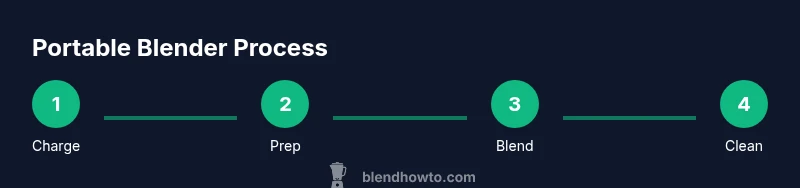
Steps
Estimated time: 20-35 minutes
- 1
Charge the blender to full
Plug in the device and allow it to reach a full charge before first use. A full battery ensures consistent blending, especially when using ice or frozen fruit.
Tip: Use a full charge for best results with ice; partial charges can reduce performance. - 2
Prepare ingredients
Wash and chop produce into small pieces. Measure liquids and place them in the cup first to reduce friction and ensure smoother blending.
Tip: Pre-cut fruits speed up blending and reduce strain on the motor. - 3
Load ingredients into the cup
Add liquids, followed by softer ingredients, then frozen items. Do not exceed the max fill line to avoid leaks and overflow.
Tip: Keep ingredients evenly distributed for balanced blending. - 4
Attach lid and blade securely
Make sure the blade is firmly seated and the lid seals are clean. A loose blade can spin unevenly and cause splashes.
Tip: Twist to lock, then gently test for leaks before lifting. - 5
Start blending with controlled power
Power on and blend at a steady pace, using short bursts if your model supports pulsing. Pause if you hear odd sounds or feel resistance.
Tip: Pulse blending in 2-3 second intervals helps maintain texture and keeps motor cooler. - 6
Check texture and adjust
Open, check the consistency, and decide if you need to blend longer or add a splash of liquid. Aim for a smooth, drinkable texture.
Tip: If needed, blend in short bursts rather than running continuously. - 7
Serve or seal the cup
Carefully remove the blade assembly only after the device has cooled; seal the cup for transport if you’re taking it on the go.
Tip: Carry a small cloth to wipe away drips when drinking straight from the cup. - 8
Clean immediately after use
Rinse parts, wash with warm soapy water, and dry thoroughly before reassembling. This prevents odors and extends seal life.
Tip: Avoid soaking the motor housing; hand wash only the non-motor parts. - 9
Store or prepare for travel
Store parts in a clean, dry place and keep a small kit of ingredients for quick blends during the week.
Tip: Label the cup with date and contents to track freshness.
Frequently Asked Questions
What is a blender to go?
A blender to go is a compact, portable blender designed for on-the-go blending in a cup, often with built-in blades and a leak-proof lid.
A portable blender is a compact device for quick blends on the move.
Can you blend ice in a blender to go?
Most models handle ice or frozen fruit, but always check the motor power and max fill to prevent strain.
Yes, many portable blenders handle ice if you follow the guidelines.
How long does a blender to go charge last?
Battery life varies by model and usage; expect multiple blends on a single charge when used moderatley.
Battery life depends on the model and how you use it; plan for a few blends per charge.
Are portable blenders dishwasher safe?
Parts labeled as dishwasher-safe can be cleaned in a dishwasher; check manuals to protect seals.
Some parts are dishwasher-safe; check the product guide to be sure.
What recipes work well in a blender to go?
Smoothies, protein shakes, dressings, and baby foods work well; adjust textures with liquids and ice as needed.
Great on-the-go recipes include smoothies, dressings, and baby foods.
How should I clean a blender to go quickly?
Rinse, wash with warm soapy water, and dry thoroughly; avoid soaking the motor housing.
Rinse promptly, wash, and dry well after use.
Can I blend hot liquids in a blender to go?
Avoid blending very hot liquids in portable models as pressure can build up; let ingredients cool first.
Hot liquids can be risky in portable blenders—cool before blending.
What maintenance helps extend lifespan?
Regularly inspect seals and blades, replace worn parts, and store dry; avoid harsh cleaners.
Keep seals clean, replace worn parts, and store dry for longevity.
Watch Video
What to Remember
- Choose a model that balances power, capacity, and cleanability
- Charge fully before blending and follow safety interlocks
- Use short bursts and pulse blending for better control
- Clean immediately after use to extend longevity