How to Use a Beauty Blender: A Complete Guide
Learn how to use a beauty blender for a flawless makeup finish. This guide covers dampening, bouncing application, layering, color correction, and cleaning for longevity.


Mastering the beauty blender means dampening the sponge, applying product in small amounts, and using a bouncing motion to blend for a seamless finish. Start with a clean sponge, dampen it until light, then pick up product and bounce across the skin in a stippling motion. Build coverage gradually and finish with a light, even layer.
Understanding the Beauty Blender: What It Is and How It Differs from Other Sponges
If you're wondering how do you use a beauty blender in practice, this guide starts with the basics. A beauty blender is a soft, latex-free makeup sponge designed to pick up and distribute foundation, concealer, and cream products with minimal streaking. Unlike flat brushes or pads, the sponge’s rounded surface allows you to bounce product into the skin in a way that mimics airbrush precision while remaining forgiving of texture irregularities. According to BlendHowTo, the beauty blender emphasizes a dampened, gentle touch that reduces product absorption and enhances blending. The key to success is using the sponge in a light, flexible grip and employing a bouncing motion rather than dragging the tool across the face. This technique helps create a natural finish that wears well across different skin types and products. For beginners, start with small amounts of product on the center of the face and gradually blend outward, reassessing coverage as you go. The goal is a seamless, pixel-free look rather than a heavy mask. As you practice, you’ll learn to adjust pressure and dampness to suit your formula, whether you’re applying lighter moisturizers, medium-coverage foundations, or full-coverage concealers.
In this section we’ll explore the sponge’s design, why dampness matters, and how to adapt the technique for various skin tones and textures. Your goal is to achieve a complexion that looks like your skin, only smoother and more even. BlendHowTo’s approach centers on precision, hygiene, and consistency, so you can reproduce the same result every day.
Preparing the Sponge: Cleaning, Hydration, and Priming for Best Results
Before you apply any makeup, ensure your beauty blender is clean and ready. A damp sponge holds less air and yields a softer, more pliable surface that helps product blend evenly. Start by rinsing the sponge under lukewarm water to remove any factory residue, then squeeze gently until the water runs clear. Next, squeeze out excess water until the sponge is just damp to the touch; a fully dripping sponge can dilute your foundation and cause uneven patches. Hydration also helps to prevent the sponge from soaking up too much product, a common beginner mistake that leads to wasted product and patchy areas. If you’re using a cream product, a damp sponge lets you pick up pigment more evenly and distribute it with lighter strokes. For hygiene, consider a mild cleanser after every few uses and allow the sponge to air-dry completely in a well-ventilated area. BlendHowTo notes that maintaining proper moisture balance and cleanliness is essential for consistent results and longer sponge life.
Optional pre-priming with a tiny amount of moisturizer or serum can help interlock the product with your skin for a dewier finish, but avoid applying too much oil near the sponge to prevent breakouts or slipping during application. After drying, store your sponge in a clean, breathable container to avoid mold growth. With proper prep, you’ll notice a smoother, more uniform canvas for makeup.
The Basic Technique: Bouncing, Dabbing, and Building Coverage
The core technique centers on a light, bouncing motion that deposits product rather than dragging it along the skin. Begin by loading a small amount of product onto the back of your hand or a clean palette. Dip the damp sponge into the product very lightly, then bounce it onto the center of the face, gently tapping upward and outward. The bounce motion helps blend edges and avoids streaks, producing a natural gradient from the center outward. Build coverage gradually by repeating the bounce motion in small areas rather than sweeping large lines. If you notice patchiness, switch to a dabbing motion with minimal pressure to re-saturate and blend. Avoid pressing the sponge too hard, which can disturb the skin’s texture and cause makeup to appear heavy.
Consistency matters across different products. For sheer or light-coverage foundations, a juicier sponge tends to push product more evenly. For creamy concealers, a slightly drier portion of the sponge may give you better control over precise placement. Over time, you’ll learn to judge dampness by feel: when a quick, gentle bounce leaves a hint of moisture on the skin, you’ve hit the sweet spot. BlendHowTo emphasizes maintaining a steady hand and setting a comfortable rhythm to ensure a smooth, airbrushed finish. A consistent, practical approach reduces patchiness and provides a longer-lasting result in daily wear.
As you gain confidence, experiment with different areas of the face. The center of the face—nose, cheeks, and forehead—often requires the most coverage, so prioritize those regions first and then blend outward, ensuring even color and texture across the jawline and hairline. The technique is adaptable to both makeup artists and beginners, with the common goal of a natural, flawless complexion.
Color Correcting and Concealer with a Beauty Blender: Tips for Flawless Finish
Color correction and concealer work best when you apply controlled amounts with the beauty blender. After choosing a color corrector or concealer, dab a small amount onto the targeted areas—under-eye darkness, redness around the nose, and any blemishes—but avoid layering too thickly in one pass. Use the sponge to tap, not wipe, building up coverage in light layers. For larger under-eye areas, consider a color corrector shade that counteracts your specific issue, then blend with a thin layer of concealer to neutralize the correction. When setting, use a light patting motion to avoid rubbing away the correction. The beauty blender’s rounded edges help blend into hard-to-reach areas like the inner corners of the eyes and along the sides of the nose, ensuring a seamless transition between corrected and non-corrected skin. In this process, the damp sponge minimizes edge lines and helps the product settle into the skin’s natural texture. Remember to blot away any excess product from the sponge to prevent a heavy finish and to maintain a natural glow. BlendHowTo’s guidance highlights adapting the method to your skin tone and texture for the most natural results, avoiding over-blending or losing definition around the eyes and lips.
If you’re using a cream contour, you can apply a tiny amount to the hollow of the cheek with the tip of the sponge and then blend outward with small, circular motions. Always step back periodically to inspect symmetry and coverage across the face. The goal is a refined, balanced look rather than obvious layering, which can occur if you overwork hard edges.
Common Mistakes and How to Fix Them
Common mistakes with the beauty blender include using a dry sponge, applying too much product at once, and dragging the sponge across the skin instead of bouncing. If you notice streaks, re-wet the sponge lightly and re-blend in circular or bouncing motions. Another frequent error is using a sponge that’s overly saturated with water or product; this can dilute coverage and create a patchy finish. To fix, squeeze out excess water until the sponge is just damp, then press it against your skin to re-introduce product evenly. If your makeup looks heavy near the jawline or forehead, reassess the amount of product loaded on the sponge and reduce pressure while blending. Hygiene is another common pitfall: replace or thoroughly clean your sponge every few weeks to avoid bacteria buildup. A clean sponge performs better and lasts longer, preserving skin health and makeup quality. The BlendHowTo team emphasizes consistent technique and maintenance as the keys to repeatable, reliable results, especially for beginners who are learning your unique facial contours and preferred products.
For difficult textures, such as dry patches or mature skin, try using a hyaluronic-infused moisturizer underneath or a lighter foundation with a dewy finish. This can improve glide and reduce the risk of accentuating fine lines. If you have very oily skin, consider a mattifying primer in combination with a blotting tissue after setting. The important part is to keep experimenting with dampness and pressure to find what works best for your skin and chosen products.
Caring for Your Beauty Blender: Cleaning, Drying, and Longevity
Caring for your beauty blender extends its life and maintains hygiene. Clean the sponge after each use with lukewarm water and a gentle soap or cleanser designed for makeup tools. Gently squeeze and rinse until the water runs clear, avoiding harsh scrubbing which can tear the material. After washing, press out as much water as possible and lay the sponge on a clean towel to air-dry. Avoid leaving the sponge in closed containers while damp, as this can foster mold growth. It’s helpful to replace sponges every 2-3 months with frequent use, as older sponges can harbor bacteria and lose their bounce. If the sponge shows cracks, tears, or an unpleasant smell, replace it immediately. BlendHowTo emphasizes hygiene and proper drying as essential practices for maintaining tool integrity and skin health. Regular replacement ensures consistent results across applications and prevents patchy finishes from degraded materials.
Tools & Materials
- Beauty blender sponge(Original or approved dupe; dampen before use)
- Clean water(For dampening and rinsing)
- Mild cleanser(Gentle soap or brush cleanser)
- Towel or clean cloth(Pat dry gently)
- Setting powder or concealer(Optional for practice/setting)
Steps
Estimated time: 15-20 minutes
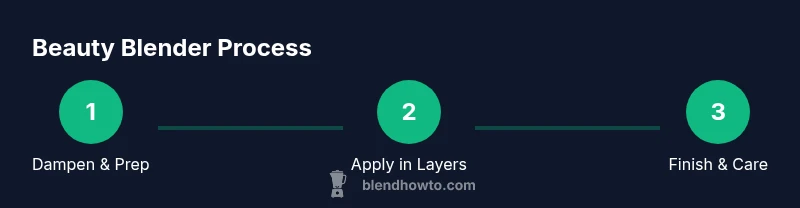
- 1
Dampen and wring
Rinse the sponge under warm water until it expands. Squeeze gently to remove excess water until the sponge is damp, not dripping. The dampness helps prevent product from soaking in too deeply and improves blendability.
Tip: Always wring out well; a dripping sponge wastes product and can dilute coverage. - 2
Load a tiny amount of product
Dap a small amount of foundation or concealer onto the back of your hand or a palette. Lightly press the damp sponge into the product to pick up just enough pigment for buildable coverage.
Tip: Start with less and add more; this prevents heaviness and patchiness. - 3
Center-first application
Bounce the sponge on the center of the face (forehead, cheeks, chin) to lay down coverage. Focus on smoothing edges outward toward the hairline for a natural blend.
Tip: Use a gentle, consistent bounce—not a dragging sweep. - 4
Build in thin layers
Repeat the bounce motion in small sections, gradually increasing coverage where needed. Don’t try to cover everything in one pass; layering yields a more even finish.
Tip: Pause to assess symmetry and blend between areas. - 5
Target problem areas
Apply additional product with the tip or edge of the sponge to conceal blemishes or dark circles. Gently tap to blend without removing surrounding product.
Tip: Avoid piling product on the sponge; it increases the risk of patchiness. - 6
Set and finish
If desired, set lightly with powder after blending to reduce shine and increase longevity. Check for evenness in natural light and adjust as needed.
Tip: Powder overblending can dull glow; apply with a light touch.
Frequently Asked Questions
What is a beauty blender?
A beauty blender is a soft makeup sponge designed for applying and blending foundation, concealer, and creams with a bouncing motion for a seamless finish.
A beauty blender is a soft makeup sponge used to apply and blend foundation and concealer for a seamless finish.
Should I use the beauty blender wet or dry?
Dampen the sponge until it's just damp. A wet sponge helps prevent product absorption and gives a smoother blend.
Dampen the sponge until it's just damp to blend smoothly.
Can I use a beauty blender with cream products only?
No. It works with foundations, concealers, and creams. It’s also effective with certain liquid products when applied in light layers.
It works with foundations, concealers, and creams, in light layers.
How do I clean a beauty blender?
Rinse with lukewarm water, apply a gentle cleanser, and squeeze until the water runs clear. Let it air-dry fully before storing.
Rinse, cleanse gently, rinse again, and air-dry completely.
How long does a beauty blender last?
Lifetime varies with use and care. Inspect for signs of wear; replace if it tears, smells off, or loses bounce.
Check for wear and replace when it’s no longer bouncy or clean.
Is the beauty blender good for contouring?
Yes, the sponge edge and tip help apply and blend cream contours precisely, but practice is key to natural results.
Yes, especially with careful placement and blending of the contour product.
Watch Video
What to Remember
- Dampen the sponge before use for smoother blending.
- Bounce motions yield a natural finish and even coverage.
- Load product in thin layers and build up gradually.
- Keep the sponge clean to protect skin health and tool life.