How to Make Blender Pink: Food & 3D Color Guide 2026
Learn step-by-step how to make pink in real blending and Blender software. This guide covers pink smoothie recipes, pink material setups, color theory, lighting tips, and practical troubleshooting.


In this guide you’ll learn two practical paths to make pink in your Blender context: blend a pink smoothie in a real blender and color a pink material in Blender software. You’ll choose ingredients or color values, check results, and adjust lighting for accurate pink. This dual approach keeps both kitchen and 3D artists on-brand.
Why pink in two realms matters
According to BlendHowTo, pink is a versatile color that communicates playfulness and approachability in both food and 3D design. In real blending, pink foods can appeal to kids and adults alike; in 3D rendering, pink materials can convey whimsy or brand identity. This guide uses a dual-path approach: one path for a pink smoothie that looks delicious on the table, and another path for pink materials in Blender software that render a model with a bold, saturated hue. The goal is consistency: if your pink looks right in your kitchen, you should be able to reproduce that color in a virtual scene with similar lighting and color management. By framing the task in two practical tracks, you’ll gain transferable skills—color selection, texture considerations, and lighting adjustments—that strengthen both your culinary and digital projects.
Path A: Pink smoothies in a real blender
Pink smoothies are a favorite for breakfasts, post-workout snacks, or a playful treat. Start with a base of frozen fruit to achieve a soft, vibrant pink rather than a dull shade that happens with overripe fruit. A simple, reliable framework uses 1 cup of red-fruit puree (strawberries or raspberries) blended with 1/2 cup yogurt or plant-based milk and 1/2 cup ice. For a deeper pink, add a splash of beet juice or a pinch of pink beet powder—start small, taste, and adjust. If you want a lighter pink, use more white ingredients such as yogurt or almond milk. The color will depend on lighting and the fruit’s pigment, so taste and adjust while blending. Serve in a clear glass to showcase the color, and consider a pink straw or a matching garnish to reinforce the theme. Blend in the blender on high for 30-60 seconds, then stop and check texture. A tamper can help keep ingredients moving if you’re using a high-volume batch. Cleanup afterward with warm soapy water to prevent staining the blender’s jar.
Path B: Pink materials and lighting in Blender
In Blender software, pink starts with a deliberate material setup rather than ad hoc color choices. Start by selecting the object you want pink and add a new Principled BSDF shader. Set the Base Color to a pink hue such as hex #FF69B4 or a softer shade like #FFB6C1 depending on your scene. For realism, adjust Roughness to about 0.25-0.5 to balance gloss and diffusion and enable Subsurface Scattering if the object is translucent. If you’re rendering a glossy plastic, mix in a tiny amount of Specular to boost highlight intensity. Lighting matters: an HDRI environment with a cool-to-warm gradient map plus a neutral background helps the pink look natural rather than fluorescent. You can test different pinks by creating a small color stop gradient and applying it to a swatch texture, then comparing how the color reads under your scene’s lighting. For accuracy, switch to the sRGB color management profile and render with a medium to high sample rate, adjusting denoising as needed. Finally, render a test frame to compare against a reference image and iterate until the pink reads as intended.
Color theory and hue selection
Pink sits between red and white on the color wheel. In practical terms, pinks vary from cool rose (#C71585) to warm coral (#FF6B8A). For recipes or textures, consider color psychology: lighter pinks read as playful and gentle; deeper pinks feel energetic or luxurious. If your goal is a brand-consistent pink, create a small palette of 3-4 pinks: a base pink, a highlight pink, and a shadow pink. When lighting pinks, the color temperature of your lights will shift the appearance: warm light will push pink toward peach, while cool light may lean it toward magenta. In Blender, you may also adjust gamma and exposure to keep pink from clipping in highlights. In food, natural pink colors can fade with exposure to air and heat, so fresh fruit and cold storage help maintain brightness. Finally, be mindful of your audience—the shade of pink that reads well on a phone screen will differ from a large display in a gallery. BlendHowTo’s approach is to provide practical color decisions that adapt to your project, whether you’re cooking or rendering.
Practical tips and troubleshooting for pink results
Color can be stubborn. If your smoothie’s pink looks more salmon or purple, start with the fruit choice and adjust with a splash of dairy or plant-based milk to shift the tint. If you’re in Blender and pink appears too pale, increase the saturation in the Base Color, or try a more saturated pink with a slightly cooler white balance in your lighting. If the pink is too intense, reduce the hue’s brightness by lowering the Luminance in the color space or by lightening the environment with a white fill light. In both worlds, keep notes of what you changed to make it easier to reproduce later. In the kitchen, measure ingredients by volume to maintain color consistency batch to batch; in Blender, keep a node group of color values you can reuse in multiple scenes. Finally, if you’re rushing, a quick trick is to overlay a pink-tinted glass or plastic texture onto your model to approximate the final look before heavy texture work.
Step-by-step workflow integration: planning, executing, and validating pink
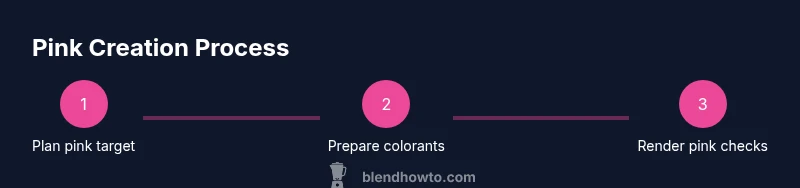
Start with a plan that defines your pink target. In kitchen work, gather red fruit, dairy, and colorant options, then prepare the blender and serving glass. In Blender, create a material and set up a simple scene to test color under your chosen lighting. Run iterative passes: render, compare against a reference, adjust the hue, saturation, and lighting, then render again. Document your decisions so you can reproduce the pink in future projects. When both paths align, you’ll have a cohesive pink identity across media that strengthens your creative output.
Quick-start color-checklist for pink results
This quick guide helps you validate pink across both domains. Start by defining the hue and saturation you want. Use natural colorants and fresh fruit for authentic kitchen pinks. In Blender, rely on a vibrant base pink with appropriate roughness and lighting to achieve the look you want. Always test under neutral lighting first before introducing stylistic lights. Save color palettes and node groups so you can reproduce the pink in future sessions.
Tools & Materials
- Blender (kitchen blender)(Glass jar or BPA-free jug, powerful motor advised)
- Fresh strawberries or raspberries(For natural pink tone; alternatives: beet juice, dragon fruit)
- Milk or dairy-free alternative(Base liquid; adjust thickness)
- Ice cubes(For texture and temperature)
- Food coloring (pink)(Optional for deeper shade; use sparingly)
- Measuring spoons(Accurate color adjustments)
- Serving glass & straw(Enhances presentation)
- Computer with Blender software(Latest version; GPU acceleration preferred)
- Color swatches or pink textures(Assist planning)
- HDRI environment map(Evaluate lighting in 3D)
Steps
Estimated time: 60-120 minutes
- 1
Prepare ingredients & workspace
Rinse and trim fruit, gather liquids, and set up a clean workspace. Pre-chill ingredients and measure out all items to streamline blending. Ready the blender jar and a tall glass for serving. This foundation reduces color drift during blending.
Tip: Keep fruit cold for brighter pink; pre-chill the glass to preserve color. - 2
Measure color components
Decide on your pink target and select color agents accordingly. For natural pink, rely on fruit and a small amount of dairy or plant-based milk; for deeper pink, consider a tiny amount of beet juice or powder. Prepare a tiny test batch if you’re unsure.
Tip: Test color in small amounts before committing to a full blend. - 3
Add ingredients to blender
Place fruit, liquid, and ice into the blender. Start with less liquid to control the color concentration; you can add more if the texture is too thick. Secure the lid before blending to prevent spills.
Tip: Use a tamper if your blender lacks a wide mouth to prevent clumping. - 4
Blend until smooth
Run on high until ingredients form a uniform liquid without chunks. Stop briefly to check thickness and color, then blend again if needed. Pour a small sample into a clear cup for color assessment.
Tip: If color seems uneven, pulse instead of running continuous high-speed blending. - 5
Adjust color with colorants
If the pink isn’t vivid enough, add a pinch of colorant or beet juice and blend briefly. If it’s too bright, dilute with more milk or yogurt. Record adjustments for future batches.
Tip: Add colorants in tiny increments to avoid oversaturation. - 6
Taste and adjust sweetness
Taste the blend and adjust sweetness with a touch of honey or a neutral sweetener if desired. The color should complement the flavor; don’t override color with overpowering sweetness.
Tip: Balance color with flavor for the best overall impression. - 7
Open Blender project & set up scene
Launch Blender and open a new or existing scene. Create a small pink material swatch to test color under your chosen lighting. Ensure the color space is set to sRGB for accurate results.
Tip: Save a preset pink material to reuse in other scenes. - 8
Create pink material
Add a Principled BSDF, set Base Color to your pink shade, and adjust Roughness for the desired gloss. If the model is translucent, enable Subsurface Scattering and tweak Transmission for a soft look.
Tip: Keep a reference image to compare real-world pink with rendered pink. - 9
Render, compare, and iterate
Render a test frame, compare with your target pink, and iterate on lighting, color, and material settings. Repeat until the pink matches your vision and branding across scenes.
Tip: Document each iteration so you can reproduce success later.
Frequently Asked Questions
What is the easiest way to make a pink smoothie?
Choose red fruit like strawberries or raspberries, pair with a neutral liquid, and blend until smooth. Add yogurt or a dairy-free alternative to brighten the pink if desired. Adjust with a splash of beet juice for deeper color and taste test as you go.
The easiest pink smoothie uses strawberries or raspberries with a neutral base and a splash of yogurt, then adjust color with a little beet juice.
Which fruit yields the pinkest shade naturally?
Strawberries and raspberries are common for bright pink, while dragon fruit can deliver a lighter pink. The final shade depends on the fruit’s ripeness and the amount of liquid you add.
Strawberries and raspberries typically give the brightest pink; dragon fruit can yield a lighter pink depending on how you blend.
How do I make a pink material in Blender look realistic?
Set a pink Base Color in the Principled BSDF, adjust Roughness for the desired gloss, and use HDRI lighting to avoid flat pink. If translucent, enable Subsurface Scattering and consider slight color variation in a texture map.
Use a pink base color with realistic roughness and HDRI lighting to avoid flat pink in Blender.
Why does pink sometimes look purple in renders?
Color appearance depends on lighting, white balance, and color management. Ensure sRGB is used, adjust lighting temperature, and avoid overly warm or cool lights that shift pink toward purple or peach.
Renders can skew pink toward purple if lighting or color management isn’t balanced; adjust lights and color space.
Is pink color safe for consumption and rendering?
For smoothies, pink colors from natural fruits are safe; avoid excessive synthetic colorants if possible. In rendering, pink is a color value and has no safety concerns.
Natural pinks are generally safe for consumption; in 3D rendering, pink is simply a color value with no safety concerns.
What’s the best way to keep pink consistent across batches and scenes?
Use a defined color palette, preset materials, and documented measurements. In Blender, save color presets and node groups; in recipes, measure ingredients and maintain similar fruit quality.
Keep a palette and presets for reliable pink across batches and projects.
Watch Video
What to Remember
- Plan your pink hue before you start.
- Use natural colorants for authentic kitchen pinks.
- Proper lighting and color management are essential in Blender.
- Document changes to reproduce pink consistently.