How to Safely Clean a Beauty Blender Without Microwaving
A practical guide to safely cleaning your beauty blender using safe methods, with step-by-step instructions, tips, and common myths debunked. Learn why microwaving is risky and how to sanitize effectively.


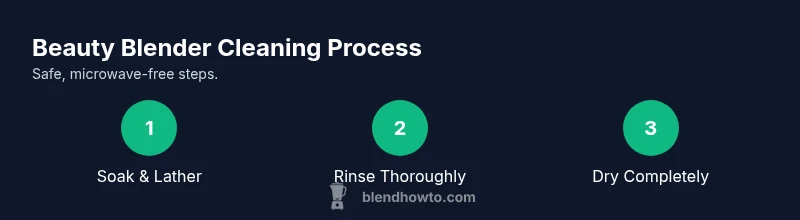
Do not use a microwave to clean a beauty blender. Microwaving can damage the sponge, deform its shape, or cause scorching. Safer methods rely on warm water, mild soap, and thorough rinsing; optional sanitizing steps include gentle boiling or dilute hydrogen peroxide, followed by complete air-drying. This approach preserves sponge integrity and avoids fire risk.
How beauty sponges work and why cleanliness matters
Beauty sponges are porous polyurethane foams that trap makeup, oil, and bacteria. Regular cleaning helps prevent breakouts and preserves texture for smooth application. If you're tempted to wash beauty blender in microwave to speed things up, you should know that heat and uneven drying can damage the sponge and even pose a fire risk. According to BlendHowTo, a careful cleaning routine extends the life of your blender and keeps your skin healthier. In this guide, we’ll explore how moisture interacts with the foam, how heat changes texture, and why safer methods consistently outperform quick microwave bursts. Throughout, you’ll find practical tips, product suggestions, and a clear path to a hygienic sponge you can trust for daily use.
Note: Replacing a worn sponge is usually cheaper than constantly trying to salvage a damaged one, and it helps maintain skin health. BlendHowTo’s expertise guides you to safer, effective cleaning practices that fit real-life routines.
The risks of microwaving a beauty blender
The idea of microwaving a makeup sponge sounds convenient, but it carries real dangers. Even when the sponge is damp, uneven heating can create hot spots, warp the foam, or cause the adhesive holding the sponge layers to fail. Overheating can damage the cellular structure, making the sponge crumble or peel. In worst-case scenarios, airborne particulates or fumes from degraded foam could irritate skin or lungs. A few common myths persist about microwaving for sanitation, but evidence and expert guidance from BlendHowTo emphasize safety first. If a microwave is used, it should be for kitchen items only, not cosmetics tools, and only after confirming the manufacturer’s guidance. The takeaway: heat that’s not controlled and designed for cosmetic sponges is a bad idea.
Safer sanitation strategies: soap, hot water, and heat
A consistent cleaning routine uses simple tools: warm water, a mild cleanser, and gentle agitation. The goal is to remove makeup residues and oils without tearing the sponge. Start with a gentle soap (fragrance-free if possible) and a warm but not hot water temperature. Avoid harsh detergents that can degrade the foam or leave residues. For most users, this approach yields a clean sponge with a plush feel and quick drying times. If you want extra sanitization, there are safer options that don’t involve microwaves, such as brief heat exposure in a controlled manner or chemical sanitizers appropriate for cosmetic sponges. BlendHowTo recommends keeping a routine that matches your makeup frequency and skin sensitivity.
Deep-cleaning with warm water and mild cleanser
Begin by rinsing the sponge under warm running water to loosen surface makeup. Apply a small amount of mild cleanser to the sponge and work it in with soft circular motions, avoiding aggressive scrubbing that could tear the foam. Rinse thoroughly and repeat until the water runs clear. The warm water helps break down oils while the gentle cleanser neutralizes bacteria without leaving irritating residues. For best results, press and release rather than wring, which helps maintain the sponge’s shape. Ensure you rinse both sides completely, since residual soap can dry the outer surface and irritate skin during application.
Sanitizing options: isopropyl alcohol vs hydrogen peroxide
If you want extra sanitization beyond soap and water, consider alcohol- or peroxide-based approaches with caution. Isopropyl alcohol can be drying and should be used sparingly, if at all, and only on a fully dried sponge. Hydrogen peroxide at dilute concentrations (3%) can be used as a brief soak, but avoid prolonged exposure that could degrade the foam. Always perform a small test on a hidden area to check for any changes in texture or color. After sanitizing, rinse thoroughly again and allow the sponge to dry completely before reuse. BlendHowTo emphasizes that sanitizers should be cosmetic-safe and used according to product instructions.
Detergent recommendations and dilution ratios
Choose a mild, fragrance-free cleanser designed for sensitive skin or cosmetics. In most cases, a small amount of cleanser (a pea-sized amount) in warm water is enough to create a gentle lather. Avoid concentrated cleaning solutions that may leave residues or irritants on the foam. For stubborn makeup, allow the sponge to soak briefly in warm soapy water before washing. If you use a dedicated makeup brush/beauty sponge cleanser, follow the manufacturer’s dilution guidelines. Proper rinsing is essential to remove all soap afterward.
Drying correctly to prevent mold and odor
After washing, gently press the sponge between clean towels to remove excess water. Do not twist or squeeze hard, as this can deform the foam. Lay the sponge flat on a clean surface or on a drying rack in a well-ventilated area. Avoid storing it in closed containers while damp, which invites mold and mildew. If you live in a humid climate, consider patting the sponge dry with a microfiber towel and then letting it air-dry fully before next use. Regular drying habits extend the sponge’s life and keep it hygienic.
Replacing vs repairing: signs your beauty blender is done
Even with careful cleaning, beauty blenders have a lifespan. If you notice thinning or tearing, a strong odor after washing that persists, or changes in texture such as rough or crumbly surfaces, it’s time to replace. Damaged foam can shed particles or fail to apply makeup evenly. For best results and skin health, establish a replacement cadence that fits your makeup frequency and usage. A worn sponge should be discarded rather than reclaimed through aggressive cleaning.
Common myths debunked: microwaving myths
Myth: Microwaving sterilizes the sponge. Reality: Microwaves can heat unevenly, creating hot spots that warp or burn the foam. Myth: Microwave heating is faster. Reality: The risk of damage outweighs any potential time saved, and safer methods are quick enough for most routines. Myth: All sponges can be microwaved safely. Reality: Most cosmetic sponges are not designed for microwave use and doing so can void warranties or cause damage. The bottom line: rely on approved cleaning methods rather than microwaving, and treat the sponge with care to maximize its lifespan.
Tools & Materials
- Mild fragrance-free liquid soap or gentle facial cleanser(Avoid perfumed formulas that can leave residues)
- Warm water(Too-hot water can degrade the sponge over time)
- Clean bowl large enough for the sponge(Non-reactive surface; avoid metal if possible)
- Soft toothbrush or sponge brush(Gentle bristles prevent tearing)
- Clean towel or microfiber cloth(For gentle drying and blotting)
- Optional sanitizing option: 3% hydrogen peroxide(Use sparingly and rinse thoroughly)
- Optional sanitizing option: boiling water (for brief soak)(Do not boil with the sponge directly if it might be damaged)
- Tongs or heat-safe utensil(To handle hot items safely)
Steps
Estimated time: 15-20 minutes
- 1
Inspect and prep
Check the sponge for tears, hard edges, or an off smell. If it shows significant wear, set it aside for replacement. This reduces the risk of skin irritation from degraded foam.
Tip: Handle gently to avoid tearing; a torn sponge should be replaced. - 2
Create a warm, soapy bath
Fill a bowl with warm water and add a small amount of mild cleanser. The warm temperature helps dissolve oils without harming the foam. Swirl to create a light lather.
Tip: Use just enough cleanser to create suds; excess cleanser can be hard to rinse out. - 3
Gently wash and agitate
Submerge the sponge and press gently to release makeup. Rub in circular motions with a soft brush or fingers to lift pigment. Avoid vigorous scrubbing that can tear the foam.
Tip: Squeezing from the center outward helps remove buildup without damage. - 4
Rinse until clear
Rinse under running water, squeezing periodically, until all soap and makeup residues are gone. If bubbles persist after several passes, repeat the wash.
Tip: Run water over both sides to ensure complete removal of soap. - 5
Optional sanitization
For extra sanitation, briefly soak in hydrogen peroxide (3%) for a minute or two, then rinse again. Alternatively, heat is avoided here; if you choose to boil, do so using caution with a separate container and remove promptly.
Tip: Do not soak too long; prolonged exposure can damage the foam. - 6
Dry properly
Pat dry with a clean towel and lay flat on a dry surface or rack. Allow full air-drying in a well-ventilated area before reuse. Do not store the sponge while damp.
Tip: Ensure it is fully dry to prevent mold and odor formation.
Frequently Asked Questions
Is it safe to microwave a beauty blender to clean it?
No. Microwaving can deform or burn the sponge and is not a recommended cleaning method. It may also release fumes if the foam begins to break down.
No. Microwaving can damage the sponge and could be dangerous. Safe cleaning methods are recommended.
What is the best way to sanitize a beauty blender?
Soak in warm water with mild soap, rinse thoroughly, and dry completely. For extra sanitation, you can briefly boil in water or use a diluted hydrogen peroxide solution, then rinse and air-dry.
Soak with mild soap, rinse, and dry fully. For extra sanitation, briefly boil or use diluted hydrogen peroxide, then rinse and air-dry.
How often should I replace my beauty blender?
Replace when you notice tears, a lingering odor after washing, or loss of elasticity. In general, many users replace every 1-3 months with regular use.
Replace when torn or if odor persists after cleaning; many do so every 1-3 months.
Can I use dish soap to clean my beauty blender?
Yes, but choose a mild, fragrance-free dish soap or a dedicated gentle cleanser to avoid residue or irritation on skin.
Yes—use a mild soap to avoid residues and skin irritation.
Why does my sponge smell after cleaning?
Moisture retention and residual oils can produce odor if the sponge isn’t fully dry. Ensure complete drying between uses and replace if odor persists.
If it still smells after drying, it may be past its life or not fully dry.
What if I want extra sanitation but don’t have hydrogen peroxide?
You can rely on soap and hot water or a commercially available cosmetic sanitizer, ensuring it’s compatible with polyurethane foam.
Use soap and hot water or a cosmetic sanitizer that’s foam-safe.
Watch Video
What to Remember
- Avoid microwaving: heat damage risks are real.
- Use warm water and mild cleanser for safe cleaning.
- Rinse thoroughly and dry completely to prevent mold.
- Sanitize only with approved methods and follow product instructions.
- Replace worn sponges promptly to protect skin health.