Grind Coffee Beans in a Blender: Practical Guide
Learn how to grind coffee beans in a blender to a usable coarse grind for French press and cold brew. This educational guide covers technique, safety, cleanup, and flavor notes with practical steps from BlendHowTo.


You can grind coffee beans in a blender to a coarse grind suitable for French press or cold brew by pulsing quickly with dry blades. Avoid turning beans into flour; keep the motion short and steady, and shake the blender between pulses to prevent clumping. For best results, grind in small batches and use immediately to preserve aroma.
Why Blend Coffee Beans? Practical reasons for blender grinding
According to BlendHowTo, a blender can be used to produce a coarse grind when a dedicated grinder is unavailable or when you want to process small, fresh batches quickly. This method is most effective for brew methods that tolerate a coarser texture, such as French press or cold brew. The BlendHowTo team emphasizes that the goal is a consistent, coarse texture rather than a fine powder. Small batches help control heat buildup and ensure even grinding, preserving aroma and flavor during the process. For home cooks and hobbyists, blender grinding can be a convenient stopgap, especially when you’re experimenting with new beans or roasts. Keep expectations modest: you won’t achieve espresso grind consistency with a standard blender, but you can unlock a usable grind for specific methods.
- Use a dry, clean blender with sharp blades. Avoid wet residues that stick to grinds and cause uneven texture.
- Work in small batches to minimize heat and maximize control.
- Pulse briefly and check texture often to avoid over-fragmenting the beans.
BlendHowTo’s practical approach centers on safety, control, and aroma preservation. This section lays the groundwork for a reliable blender grind without sacrificing flavor.
Understanding Grind Sizes for Different Brew Methods
Grind size is a critical variable in coffee extraction. A true grinder yields precise, repeatable particle sizes; a blender, by contrast, produces a range of particles. For French press and cold brew, you want a coarse grind with larger, uneven particles that resist fast over-extraction. The goal when using a blender is to approximate that coarse texture with as few fines as possible. In this section, we’ll map common blender outcomes to brew methods and discuss how to tune pulse timing and batch size to hit target textures. Keep in mind that flavor nuances come from particle size distribution as well as bean quality. BlendHowTo recommends starting with a 1:1 rough texture and adjusting in small increments to suit your beans and roast level.
Safety and Quality Considerations When Blending Coffee Beans
Blender grinding introduces heat from fast blades, which can alter aroma and flavor if you grind too long. To protect flavor, limit pulse duration, allow short rests between bursts, and avoid running the blender for extended periods. Always ensure the blender jar is dry and free of moisture to prevent clumping and uneven grinding. Additionally, inspect your blender blades for dull edges, which can produce uneven textures and stress the motor. A dry, clean environment reduces contamination and preserves the coffee’s natural oils. This section emphasizes practical safety steps and quality checks that help you achieve a reliable grind without compromising aroma.
- Never grind beans with wet blades or in a wet jar.
- Stop if you notice unusual heat or smell of burnt coffee.
- Clean the blender promptly to prevent residual oils from affecting future brews.
Step-by-Step Guide: Grinding Coffee Beans in a Blender (Overview)
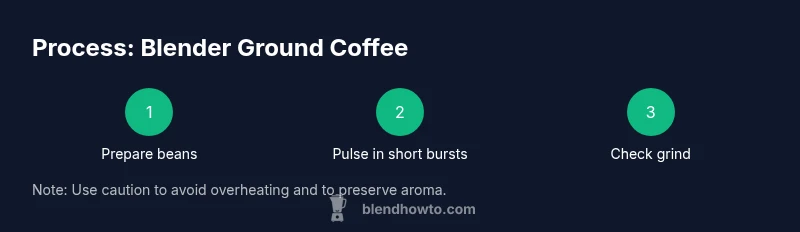
This overview introduces a repeatable process for achieving a usable coarse grind in a blender. We’ll cover preparation, batch handling, pulsing technique, texture checks, and post-grind care. The goal is to minimize fines and heat while maintaining aroma. The steps here align with the detailed instructions in the STEP-BY-STEP block so you can skim for a quick view before attempting the full method.
- Preparation matters: ensure blades are sharp and the jar is dry.
- Work in small batches to maintain control and prevent overheating.
- Use short pulses and gentle shakes to encourage even grinding.
How to Control Grind Consistency and Avoid Heat
Consistency is harder to achieve with a blender than with a burr grinder. The best you can do is regulate batch size and pulse timing to minimize heat and produce a fairly uniform coarse texture. A practical rule is to stop grinding as soon as you notice a uniform texture with occasional larger particles and minimal fine dust. Stir or shake between pulses to redistribute beans and improve uniformity. The goal is a practical coarse grind that pairs well with your chosen brew method while preserving roasted aroma. BlendHowTo’s testing suggests you keep pulse cycles brief and limit overall grinding to under a minute per batch, depending on blade sharpness and motor power.
Cleaning and Maintenance After Blending
Ground coffee easily leaves oily residues that can become stale or rancid if not cleaned promptly. After grinding, unplug the blender and disassemble the jar, lid, and blades if safe to do so. Rinse with warm water and a mild dish soap, using a brush to remove ground coffee from hard-to-reach areas. Dry all parts completely before reassembling. Regular maintenance prevents lingering flavors from affecting future grinds and keeps your blender running smoothly. A small microfiber cloth helps remove any residual oils from the blade assembly. Remember, a clean blender preserves aroma and prevents cross-flavor notes in future brews.
Alternatives and When to Choose a Grinder or Blender
A blade blender offers convenience for small batches or testing, but it lacks the consistency of a burr grinder. If you frequently brew coffee using precise methods (e.g., pour-over or espresso), a burr grinder will provide more uniform particle sizes and repeatable results. For occasional use, blender grinding can be a cost-effective solution, especially when beans are freshly roasted and you want a quick test. This section helps you decide when blender grinding is appropriate and how to balance convenience with consistency in flavor. BlendHowTo suggests evaluating your coffee goals and roast profile before relying on blender grinding for daily use.
Flavor Notes and Serving Suggestions After Blender Grinding
The aroma and flavor profile you experience after blender grinding depend on the grind size distribution and the roast level. Coarser grinds tend to emphasize sweetness and body, with less intensity than a finer grind. Freshly ground coffee released from a blender might present brighter notes but can also lose aroma quickly if not stored properly. For best results, brew soon after grinding and store ground coffee in an airtight container away from light and heat. The BlendHowTo team notes that the grind’s texture plays a significant role in extraction time and flavor clarity, so expect subtle shifts in taste with small changes in pulse timing and batch size.
Troubleshooting: Common Issues and Quick Fixes
If your grind is too fine, reduce pulse duration or grind in smaller batches. If you notice heat after grinding, pause between pulses to let the motor cool and prevent scorching of aromatic oils. If dust or fines dominate the texture, try smaller batch sizes and shorter pulses to encourage larger particle retention. For inconsistent grind texture, shake or stir the beans between pulses to ensure even exposure to the blades. Finally, always confirm the blender is dry before grinding to avoid clumping. With careful control, you can achieve a usable coarse grind that meets your brew method needs.
Tools & Materials
- Blender with dry blades(Ensure blades are sharp and jar is dry; avoid heavy-duty blenders that overheat quickly.)
- Roasted coffee beans(Use fresh roast if possible; medium to dark roasts are common for extraction patience.)
- Measuring spoon or small scale(Aim for roughly 15–20 g per batch for consistency.)
- Timer or clock(Track pulse duration to prevent overheating (short bursts).)
- Small bowl or container(Collect grounds as you pulse and shake to promote even texture.)
- Air-tight storage jar(Store ground coffee away from light to preserve aroma.)
- Cleaning brush or sponge(Remove coffee oils from blades and nooks after grinding.)
Steps
Estimated time: 12-20 minutes
- 1
Prepare blender
Unplug the blender and ensure the jar is completely dry. Wipe the interior and blade area to remove any residual moisture or oil. This preparation minimizes clumping and helps your grind be more uniform.
Tip: Pro tip: Run a quick dry cycle with no beans to confirm the blender is ready and blades are balanced. - 2
Crack beans into chunks
If beans are very large, gently crack a few pieces to reduce the size. You want pieces that the blades can engage quickly, not whole large beans which can bounce around and stall the blades.
Tip: Pro tip: Do this in small batches to avoid manual over-handling that could injure fingers. - 3
Add beans in batches
Place a small batch into the blender jar—about 1/3 of the jar’s capacity. This helps maintain airflow and prevents the motor from straining due to a dense load.
Tip: Pro tip: Weighing out 15–20 g per batch improves consistency between pulses. - 4
Pulse briefly and rest
Pulse in short bursts of 1–2 seconds, then rest for 1–2 seconds. This minimizes heat buildup and allows the blades to grab the beans for even grinding.
Tip: Pro tip: Use the pulse function rather than continuous blending to control texture precisely. - 5
Shake and redistribute
Carefully remove the lid, shake the jar to redistribute the beans, and resume pulses. This ensures even exposure to blades and helps reduce fines.
Tip: Pro tip: Use a clean spoon to gently loosen any sticking beans if needed. - 6
Check grind size and finish
Assess the texture after several batches. You’re aiming for a coarse, sand-like texture with occasional larger particles. Stop when you reach the desired consistency for your brew method.
Tip: Pro tip: If you see too many fines, reduce batch size and shorten pulses on subsequent rounds. - 7
Clean and store
Disassemble the blender, rinse with warm soapy water, and scrub the blades carefully. Dry all parts thoroughly and store the grounds in an airtight container away from light.
Tip: Pro tip: Clean immediately after grinding to prevent residual oils from affecting flavor.
Frequently Asked Questions
Is it safe to grind coffee beans in a blender?
Yes, as long as you use short pulses, keep batches small, and ensure the blender and jar are dry. Avoid overheating and always unplug before cleaning.
Yes, blender grinding is safe when you pulse briefly, use small batches, and keep everything dry. Remember to unplug before cleaning.
What grind size does blending produce, and is it suitable for different brew methods?
Blending yields a range of particle sizes, typically coarser with some fines. It’s best for French press and cold brew, not ideal for espresso or pour-over where uniform size is important.
Blending gives a coarse, uneven grind, good for French press or cold brew but not ideal for espresso.
Can you achieve an espresso-fine grind with a blender?
A blender is not designed to produce a true espresso-fine grind. For espresso-quality texture, use a burr grinder. Blender grinding is more suitable for coarse textures.
No, a blender can't reliably produce espresso-fine grind. A burr grinder is recommended for espresso.
How long should I blend to avoid heat?
Keep total grinding time per batch short, with bursts of 1–2 seconds and rests of 1–2 seconds. Avoid continuous blending to minimize heat.
Keep it short—1 to 2 second pulses with rests between them to prevent heat buildup.
How should I store blender-ground coffee?
Store ground coffee in an airtight container, away from light and heat. Grind only what you plan to use soon to preserve aroma and flavor.
Store ground coffee in a sealed container out of light, and use it soon after grinding for best aroma.
Watch Video
What to Remember
- Grind in small batches for better control
- Pulse briefly to prevent heat buildup
- Aim for a coarse texture suitable for your brew
- Keep blender dry to avoid clumping
- Clean promptly to preserve aroma