Easy Wash Blender Cleaning: A Practical How-To
Learn a practical, step-by-step method to clean an easy wash blender quickly and safely. Covers countertop and immersion models, plus odor-prevention tips to keep your blends tasting great.


You’ll learn how to clean an easy wash blender quickly and safely. This approach works for most countertop and immersion models, focusing on removable parts, mild soap, and fast drying. By following these steps, you’ll cut residue, prevent odors, and get back to blending faster, with fewer scrubs and less elbow grease.
Why easy wash blender design matters
An easy wash blender isn't just a convenience; it's a sustainability feature. When the jar, blade assembly, and lid are straightforward to clean, you'll actually wash it after every use instead of letting residue build up. This matters for flavor, odor control, and food safety. In this section we explore how design choices—like wide mouths, removable blades, dishwasher-safe components, and minimal gasket seams—cut the time and effort required for cleanup. You'll also see how color choices, material durability, and ergonomic lids influence how often you reach for the cleaning supplies. For home cooks and hobbyists, prioritizing easy-wash design means fewer sticky surfaces and more consistent results in your blends, soups, and sauces.
Key features that make a blender easy to clean
The easiest blenders to wash share several common features. A wide, straight-sided jar allows residues to slide out with a simple rinse. Removable blade assemblies reduce scrubbing on hard-to-reach corners. Dishwasher-safe parts, when indicated by the manufacturer, save you a hand wash. Fewer seams and a smooth interior surface minimize nooks where yogurt, pulp, or seeds cling. Finally, a gasket with simple access points makes it easier to clean the seal without disassembling the entire unit. If you want a blender that stays clean with minimal effort, these design traits are non-negotiable for your shelf.
How to choose an easy-wash blender for your kitchen
When shopping for an easy-wash blender, look for these criteria. First, confirm that the jar is wide-mouthed and easy to grip, which reduces splash and makes scrubbing easier. Second, verify that the blade assembly is either removable or easy to access for cleaning. Third, check for dishwasher-safe labeling on the jar, lid, and blade housing. Fourth, consider models with a smooth interior and minimal gasket seams to prevent residue buildup. Finally, read the cleaning guidance in the manual and note any parts that are not dishwasher-safe. These considerations save you time and frustrations after long blending sessions.
Step-by-step cleaning routine: quick overview
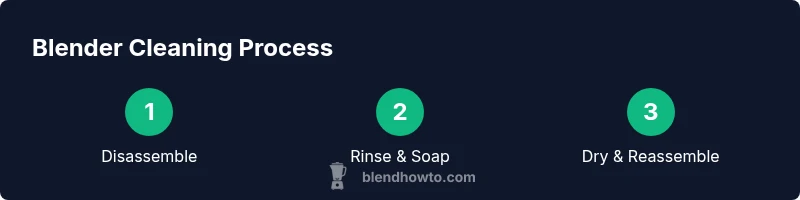
A practical cleaning routine starts with disassembly, quick rinsing, a soap wash, careful blade and cover care, a thorough rinse, and complete drying. This streamlined approach minimizes residue, odors, and downtime, so you can get back to creating smoothies, soups, or sauces without delay.
Step-by-step cleaning routine: disassembly and rinse
Disassembly is the first and most critical step. Power off the blender and unplug, then remove the jar from the base. Separate the lid, blade assembly, and any seals or gaskets. Rinse each part under lukewarm water to remove loose particles before applying soap. This pre-rinse keeps dryer residue from forming and speeds up the subsequent wash.
Step-by-step cleaning routine: washing and scrubbing
Fill the jar with warm water and a few drops of dish soap, then swirl to loosen stuck-on bits. Use a bottle brush to reach the interior and a small brush for crevices around the blade housing. If residues persist, soak the jar for 2–3 minutes before a second scrub. Avoid harsh abrasives that could scratch the jar or blades. Rinse the parts thoroughly to remove all soap.
Deep clean and odor control
Occasional deep cleaning helps prevent lingering odors. Create a gentle paste with baking soda and water, apply to the interior, and scrub with a soft sponge. For stubborn smells from certain ingredients, a brief vinegar rinse (diluted with water) can help, followed by a thorough rinse and air-drying. Never mix these sanitizing steps back-to-back with incompatible materials; always check your manual.
Special cases: immersion vs countertop blenders
Immersion blenders require careful cleaning of the shaft and blending head, which can stay wet during use. Countertop models often have more parts to disassemble but can be cleaned similarly. Follow the manufacturer’s guidance for blade removal and gasket care. In all cases, ensure you let all parts dry completely to avoid mold and odor.
Quick hacks for stubborn residue
For dried-on residue, heat-safe water and a touch of dish soap can help loosen buildup. A paste of baking soda and water applied to the jar interior can tackle tough spots. Use a soft-bristle brush to avoid scratching the jar or blades. Finally, if your model allows, place washable parts on the top rack of a dishwasher for a thorough clean.
Maintenance to prevent future build-up
To minimize cleaning time, rinse the jar immediately after use and wipe the blade housing with a damp cloth before storage. Regularly inspect seals for cracks and replace worn gaskets as needed. Keeping the base and power cord clean and free of moisture reduces risk of electrical issues. Consistent care keeps your easy wash blender ready for daily use.
Safety and care tips
Always unplug the blender before disassembly. Handle blades with care to avoid cuts, and keep the work area stable to prevent slips. Avoid soaking electronic bases; wash only stationary components. If any part feels warped or cracked, stop using it and consult the manufacturer’s guidance. Regular checks prevent leaks and ensure long-term performance.
Tools & Materials
- Dish soap(Mild, fragrance-free preferred)
- Warm water(Not boiling; safe to handle)
- Bottle brush or soft-bristle brush(Target interior of jar and blade area)
- Non-abrasive sponge or cloth(For lid and exterior surfaces)
- Toothbrush or small brush for crevices(Gasket seams, blade housing)
- Dry towel or dish rack(Drying aid or air-dry space)
Steps
Estimated time: 8-12 minutes
- 1
Remove and disassemble
Power off the blender, unplug, and carefully detach the jar from the base. Separate the lid and blade assembly, along with any seals or gaskets. This step reduces risk during washing and exposes all surfaces for cleaning.
Tip: Handle blades with care and work on a stable surface to avoid slips. - 2
Rinse parts immediately
Rinse jar, lid, and blade assembly under lukewarm running water to remove loose residue before applying soap. This pre-wash prevents dried-on material and speeds up the full wash.
Tip: Rinse while residue is still soft to avoid scrubbing harder later. - 3
Wash the jar and blade assembly
Fill the jar with warm water and a small amount of dish soap; swirl to loosen stuck bits, then use the bottle brush to scrub interior and blade housing. Soak 2–3 minutes if necessary.
Tip: If residue is stubborn, let it soak briefly before scrub. - 4
Clean the lid, gasket, and exterior
Wash the lid, gasket, and exterior surfaces with a non-abrasive sponge. Remove the gasket if dishwasher-safe and follow the manual’s guidance for cleaning seals.
Tip: Use a small brush to reach tight seams; avoid soaking sensitive gasket parts unless approved. - 5
Scrub stubborn residues
For tough spots, apply a gentle baking-soda-and-water paste and scrub with a soft brush. Rinse thoroughly after treating spots to prevent residue transfer to blends.
Tip: Avoid metal scrubbers which can scratch plastics. - 6
Rinse thoroughly and inspect
Rinse each part until no soap remains. Inspect for hidden residue and ensure there are no cracks or warping before reassembly.
Tip: Look for color staining or film as signs you may need an extra rinse. - 7
Dry completely before reassembly
Dry each part with a clean towel or allow air-drying on a rack. Reassemble only when all components are fully dry to prevent mold.
Tip: Dry interiors first; exterior can air-dry while you finish other tasks. - 8
Reassemble and test
Put the blender back together and perform a quick rinse cycle with water to confirm there are no leaks. That confirms you’re ready for the next blend.
Tip: Check seals and re-tighten if needed.
Frequently Asked Questions
Is it safe to put blender blades in the dishwasher?
Many blender blades are dishwasher-safe, but this depends on the model. Always check the user manual before loading blades into a dishwasher. If unsure, wash blades by hand to prevent dulling or loosening.
Yes, some blades are dishwasher-safe, but verify first; when in doubt, wash by hand.
Can I sanitize my blender with vinegar or bleach?
Diluted vinegar rinses or light bleach solutions can sanitize blender parts, but only if the materials are rated for them. Rinse thoroughly afterward and air-dry completely.
You can sanitize with a mild vinegar rinse or diluted bleach if your parts tolerate it, then rinse well.
How often should I deep-clean my blender?
Deep-clean every few weeks or when you notice persistent odors or residue. Regular daily cleaning minimizes buildup and keeps flavors pure.
Do a deeper clean every few weeks or when you detect odors; daily cleaning helps, too.
Why does my blender develop a smell after blending certain ingredients?
Odors come from oils, proteins, and pigments that cling to interior surfaces. Regular washing and occasional baking-soda or vinegar treatment can help neutralize smells.
Smells come from oils and proteins sticking to the inside; clean regularly and treat tougher odors with baking soda or vinegar.
Are all parts dishwasher-safe?
Not all parts are dishwasher-safe. Always confirm with the manual, especially for seals and blade assemblies, to avoid warping or deterioration.
Not every part is dishwasher-safe—check the manual for guidance on seals and blades.
Can I clean without disassembling?
Some models allow a basic rinse by running warm soapy water through the jar, but fully cleaning blades and gaskets usually requires disassembly. Follow your model’s guidance.
You can do a quick clean without disassembly, but to fully clean blades and seals you’ll likely need to take it apart.
Watch Video
What to Remember
- Wash blender parts promptly after use
- Choose models with easy-disassemble blades and wide-mouth jars
- Use mild soap and warm water; avoid harsh chemicals
- Dry parts completely before reassembly to prevent mold