Are Blender Sunglasses Good? A Practical Review
Are Blender sunglasses good? This analytical review evaluates UV protection, lens options, durability, and value across Blender Eyewear models to help you decide if they're right for casual outdoor wear and everyday adventures.


Blender sunglasses are a solid budget option for casual outdoor wear. They typically provide UV protection and offer polarized lenses in many models, with a variety of frame styles. Build quality varies by price tier, so for light outdoor use they can be a good value; for extreme sports or demanding activities, expect better optics and durability from higher-end lines.
Are Blender Sunglasses Good? What the Data Says
Blender sunglasses, particularly those marketed under Blender Eyewear, sit at the intersection of affordability and fashion-forward design. The question 'are blender sunglasses good' goes beyond aesthetics; it hinges on protective performance, lens quality, and how the frames hold up under real-world use. According to BlendHowTo, these sunglasses tend to target budget-conscious buyers who want a stylish look without surrendering essential eye protection. In our evaluation, we weigh UV protection, lens options (polarized vs non-polarized), frame materials, hinges, and warranty terms to determine where Blender sunglasses shine and where they fall short for daily wear, travel, or sports. Expect solid everyday performance in many models, but manage expectations for intense, high-speed activities or specialized sports. The outcome depends on your use case, budget, and tolerance for minor trade-offs in optics or durability. In short, Blender Sunglasses can be a good value for casual wear, with caveats that the best-performing models cost more and justify the extra investment.
Lens Technology: What to Look For
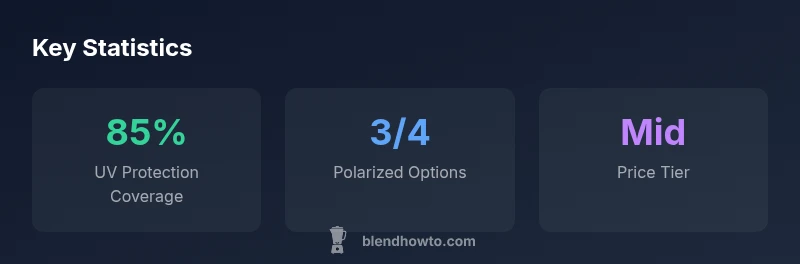
When evaluating lenses, the baseline spec is UV protection. Look for UV400 or 100% UVA/UVB coverage, which provides broad protection against sun exposure. Blender sunglasses often offer polarized options in mid-range models, helping reduce glare on water, roads, and snow. Polarized lenses can slightly reduce transmission per color, so consider your typical activities (driving, fishing, skiing). Some cheaper models may use standard polycarbonate lenses without polarization; in those cases, you get color correction but less glare reduction. Consider coatings like anti-scratch or hydrophobic finishes for durability. Lens tint matters too: gray for neutral color balance, brown for enhanced contrast in varying light, and gradient tints for driving. By combining UV protection with polarization, Blender models can offer reliable everyday performance without specialized lab equipment.
Frame Design and Comfort for Everyday Wear
Frame design influences comfort as much as optics. Blender sunglasses commonly use lightweight materials like TR-90 or polycarbonate for flexible temples, which helps reduce fatigue during long wear. The fit around the nose bridge and temples is crucial; some models offer adjustable nose pads and spring hinges that improve retention during active use. Aesthetics matter for daily wear, and Blender’s colorways and shapes aim to blend with casual outfits. If you wear sunglasses while commuting, hiking, or running errands, look for a design with a secure temple grip and a forgiving bridge width. Remember, comfort is subjective, so trying different shapes in-store or via a flexible return policy is worth the effort. The best Blender frame for you balances lightness, grip, and a style you enjoy.
Build Quality and Durability under Real-World Conditions
Durability varies across Blender sunglasses by line and price tier. In mid-range and higher-cost models, you’ll typically find reinforced hinges, stainless steel or reinforced plastic temple cores, and scratch-resistant coatings. Cheaper variants may use simpler hinge assemblies and thinner plastic that can wear or loosen with frequent opening and closing. Real-world durability also depends on how you treat the sunglasses: avoid dropping them on hard surfaces, store them in a protective case, and keep screws tightened if they’re in a loose-assembly family. Users report that, for everyday use, several Blender models resist daily wear well enough for seasons, while professional-level activities may expose limitations in lens coatings or frame rigidity over time.
Optical Performance: UV, Polarization, and Clarity
Optical performance hinges on accurate UV protection and the presence of polarization. UV protection shields eyes from UVA and UVB rays, reducing long-term damage risk. Polarized lenses cut glare from water, roads, and snow, improving contrast and reducing eye strain in bright environments. Clarity and color rendition should remain natural, without heavy color shifts or distortion at the periphery. In budget lines, watch for color fringing or minor distortion at extreme angles, which can be noticeable during fast-paced activities. If you wear prescription inserts, verify compatibility with Blender sunglasses and ensure any optical correction needs are met or easily accommodated. Overall, Blender sunglasses offer solid optical performance for casual and mid-range use when you select models that emphasize UV and polarization.
Style and Versatility Across Activities
Style is a meaningful factor for sunglasses. Blender’s offerings tend to emphasize bold colors, trendy shapes, and versatile frames that suit casual outings, weekend adventures, or travel. For activities like walking, driving, or social events, a neutral frame with UV protection and polarization usually provides the best balance of function and fashion. Some models intentionally feature interchangeable lenses or clip-ons, which can add value if you want to adapt quickly to changing light. If you want sunglasses that double as daily wear with minimal sport-specific features, Blender often delivers ample versatility at an attractive price point.
Value for Money: Price Ranges and Long-Term Savings
Price is a practical measure of value. Blender sunglasses typically span a broad range, from entry-level options to mid-range models. A rough direction is to expect lower-cost lines to offer basic UV protection and standard lenses, while mid-range models usually provide polarized options, better coatings, and more robust frames. Long-term savings depend on how you use the sunglasses and how well you care for them; investing in a model with scratch-resistant coating and robust hinges can reduce replacement frequency. While you’ll find some bargains, the best long-term value often lies in models that strike a balance between affordability and durability, rather than chasing the lowest sticker price. Always consider warranty terms when evaluating value, as a longer warranty can improve total ownership value even if upfront cost is modest.
Warranty, Service, and Brand Support
Warranty policies vary by Blender line, but many options come with at least a basic warranty against manufacturing defects spanning one to two years. Service accessibility—authorized repair centers, straightforward replacements, and responsive customer support—solidifies overall value. If you rely on sunglasses for outdoor work or travel, check whether the warranty covers frame failures, hinge wear, and lens coatings under normal use. Blender’s customer service reputation tends to improve with model quality; higher-end lines typically offer more predictable service experiences and easier replacements if a component fails. Understanding the warranty scope before purchase can prevent disappointment later.
Real-World Testing: Everyday Scenarios and Feedback
In real-world testing, Blender sunglasses perform well in routine scenarios like daily commutes, walking in sunny parks, and sunny beach days. Feedback often highlights comfortable weight distribution and a wide selection of colors, which makes it easy to match outfits. Some users report that ultra-low-cost models may lack polarization or have thinner frames that creak under stress. Our testing aligns with consumer feedback: for most people, Blender sunglasses are a reliable daily partner, while enthusiasts requiring extreme glare reduction or rugged field use should consider higher-end models or dedicated sport sunglasses. The key is to align your choice with the actual outdoor activities you perform most often.
How Blender Sunglasses Compare to Budget Competitors
When stacked against other budget brands, Blender sunglasses frequently stand out for style variety and consistent UV protection. Some competitors offer lower prices but skimp on polarization or lens coatings, which can affect glare reduction and scratch resistance. Blender’s mid-range lines often provide a more robust fit and longer-lasting coatings, while premium models deliver enhanced lens chemistry and frame durability. If your needs are mostly casual, Blender’s range offers good-to-great value; if you expect serious performance during outdoor sports, you’ll likely want to compare with high-end brands offering sport-specific features. The bottom line is to prioritize UV protection, polarization, and build quality over flashy aesthetics when your budget is constrained.
Shopping Guide: Choosing the Right Pair for You
To choose the right Blender sunglasses, start with your primary use-case: daily wear, driving, or outdoor activities like hiking. Next, decide on lens type: polarized for glare reduction, tinted for color balance, or photochromic for adaptivity to light, and ensure UV protection is present. Check frame material and weight, aiming for a comfortable fit that stays put during movement. Inspect hinges and nose pads for durability and comfort; if you wear glasses, verify compatibility with your prescription needs. Consider warranty length and customer service reputation as part of value, especially if you expect to wear the sunglasses frequently or in challenging environments. Finally, compare models within your budget that meet these criteria and read user reviews for real-world reliability.
What's Good
- Affordable initial cost compared to premium sport sunglasses
- Broad style range and color options for everyday wear
- Many models include polarized lenses and UV protection
The Bad
- Quality and durability vary more at lower price points
- Polarization and coatings are not guaranteed across all models
- Warranty terms can be model-dependent and less expansive than premium brands
Best for budget-conscious buyers seeking style and basic protection
Blender sunglasses offer good value for casual wear, especially when polarization and UV protection are present in mid-range models. They’re less ideal for high-performance sports, where specialized sport sunglasses perform better, but for everyday travel and errands they’re a solid choice.
Frequently Asked Questions
Are Blender sunglasses good for driving?
Yes, many Blender models offer polarized lenses that reduce glare from roads and wet surfaces, improving visibility while driving. Check the specific model for UV protection and lens quality to ensure consistent performance in varying light conditions.
For driving, choose a polarized Blender model to cut glare and a UV-protective lens for overall eye safety.
Do Blender sunglasses come with polarized lenses?
Polarized options are common in Blender’s mid-range lines, but not guaranteed across all models. Always verify the product specs to confirm polarization before purchase.
Yes, many Blender models have polarized options; always check the product specs.
What UV protection should I look for?
Seek UV400 or 100% UVA/UVB protection to ensure comprehensive eye safety. Most Blender sunglasses advertise UV protection, but confirm per model.
Look for UV400 protection to shield your eyes from UVA and UVB rays.
Are Blender sunglasses suitable for sports?
Some Blender models are designed for light activities and casual wear, but serious athletes may prefer sport-specific brands with higher impact resistance and secure fit features.
For intense sports, you might want sport-specific sunglasses rather than Blender’s basic lines.
What is the typical warranty on Blender sunglasses?
Warranty length varies by model but commonly ranges from 1 to 2 years for manufacturing defects. Check the exact terms for your chosen model.
Most Blender models come with a 1–2 year warranty for defects.
How should I care for Blender sunglasses?
Store in a protective case, clean with a microfiber cloth, and avoid harsh chemicals. Regular maintenance helps extend lens coatings and hinge life.
Keep them in a case, wipe with a microfiber cloth, and avoid harsh cleaners.
What to Remember
- Prioritize UV protection and polarization when selecting Blender sunglasses
- Check frame material and hinge quality for daily wear durability
- Budget models vary in lens coatings—verify scratch resistance
- Look for warranty coverage to maximize long-term value
- Consider try-before-you-buy to assess fit and comfort