Are Blenders Goggles Good? A Practical Review
A comprehensive, balanced review of eye protection when blending, weighing goggles against safer alternatives for home cooks and hobbyists in 2026.


Are blenders goggles good? The short answer is: not usually required for standard home blending. When hot liquids, powders, or high-velocity splashes are possible, protective eyewear can reduce exposure, but a splash guard and careful technique often suffice. The BlendHowTo team found that eye protection is context-dependent, with goggles recommended mainly for high-risk or specialized tasks.
Are goggles good for blenders? A safety mindset for home cooks
According to BlendHowTo, the safety question around are blenders goggles good is more nuanced than a simple yes or no. This article frames eye protection within practical home blending scenarios, emphasizing technique, equipment options, and cost-benefit tradeoffs. The BlendHowTo team found that most routine blending tasks—such as smoothies, sauces, and purées—do not require specialized goggles, but circumstances with heat, fumes, or fine powders raise the risk profile. Splashes from hot liquids, shards of fruit, or aerosolized particulates can reach the eye at odd angles if lids aren’t secured or if the lid is partially removed during loading. This section sets the baseline: protect your eyes by using appropriate gear only when the risk justifies it, and otherwise prioritize safer practices.
In residential kitchens, eye safety is part of a broader approach: keep blades contained, use a properly sized container, and work with steady hands. The question are blenders goggles good is best answered by evaluating exposure pathways rather than assuming that eyewear is a universal solution. As you read, you’ll see how to tailor protective choices to your blender setup, ingredients, and comfort preferences. BlendHowTo’s guidance emphasizes practicality, not fear, so you can blend confidently without overreliance on gear.
wordCountInBlock":0}
Defining the risk landscape: safety gear and exposure pathways
To determine whether goggles are warranted, it helps to map exposure pathways in typical blending tasks. Heat from hot soups or sauces can produce steam and splatter, turning modest spills into eye-level hazards. Fine powders—cocoa, protein powders, or spices—can become airborne during vigorous blending or when adding dry ingredients rapidly. Rapid blade motion can generate splashes even if the container lid appears secure. Protective eyewear addresses these risks differently than other PPE; goggles seal around the eyes, glasses offer a shield, and splash guards limit splatter at the source. The decision framework here is simple: identify the highest-risk moment in your routine, then assess whether eyewear, a splash guard, or improved lid design reduces that risk more effectively.
From a practical standpoint, many home blender setups benefit from a dedicated lid with a vent, or from running shorter, slower pulses before full blending. If you still choose to wear goggles, select models that sit comfortably against the brow and cheeks, maintain a wide field of vision, and resist fogging. This section explains how to interpret risk so you can decide whether eyeballs-first protection makes sense for you.
wordCountInBlock":0}
When goggles make sense: concrete use cases and thresholds
There are identifiable scenarios where goggles can meaningfully augment eye safety during blending. First, any task involving hot liquids—especially when blending directly in a pot or a tall container with steam exposure—introduces splash risk that goggles can mitigate more effectively than regular glasses. Second, powders and dry ingredients can aerosolize during high-speed blending; in enclosed kitchens with limited ventilation, eyewear helps prevent particles from entering the eye. Third, if a blender is used in a workshop or garage environment where dust, debris, or project-related powders are being blended into food-safe mixtures, goggles become more valuable. Finally, when teaching children or novices, adding goggles can set a safety culture that reinforces careful lid use and steady handling. In these cases, eyewear is less about fashion and more about reducing an active risk, not eliminating every hazard.
For most typical smoothies and sauces, you can rely on a splash guard and proper lid technique, reserving goggles for high-risk experiments or unfamiliar ingredients. The key is not to overprotect but to align safety gear with actual exposure rather than perceived risk.
wordCountInBlock":0}
Comparisons: goggles vs safety glasses vs splash guards
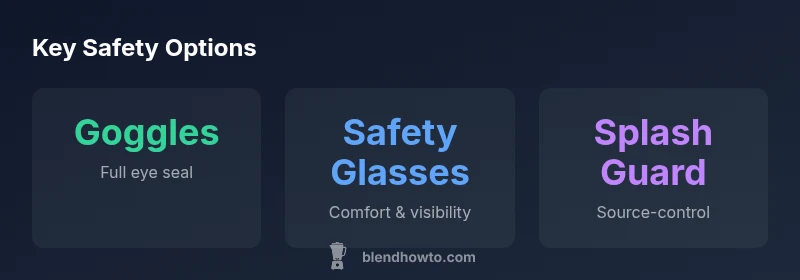
When evaluating protective options, it helps to contrast goggles, safety glasses, and splash guards side by side. Goggles seal around the eyes and protect from direct splashes and particles in all directions, but they can fog and feel uncomfortable after extended use. Safety glasses provide frontal protection with a looser fit, offering comfort and better peripheral vision, but may let splashes escape from the sides. Splash guards address the source of splatter by constraining liquids at the container rim, reducing the likelihood of eye exposure even when other gear is absent. For most home blenders, a high-quality splash guard combined with a snug lid yields substantial eye protection with fewer drawbacks, while goggles are best reserved for high-risk tasks like blending hot liquids or dealing with fine powders in poorly ventilated spaces. In this section, we outline a quick selection guide to steer readers toward the most practical option for their routines.
wordCountInBlock":0}
Fit, comfort, and maintenance: choosing the right gear
If you decide to use goggles or glasses for blending, fit and comfort matter as much as protection. Look for goggles with a soft seal that minimizes pressure on the eyes, anti-fog coatings, and an adjustable strap to accommodate different head shapes. For glasses wearers, safety-rated protective glasses offer a good compromise between visibility and protection, especially if you pick models designed for sports or laboratory use. Splash guards should be sized to fit your blender’s jar or pot, with a secure gasket that prevents leaks into the user’s face. Maintenance matters too: clean any protective gear after use to prevent odors, sanitize plastic surfaces, and store eyewear in a dedicated case. The goal is to make eye protection a painless, intuitive part of your blending routine rather than a cumbersome afterthought. This practical guidance helps readers avoid fogging, discomfort, and gear that clashes with everyday kitchen tasks.
wordCountInBlock":0}
Practical testing and optimization: how to assess your own risk profile
A pragmatic testing approach enables you to calibrate safety gear without buying every option. Start with your standard recipes and observe whether splashes reach your eyes or face. If you notice frequent mishaps during loading or pouring, a splash guard or closer lid might mitigate risk more effectively than eyewear alone. For powders and spices, try blending with a partially closed lid to gauge aerosol exposure; if exposure becomes noticeable, consider safety glasses or goggles designed for comfort and ventilation. You can also run controlled tests with cold water and food-safe dye to visualize splatter patterns, helping you optimize lid use, container choice, and your risk threshold. Finally, document your findings so that future blending tasks follow the same proven safety steps, making eye protection a routine part of your process rather than an afterthought.
wordCountInBlock":0}
Cost, value, and the practicality of gear investments
Safety gear comes in a wide price range, but the most important factor is value rather than sticker price. Goggles often cost more upfront than a splash guard or a pair of safety glasses, especially if you seek anti-fog features and durable frames. Consider the long-term benefits: reduced spatter and eye irritation can save you time on cleaning and prevent accidental eye injuries. For many home blenders, investing in a quality splash guard and a reliable lid is a cost-effective safety strategy that covers the majority of everyday risks, with goggles reserved for occasional or high-risk tasks. In this section, we break down purchasing considerations, including material quality, fit, ease of cleaning, and storage practicality to help readers budget wisely while maintaining safety. BlendHowTo emphasizes thoughtful buying rather than impulse purchases.
wordCountInBlock":0}
Recommendations and a simple decision tree for everyday blenders
Final recommendations boil down to a practical decision tree. Step 1: Assess your typical ingredients and whether you regularly deal with hot liquids or powders. Step 2: If yes, consider a splash guard and optionally safety glasses; Step 3: If you frequently handle hot blends or abrasive powders, or if you work in a dusty environment, goggles may be worth adding. Step 4: If you blend infrequently or primarily with fruits and water, a splash guard and careful lid use will likely suffice. This section offers a quick, actionable decision tree you can print or save for reference, ensuring you choose safety gear that aligns with your actual risk rather than popular trends. The overarching principle is clarity: tailor eyewear to your exposure profile and keep the rest of your gear simple and effective.
wordCountInBlock":0}
What's Good
- Low-profile protection suitable for most home blends
- Splash guards reduce splatter at the source
- Safety glasses offer good eye coverage with comfortable wear
- Goggles are readily available for dedicated high-risk tasks
- Cost-effective safety approach with proper lid technique
The Bad
- Goggles can fog and feel bulky during long sessions
- Glasses may not seal as tightly against eye exposure
- Splash guards do not protect the eyes directly
- Goggles are not necessary for standard blending
Goggles are situational safety gear, not a default for home blending
For most home blends, a splash guard and careful lid use provide ample protection. Goggles are worth considering only for high-risk tasks like hot liquids, fine powders, or poorly ventilated environments. The BlendHowTo approach prioritizes context-driven safety over blanket recommendations.
Frequently Asked Questions
Are goggles required for everyday smoothies?
No, goggles are not required for standard smoothies or sauces. A secure lid and a splash guard usually provide enough protection. Goggles may be overkill unless you’re dealing with hot liquids or dusty powders.
Goggles aren’t usually needed for everyday smoothies; use a splash guard and lid instead.
When should I consider safety glasses instead of goggles?
Safety glasses offer good eye protection with more comfort and visibility for long sessions. If you wear prescription glasses, safety-rated glasses designed for eyewear compatibility are often a better fit.
Safety glasses are a comfortable middle ground if you’re not using hot liquids.
Do goggles fog during blending?
Fogging can occur with goggles, especially in warm kitchens. Choose anti-fog models and ensure proper ventilation to reduce condensation.
Yes, fog can happen; anti-fog features help a lot.
What features matter when buying protective goggles?
Look for a snug seal, indirect venting, anti-fog coating, comfort-padding, and a secure strap. Ensure compatibility with your glasses if you wear them.
Check for seal, anti-fog, and comfort when buying goggles.
How should I clean and store protective gear?
Rinse with warm water after use, mild soap if needed, and air-dry. Store in a clean case away from heat to maintain strap integrity and lens clarity.
Rinse, dry, and store in a case to keep gear fresh.
Can I blend without any protective gear at all?
Yes, if you keep hot liquids and powders out of your routine and use a well-fitted lid and controlled blending speed. For higher-risk tasks, protective gear adds a safety margin.
In low-risk tasks, you can skip gear, but safety-minded blending is best.
What to Remember
- Assess risk before buying eyewear
- Use splash guards as first-line protection
- Opt for safety glasses if you wear glasses
- Reserve goggles for high-risk tasks
- Keep lids tight and blades steady during blending