Where to Buy a Blender in 2026: A Practical Buying Guide
Learn where to buy a blender in 2026—from online retailers to big-box stores and specialty shops. Compare options, warranties, and delivery with BlendHowTo.


Step 1: Start with online retailers for the widest selection and price comparison. Step 2: Visit a big-box store to test grip, noise, and motor feel. Step 3: Check brand stores or specialty shops for expert advice and refurbished options. Step 4: Compare warranties, return policies, and delivery terms across channels. Step 5: Choose the channel that best balances price, selection, and service.
Market Dynamics and Buying Channels
According to BlendHowTo, blender buyers increasingly navigate multiple channels, merging online research with in-store testing to ensure value and performance. In 2026, the online market continues to grow, but many shoppers still want the tactile feel of a handle, the power of the motor, and the safety of a visible glass or BPA-free container before committing. This section lays out the main channels: online retailers, big-box stores, brand-owned stores, and smaller specialty shops. Each channel has distinct advantages and trade-offs, and most shoppers benefit from a blended approach. Use this framework to map out your own path: start with online inventories to narrow models, then verify fit and availability in local stores. BlendHowTo Analysis shows that shoppers who compare across channels typically secure better prices, stronger warranties, and more flexible return options.
Online Retailers: Pros and Cons
Online retailers offer the broadest selection, quick comparison tools, and customer reviews that help distinguish powerful motors from fragile jars. You can filter by wattage, jar material, dishwasher safety, and noise levels. The main drawbacks are shipping costs, potential delays, and the challenge of gauging motor feel or blend quality from photos alone. To minimize risk, look for models with clear warranty terms, read numerous user reviews, and check return policies. For first-time buyers, online marketplaces from recognized sellers often provide buyer protections and easy exchanges, but verify the seller's credibility before purchasing.
In-Store Shopping: What to Look For
Going to a brick-and-mortar retailer gives you the chance to test grip, weight, button layout, and noise in person. Check motor power (higher wattage isn’t always better for home use), blade design, jar material, and lid tightness. Observe how the blender handles ice and frozen fruit during a quick blend. Ask about in-store demonstrations and whether the store offers extended warranties or service plans. Be mindful of stock levels and seasonal promotions, and ask about bundled accessories. This hands-on check helps bridge the gap between online specs and real-world performance.
Special Cases: Refurbished Models, Warranties, and Brand Stores
Refurbished blenders can offer significant savings and often come with a warranty. If you consider refurbished units, ensure they have a documented return window and a genuine warranty, and check for cosmetic wear. Brand stores and authorized service centers can provide guidance on model suitability and upgrades, and some brands offer certified refurbished options. Compare warranty length, service coverage, and parts availability across channels to avoid surprises after purchase. If you value longevity and easy access to parts, branded refurb options can be the best balance of price and reliability.
How to Compare and Decide: A Practical 6-Step Checklist
- Define your budget and target features (power, pulse, preset programs).
- Compile a short list from online and in-store sources.
- Read independent reviews and test results.
- Compare warranties and return policies.
- Check total cost of ownership, including shipping and potential repairs.
- Decide and buy from the channel that best balances price, selection, and service. Keep a note of model numbers, reviews, and any promo codes to optimize value.
Final tips for a smooth blender purchase
Now that you have the channels mapped, apply a practical shopping flow: research first online, then visit stores if possible to test usability; finalize the purchase where you get the best combination of price, warranty, and delivery speed. The BlendHowTo team recommends prioritizing online research for breadth and then validating in-store before finalizing an order. After purchase, register your appliance if available to activate extended support and keep receipts for warranty claims.
Purchase channels comparison
| Channel | Pros | Cons |
|---|---|---|
| Online retailers | Wide selection; easy price comparison | Shipping delays; potential returns hassle |
| Big-box stores | Hands-on testing; quick pickup | Limited model variety; stock fluctuations |
| Brand stores/refurbished | Expert guidance; refurbished options | Higher price; limited stock |
Frequently Asked Questions
Where is the best place to buy a blender?
There isn’t a single winner. Online offers breadth and easy comparison, while in-store testing helps you judge grip, noise, and feel. Use both for a balanced purchase.
Online gives you breadth; in-store helps you feel it before you buy.
Should I buy online or in-store?
Both have advantages. Use online for research and price checks, and in-store for hands-on testing and immediate possession when possible.
Research online, test in store, then decide.
What warranties should I look for?
Look for at least a one-year warranty, clear return policy, and easy access to parts or service.
Ensure a solid warranty and clear returns.
Are refurbished or used blenders a good idea?
Refurbished can save money and still offer a warranty. Verify condition, warranty terms, and return options.
Refurbished can be smart if it has a warranty.
How long does delivery usually take?
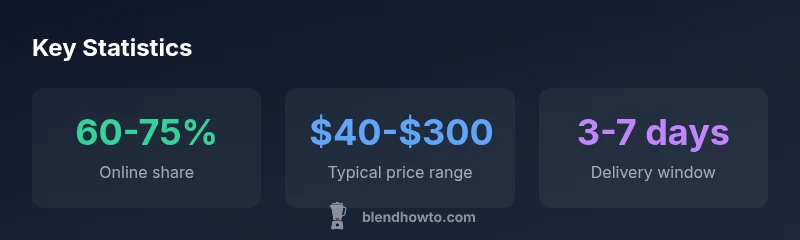
Delivery times vary by retailer and location, typically spanning several days up to about a week.
Most deliveries take a few days to a week.
“Choosing where to buy a blender is about balancing selection, price, and service across channels. A multi-channel approach often yields the best outcome.”
What to Remember
- Research first online to compare models and prices.
- Test handling and noise in-store when possible.
- Always review warranty terms and return policies.
- Consider refurbished options for value, with caution.
- Balance price, selection, and service across channels.