Difference Blender vs Food Processor: An Analytical Guide
Explore the difference blender and food processor with an analytical comparison. Learn when to use each, key features, and practical buying guidance for your kitchen tasks.


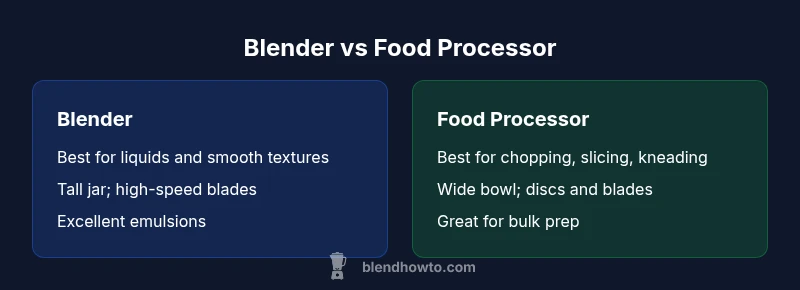
The difference blender and food processor centers on task specialization. A blender excels at liquids and emulsions, delivering silky smoothies and purees with a tall jar and rotating blades. A food processor handles solids, chopping, kneading, and slicing with a wide, flat bowl and a disc/blade system. For most kitchens, know your primary tasks first: drinkable textures versus bulk preparation. This quick comparison sets expectations for performance and value.
What is the difference blender and food processor? The phrase is more than semantics—it signals distinct design and performance envelopes. In practice, a blender blends liquids and soft foods into smooth textures; it uses a tall, narrow jar and sharp blades that sweep ingredients into a vortex for even emulsions. A food processor, by contrast, is built for chunkier work: chopping, shredding, slicing, and even dough handling, thanks to a wide work bowl and interchangeable discs. According to BlendHowTo, understanding this distinction helps you select the right tool for the job and avoid kitchen clutter. This section dives into how each appliance operates, what its primary strengths are, and where their limits lie. Expect practical comparisons, real-world examples, and clear guidelines to match your cooking style with the right device.
Core differences in design and function
The most visible difference between a blender and a food processor is their intended use. Blenders emphasize velocity and liquid handling, with a narrow jar that concentrates force on liquids. Food processors use a broader, flatter bowl and more versatile cutting implements, enabling bulk chopping and dough work. Blade geometry matters: blended blades are typically curved to pull ingredients into a vortex, while food processors rely on fixed blades or disks for even, uniform cuts. Control schemes also differ: blenders often have variable speeds and pulse for texture control, whereas processors provide time-tested functions like chop, slice, grate, and knead. Power ranges vary widely, but the practical impact is that blenders tend to excel at smoothness and emulsions, while processors shine when you need chunks, shards, or formed textures. Intake and capacity also differ: tall jars favor liquids, while wide bowls handle dense mixtures more comfortably. For home cooks, the key is aligning your most frequent tasks with the design strengths of each appliance, and recognizing that some tasks overlap but not perfectly.
When to use a blender vs a food processor
Choosing between these two tools hinges on your kitchen routines. Use a blender when you want silky smoothies, creamy soups, emulsified dressings, nut butters, or purees with minimal texture. The high-speed blades in a blender are optimized for breaking down liquids and soft solids into uniform, velvety textures. A food processor is the go-to for chopping vegetables, crushing nuts, kneading dough, grating cheese, and making pesto or hummus with more body and bite. If a recipe calls for dough, shredded vegetables, or a coarse to medium chop, a processor will save time and effort. For charred, roasted, or thick soups that require chunkier texture, a processor can handle bulk prep more efficiently. In short, think of blenders as texture specialists for liquids, and processors as shape/design specialists for solids. If your daily tasks include both, you may eventually want both, or a high-powered blender with processing blades, depending on budget and counter space.
Key features to compare (blade design, container, motor, controls)
Texture outcomes and user experience depend on several core features. Blade design in blenders is optimized for a smooth, consistent texture, often with 2–4 blades arranged for a strong vortex that pulls ingredients into suspension. Food processors use different blades and discs for chopping, slicing, shredding, and kneading, enabling precise control over texture and thickness. Container geometry matters: tall, narrow jars drive thorough purees; wide, shallow bowls accommodate bulk chopping and dough handling. Motor power influences speed and heat, but the real determinant is the ratio of blade surface area to the container volume and the software of speed settings. Controls vary from simple pulse options to precise dial speeds or preset programs. In a practical sense, evaluate how often you need to puree to a silky finish versus how often you need coarse choppings or dough work, then map those needs to the features that a given model offers. This alignment minimizes retries and maximizes kitchen efficiency.
Practical kitchen scenarios: recipes and results
Consider your typical week: morning smoothies, weekend sauces, and occasional doughs. For smoothies, a blender delivers a uniform, creamy texture with minimal chunks. For pesto or salsa, a processor preserves some body and texture while speeding up prep. If you bake, a processor can handle dough or crumbly mixes more efficiently than a blender; you’ll often see kneaded dough or thick batters that benefit from a wide bowl and specific blade designs. For nut butters and spreads, both tools can work, but a high-powered blender may make a smoother finish with less risk of over-processing. Seasonal tasks matter too: soups and stews benefit from blending after partial chopping, while raw veg plates benefit from quick shredding or slicing with a processor. Real-world testing shows that the right tool reduces prep time and improves consistency across meals, which is essential for home cooks seeking reliability.
How to choose based on cooking style and space
Your cooking style should drive your decision. If you prioritize speed and texture in beverages and soups, a high-powered blender is worth the investment. If you frequently prepare chopped vegetables, sauces, and baked goods that require uniform slices, shreds, or kneading, a processor becomes indispensable. Space and budget also dictate practicality: a single versatile unit can suffice for small kitchens, while a two-device setup offers maximum flexibility. When evaluating models, look for robust warranty support, dishwasher-safe containers, and compatibility with attachments. Finally, consider whether you prefer a modest setup for essential tasks or a higher-end configuration with programmable settings that cover both blending and processing tasks. The aim is to minimize clutter while maximizing your daily cooking outcomes.
Common misconceptions about blending vs processing
A common myth is that one appliance can do everything with equal efficiency. In reality, each tool is optimized for distinct functions; trying to force a blender to chop hard vegetables or a processor to emulsify a thick smoothie often yields unsatisfactory results. Another misconception is that more power guarantees better texture; blade design, jar geometry, and control interfaces matter as much as horsepower. Some cooks assume a processor will puree soups perfectly; while it can handle bulk chopping well, achieving a silky pureé may require extra blending. Finally, many buyers believe a higher price always equals better performance; while cost correlates with durability and features, the true value lies in how well the device matches your frequent tasks and the reliability of its components.
Maintenance and cleaning tips
Maintenance is a pillar of long-term performance. Rinse blades promptly after use and avoid soaking metal parts in standing water for extended periods. For blenders, remove the gasketed seal if applicable and wash the jar with warm, soapy water, ensuring the blades do not contact skin. Food processors require careful disassembly: remove blades and discs, rinse, dry completely to prevent rust, and store with the lid ajar if moisture is present. Always check that the blades are completely dry before reassembly. Some models feature dishwasher-safe components; confirm your user manual to avoid warping or dulling blades. Regularly inspect seals and gaskets for wear and replace as needed to maintain performance and safety.
Budgeting and value: how to invest in one or both
Budget planning should reflect your primary tasks. A basic blender can perform smoothies and purees at a modest price, while a basic processor may cost a bit more due to its versatility in chopping and kneading. If you entertain often or bake frequently, a higher-end blender with pulse controls and durable glass jars can handle thick blends, while a compatible food processor with multiple discs can replace several kitchen tools. Some buyers prefer a compact two-in-one unit, though performance may be lower in tasks requiring precise texture. Budget for a model with a solid warranty, easy cleaning, and spare blades if you anticipate heavy use. In many cases, home cooks find value in owning both devices or selecting a premium hybrid model that combines high blending speed with processing capabilities.
References and further reading
For additional guidance on safe kitchen appliance use and recommended practices, see credible sources:
- https://www.fda.gov
- https://www.usda.gov
- https://nchfp.uga.edu
These resources provide general food safety and preparation guidance that informs practical appliance use in home kitchens.
Comparison
| Feature | Blender | Food Processor |
|---|---|---|
| Primary function | Liquids, smoothies, purees; emulsions | Chopping, slicing, shredding, kneading |
| Blade design | Tall jar, blades arranged to pull contents into vortex | Discs and blades for precise cuts; wide range of attachments |
| Container shape | Narrow, tall jar optimized for liquids | Wide, shallow bowl optimized for solids |
| Motor power range | Moderate to high RPM; variable speeds | Higher torque with diverse attachments |
| Best for | Smoothies, sauces, soups, nut milks | Chopping, dough, shredding, large batches |
| Texture results | Silky, uniform liquids; finer emulsions | Coarser to uniform chunks; more control over texture |
| Cleaning difficulty | Often simpler: jar and blades | Can be more complex due to discs/attachments |
| Price range | Low to mid range for basic models | Mid to high range for versatile models |
What's Good
- Specialized performance for specific tasks
- Faster preparation of liquids and emulsions
- Clearer appliance workflow and cleanup routines
- Compact options available for small kitchens
The Bad
- Limited versatility in a single device
- Doughs and thick mixtures can be challenging in a blender
- More attachments can increase clutter and cost
- Some models require careful cleaning of blades
Choose based on your primary tasks; blender for liquids, processor for solids
Blenders excel at silky blends and emulsions, while food processors dominate chopping, slicing, and dough work. If your cooking style includes both sets of tasks, consider either a high-powered blender with processing blades or a two-device setup for best results.
Frequently Asked Questions
What is the main difference between a blender and a food processor?
The main difference is purpose: blenders handle liquids and smooth textures, while food processors excel at chopping, slicing, and kneading. Blade geometry and container design drive these outcomes, making each tool more efficient for its intended tasks. Understanding this helps you build a practical, space-efficient setup.
Blenders are for smooth textures, processors are for chopping and kneading. Pick based on what you cook most.
Can I use a blender to do dough or heavy chopping?
Some high-powered blenders can handle soft doughs or rough chopping, but they are not ideal for heavy doughs or precise slicing. For best results with dough and bulk chopping, a food processor or processor-compatible attachments are recommended. Use a blender for emulsions and purees instead.
A blender can handle light doughs and soft blends, but for heavy doughs, a processor works better.
Is it better to buy one multi-use device or two specialized machines?
If you frequently make both smoothies and chopped vegetables, a multi-use device with attachments can be convenient, but it may compromise efficiency for heavier tasks. A dedicated blender plus a separate processor generally offers the best performance and flexibility, especially for serious home cooks or hobbyists.
One device can do a lot, but two devices often give you better results and speed.
What features matter most when comparing models?
Look for blade design quality, container shape, motor torque, speed presets, and ease of cleaning. Also check dishwasher-safe components and warranty coverage. These factors determine texture, reliability, and long-term value.
Prioritize blade quality, container design, and how easy the parts are to clean.
Do higher price always mean better performance?
Not always. Higher prices often reflect build quality, durability, and extra features, but the best choice depends on whether those features match your actual use. Evaluate performance on your most frequent tasks and consider warranty and parts availability.
More cost can mean better durability, but focus on features you’ll actually use.
What to Remember
- Identify your top tasks before buying
- Blenders for liquids; processors for solids
- Consider space, budget, and future needs
- Look for durable blades and dishwasher-safe parts
- Balance one- or two-device setups based on usage