Do You Need a Blender and Food Processor? A Practical Guide
Do you need a blender and a food processor? This analytical blender buying guide compares tasks, costs, and use cases to help you decide which appliance fits your kitchen.


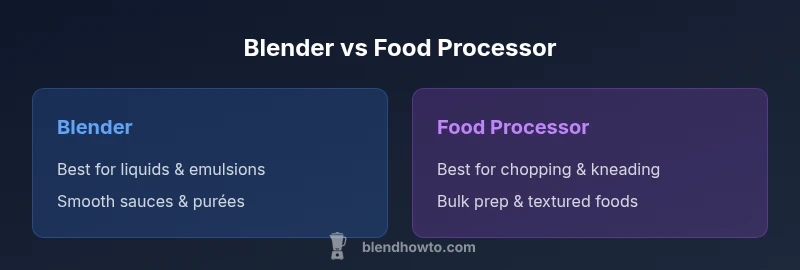
Do you need a blender and a food processor? In practice, the answer hinges on your cooking style. The phrase 'do you need a blender and a food processor' is common because liquids, sauces, and smoothies benefit from a blender, while chopping, shredding, and dough work are better suited for a processor. If your meals require both approaches, you may want both devices or a versatile multi-function model.
Do you need a blender and a food processor: framing the question
The question do you need a blender and a food processor is one of the most common crossroads in kitchen gear. Home cooks often wonder if one appliance can cover all their tasks, or if two specialized machines will actually save time and improve results. The core distinction comes down to how each device manipulates ingredients. A blender excels at liquids, emulsions, and purees, creating silky textures that are hard to achieve with a processor. A food processor shines when you need consistent chopping, slicing, shredding, grating, or kneading dough, where speed and control matter more than liquidity. To decide, map your weekly recipes to these capabilities and look for overlap where it makes sense to combine tasks.
Do you need a blender and a food processor: framing the question
Comparison
| Feature | Blender | Food Processor |
|---|---|---|
| Best for | Smoothies, sauces, emulsions, purees | Chopping, shredding, kneading dough, bulk prep |
| Texture outcomes | Silky liquids and uniform purees | Evenly chopped pieces and variable texture control |
| Motor power | High-speed blades optimized for liquids | High torque with wide speed range and attachments |
| Capacity | Typically tall jar, around 1–2 L | Wide bowls around 2–3 L with feed chute |
| Ease of cleaning | Fewer parts; quick rinse, some dishwasher-safe | More parts and blades; some components dishwasher-friendly |
| Common tasks | Smoothies, nut milks, purées | Chopping vegetables, shredding cheese, dough work |
| Price range | $40-150 | $100-450 |
| Best for | Liquids and emulsions focused cooking | Bulk prep and precise texture control |
What's Good
- Covers a broad set of tasks with fewer gadgets
- Can save time on liquids, sauces, and emulsions
- A well-chosen model reduces prep steps and cleanup
The Bad
- One device may not meet high-end performance for every task
- Cleaning can be time-consuming if multiple parts are involved
- Higher upfront cost when buying two machines or a premium multi-function unit
Blender dominates liquids; processor dominates solid prep
If your cooking leans toward smoothies and sauces, prioritize a quality blender. If you frequently dice, shred, or knead, a processor is essential. For broad versatility, consider owning both or a robust multi-function unit if budget allows.
Frequently Asked Questions
Do you need a blender and a food processor, or can one device replace the other?
For many kitchens, one device can cover a large portion of tasks, but there are trade-offs. A blender handles liquids and emulsions well, while a processor excels at chopping, shredding, and dough work. If you frequently cook in both styles, owning both or investing in a high-capacity, multi-function model is worth considering.
Often you can do most tasks with one device, but for best results you’ll want both or a strong all-in-one.
Is a blender sufficient for making sauces and nut butters?
A blender can produce smooth sauces and some nut butters, especially if it has strong power and a tamper. However, thick or chunky nut butters may require a processor or a very high-powered blender with patience and proper technique.
A blender can handle sauces; for thick nut butter, a processor or a heavy-duty blender works better.
What tasks is a food processor best for?
A food processor excels at rapid chopping, shredding, slicing, and kneading dough. It also handles bulk prep and grating, which saves time on larger batches. For delicate tasks like emulsions, you’ll still prefer a blender or a separate attachment.
Chopping, shredding, and dough work are where a processor shines.
How much should I expect to spend on a good blender or processor?
Prices vary widely, but a solid blender typically starts in the mid-range, while a capable processor with attachments trends higher. Consider long-term value, durability, and the range of tasks supported by each model rather than chasing the cheapest option.
Expect mid-range for solid blenders; processors cost more if you want extra features.
Are there combination appliances that do both?
There are combination units and high-end multi-function models that claim to replace two devices. Results can vary by task, and sometimes performance is optimized for certain functions at the expense of others. If you go this route, read reviews focused on the specific tasks you care about.
Yes, there are combo units, but check performance for your go-to tasks.
What maintenance habits extend the life of either appliance?
Regular cleaning, avoiding overloads, and following manufacturer care instructions extend lifespan. Dry up blades and seals after washing, and store parts in a dry area. Periodic blade sharpening or replacement may also be needed for consistent results.
Clean them after use, don’t overload, and follow care instructions.
What to Remember
- Assess your must-do tasks before buying
- Measure counter space and storage realistically
- Compare price per task, not just upfront cost
- Plan for future recipes to avoid gaps
- Choose cleaning practicality alongside performance