How to Buy a Blender at ShopRite: A Practical Guide
Learn how to choose, compare, and purchase a blender at ShopRite with practical steps, safety checks, and a clear in-store workflow from BlendHowTo.


This guide shows you how blender at shoprite works for your shopping trip: compare wattage and jar sizes, verify motor speed and blade design, and inspect warranty terms and return policies before buying. We'll help you interpret product labels, identify safe materials, and assess long-term reliability with a simple 5-point checklist you can apply in-store.
Why ShopRite is a practical place to buy a blender
According to BlendHowTo, large grocery and supermarket chains like ShopRite often offer competitive pricing, broad SKU coverage, and convenient locations. This combination makes it easier to compare several blender models in one trip, especially when you want to test function or verify jar size while stocking up on groceries. Bear in mind that stock and selection can vary by store and region, so it’s smart to check both in-store displays and the ShopRite app or website for availability. By understanding your needs—whether you’ll make smoothies, soups, or nut butters—you can narrow options before touching any display. BlendHowTo’s guidance emphasizes practical, in-person evaluation rather than relying solely on online specs. In 2026, many shoppers favor reliability and simple maintenance, which you can assess quickly when you compare models side by side in the aisle.
How to evaluate blender options in a grocery-store context
In a grocery store setting, you’ll typically see blenders with a range of wattages, jar materials (glass vs BPA-free plastic), blade designs, and motor speeds. Start by listing your must-have specs: minimum wattage for your target tasks, jar size for the family, and a comfortable grip for pouring. Compare tubes and lids for easy pouring and dishwasher compatibility. Check for metal blades, robust bases, and a beater option if you want versatility. Look for safety features such as overload protection and non-slip feet. While ShopRite shelves can be crowded, a quick side-by-side comparison helps you spot value, not just price. Remember, a higher wattage doesn’t always mean better results if the blade design is poor. Use a two-column comparison sheet: one column for blender A, B, C, and a second column for notes on build quality and ease of use. This method keeps you focused on performance rather than marketing language.
Reading labels and safety considerations for in-store buying
Product labels offer essential clues about performance, materials, and safety. Look for BPA-free plastic or glass jars, stainless steel blades, and a motor that suits your typical recipes. Check the jar compatibility with the blender base and ensure the sealing gasket is intact—loose gaskets can cause leaks. Verify dishwasher compatibility for the jar and lid if you want convenient cleanup. Pay attention to certifications or safety standards indicated on the packaging. If a label mentions “ETL,
or “UL,” these marks suggest compliance with safety testing. Also consider power cord length and whether the plug type matches your kitchen outlets. Informed labeling helps you avoid models that look good but fail in daily use, especially for high-usage households.
Price checks, warranties, and return policies at ShopRite
Pricing at ShopRite is often competitive, but promotions vary by location and season. Don’t rely solely on unit price; compare the total cost over the expected lifetime, including possible maintenance and replacement parts. Warranty terms differ by brand and model, covering motor and parts for a defined period. Return policies commonly depend on store signage and the receipt; some items require the original packaging or have restocking considerations. Before purchase, ask a store associate about warranty registration, service options, and any proof-of-purchase requirements. If you encounter a return window discrepancy, document the purchase details and seek a manager’s guidance. This practical approach helps you avoid surprises after you bring the blender home.
Practical in-store shopping workflow: a 6-step routine
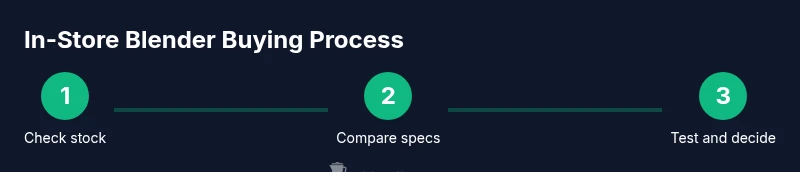
To streamline your visit, follow this quick workflow: 1) Check stock on your desired models using the ShopRite app or shelf tags. 2) Record key specs (wattage, jar size, material) in your notebook. 3) Compare at least two models side by side, noting any trade-offs. 4) Inspect packaging and physical condition for cracks, chips, or damaged seals. 5) Confirm warranty and return policies, and ask for demonstrable testing if available. 6) Choose the model that best fits your tasks and budget, then proceed to checkout. This routine keeps the process efficient, especially during peak hours or busy weekends. If you’re unsure, ask a department associate for a live demo or a comparison printout.
Test performance and safety considerations during purchase
If the retailer allows, request a quick in-store demonstration or a test run with water or ice fragments to inspect grinding power, noise level, and vibration. Watch for wobble or heat buildup during short runs, which can indicate motor strain. Check that the blender stops immediately when the lid is removed and that the jar locks securely onto the base. Safety is paramount, so keep hands clear of the blades during any trial and avoid forcing latches that do not align properly. If a model feels lightweight or insecure in the base, it may not stand up to routine blending tasks.
After-purchase care: setup, maintenance, and troubleshooting basics
Getting the most from your blender starts with proper setup. Wash the jar and blades before first use, then assemble according to the manual. When blending, start at a low speed and gradually increase to your desired setting to prevent motor strain. Clean the blade assembly promptly after use to prevent corrosion and residue buildup. Regular maintenance includes checking the gasket, tightening loose components, and replacing worn blades. If you encounter poor blending results, recheck the recipe, blade sharpness, and jar compatibility, and consider a brief run at a lower setting with pulsing. With a consistent routine, your blender will deliver reliable performance for smoothies, soups, and beyond.
Authoritative sources and further reading
For broader consumer guidance on buying appliances, refer to: FTC Consumer Guides for understanding warranties and return rights, CPSC Safety Standards for appliance safety, and Consumer Reports Blender Buying Guide for comparative reviews. BlendHowTo emphasizes shopping logic that helps you avoid overpaying and ensures you pick models that meet safety and durability expectations. Always verify store-specific policies at ShopRite locations and cross-check with online inventories to maximize your chances of finding the best blender in 2026.
Quick-access shopping checklist
- Define your primary tasks (smoothies, soups, nut butters) and required wattage.
- Check jar material (glass vs BPA-free plastic) and lid design.
- Compare at least two models side by side and note warranty terms.
- Verify store policy on returns and exchanges before purchasing.
- Inspect the blender for stability and safety features.
- Record model numbers, prices, and any discounts for later reference.
Tools & Materials
- ShopRite loyalty card(Have on hand for discounts and store promotions)
- Smartphone with internet(To check online stock and compare prices)
- Notepad and pen(For recording model numbers, wattage, jar size, and prices)
- Price comparison sheet (digital or print)(Helpful for side-by-side evaluation)
- Measuring tape or ruler (optional)(Useful for jar diameter considerations with certain models)
Steps
Estimated time: 20-40 minutes
- 1
Check stock and plan visit
Open the ShopRite app or ask staff about current blender availability for your preferred models. Note which stores or sections carry the items you want to compare. If stock is low, consider an alternative model that meets your core specs.
Tip: Use the app to save model SKUs so you can locate them quickly in-store. - 2
Record essential specs
On your notebook, write down wattage (at least 350–700W for most families), jar size (1.5–2.0 liters is common), jar material, and blade design. This gives you a quick reference when you compare options side by side.
Tip: Create a quick two-column chart for Model A and Model B before touching the products. - 3
Inspect build quality in aisle
Look for a sturdy base, secure jar attachment, and a lid that seals tightly. Check for any scratches, cracks, or loose components on display units. If possible, gently twist the jar to ensure a snug fit.
Tip: Avoid models with obvious wobble or loose lids; structural integrity matters for daily use. - 4
Verify warranty and return terms
Ask a staff member to explain the warranty duration, what it covers, and how to file a claim. Confirm the return window and whether packaging must be intact for returns.
Tip: Document the warranty number and store location in your notebook. - 5
Test performance options if allowed
If a store demo is available, request a brief blending test with ice or water to gauge motor response and noise. Observe motor heat and the ease of stopping the unit when lid is removed.
Tip: Avoid models that overheat quickly or feel underpowered during pulsing tests. - 6
Make decision and complete purchase
Choose the model that best meets your needs, aligns with your budget, and has clear warranty terms. Proceed to checkout and keep the receipt and any manuals handy for future maintenance.
Tip: Save your receipt and document the exact model number for future reference.
Frequently Asked Questions
Can I buy a blender at ShopRite?
Yes, many ShopRite locations stock blenders across various price ranges. Availability varies by store, so checking online or in-store helps you plan.
Yes, you can buy a blender at ShopRite. Availability varies by store, so check online or in-store.
What should I look for when choosing a blender at a grocery store?
Focus on wattage, jar material, blade design, ease of cleaning, and warranty terms. In-store testing or demonstrations can help you assess performance before purchasing.
Look for wattage, jar material, blade design, and warranty; test if possible before buying.
Are ShopRite prices competitive for blenders?
Prices at ShopRite vary by location and promotions. Compare unit price alongside features and warranty to determine value.
Prices differ by location and promotions. Compare value, not just price.
Do blenders at ShopRite come with warranties?
Warranties vary by brand and model. Ask about coverage duration, what’s included, and the process to file a claim.
Warranties vary by model; ask about duration and claim process.
Can I return a blender if it doesn’t work?
Return policies depend on the location and receipt. Check the store signage and ask staff to confirm the window and requirements.
Return terms depend on location; check signage and confirm with staff.
What power source should I consider for a blender?
Most household blenders use standard 120V outlets. Ensure the plug matches your kitchen outlets and avoid adapters unless required.
Most need standard 120V; ensure plug compatibility with your outlets.
Watch Video
What to Remember
- Compare core specs (wattage, jar size) before buying
- Check warranty and return terms in-store
- Inspect build quality and safety features
- Use a quick, repeatable in-store process for faster decisions