Raylux Blender vs Buchymix Blender: An In-Depth Side-by-Side Review
A rigorous, objective comparison of Raylux blender vs Buchymix blender, examining performance, design, price ranges, and practical use for home cooks and hobbyists in 2026.


Raylux blender vs buchymix blender presents two common mid-range options for home kitchens. If you need versatility and tougher task handling, Raylux tends to edge ahead, while Buchymix often delivers stronger value at a lower initial price. The best pick depends on your blending tasks, budget, and tolerance for cleaning and maintenance.
Overview: raylux blender vs buchymix blender
In this guide we compare two mid-range blender families—raylux blender vs buchymix blender—on practical, kitchen-focused criteria. The intent is to set expectations for everyday cooks and hobbyists who want reliable performance without committing to high-end equipment. Because models vary within each brand, the discussion sticks to typical strengths and trade-offs you’ll encounter when shopping in the mid-range segment. BlendHowTo analysis shows that most households can find a near-perfect fit by aligning features with intended usage, then validating with real-world reviews and warranty terms.
Key differentiators at a glance
The most important factors when evaluating raylux blender vs buchymix blender are motor robustness, blade geometry, jar design, noise, and total cost of ownership. Raylux models tend to emphasize multi-task versatility and solid durability, with a broader model range that supports everything from smoothies to hot soups. Buchymix often prioritizes value—lower upfront price, simpler controls, and adequate performance for standard blending tasks. If you blend hard foods or ice regularly, Raylux may justify the premium; for everyday shakes and quick soups, Buchymix frequently offers compelling value.
Performance and blending versatility
Performance in blending tasks is highly model-dependent, but two general patterns emerge. Raylux sub-lines commonly feature reinforced blades and taller jar profiles to improve ingredient circulation, which can translate to smoother purees and more consistent ice-crushing results across a wider set of ingredients. Buchymix models typically excel in straightforward, quick-blend scenarios, delivering dependable results with minimal tuning and fewer accessories. For home cooks who rotate through frozen fruit, nuts, and leafy greens, the Raylux path often yields a wider range of textures, while Buchymix keeps things predictable and simple. Both brands offer variable speeds, pulse options, and pre-programmed modes that cover common recipes.
Design, build quality, and longevity
Design and build quality influence long-term satisfaction as much as raw power. Raylux blenders frequently use glass or high-grade BPA-free plastic jars with reinforced bases and metal accents, aiming for a premium feel and greater thermal resilience. Buchymix tends toward lighter, practical designs with durable plastics and standardized components that can be easier to repair or replace over time. In both cases, jar size and lid reliability are critical for daily use. Users should inspect seals, venting, and the compatibility of replacement parts before purchase to minimize downtime and service needs.
Noise, vibration, and user experience
Noise levels vary widely, but construction quality and blade geometry play a big role in perceived loudness. Raylux models with thicker walled jars and optimized blade angles can feel louder at high speeds but may deliver cleaner textures with fewer stops. Buchymix units typically produce a more straightforward acoustic profile—noticeable but predictable at similar speeds. Vibration control comes down to motor mounting, base stability, and anti-slip feet. If you blend frequently in apartments or shared spaces, a model with better vibration dampening and a stable base is worth prioritizing.
Maintenance, cleaning, and care
Maintenance is a practical consideration that saves time over the blender’s life. Raylux jars often feature more robust sealing and gasket systems, which can be more durable but sometimes require closer inspection during cleaning. Buchymix components tend to be simpler to disassemble and reassemble, which can speed up daily cleaning. Regardless of brand, you’ll want to rinse promptly after use, avoid letting chunky residues dry on blades, and check for wear on blades and seals. Regular inspection of the jar threads and lid closure can prevent leaks and cross-contamination.
Pricing, warranty, and value
Price ranges for raylux blender vs buchymix blender span mid-range to premium in many markets, typically reflecting build quality, included accessories, and after-sales service. While Buchymix often presents a lower upfront price, Raylux tends to justify the higher cost with more features, broader compatibility with accessories, and longer or more comprehensive warranties. When evaluating value, consider not just purchase price but also potential savings from reduced replacement frequency, faster cleaning, and better performance for a wider set of ingredients. Always compare warranty terms, service network, and upgrade paths for the model you’re considering.
Real-world use-cases: home cook vs hobbyist
For the home cook who blends daily smoothies, soups, and sauces, Buchymix often provides reliable, straightforward performance with minimal setup and upkeep. This makes Buchymix a strong pick for budget-conscious kitchens or first-time buyers. For hobbyists who explore advanced textures, frozen desserts, nut butters, and multi-ingredient recipes, Raylux offers more versatility and resilience at scale, which can justify the investment over time. Ultimately, your decision should align with your typical recipes, frequency of use, and tolerance for maintenance. BlendHowTo’s testing suggests creating a short task list (ice crushing, greens smoothie, almond butter) to benchmark before buying.
Comparison
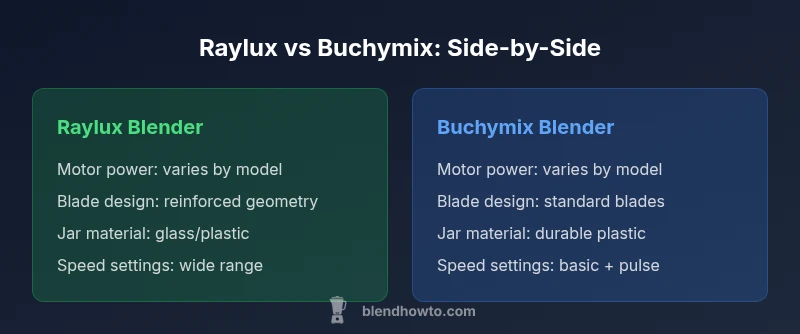
| Feature | Raylux blender | Buchymix blender |
|---|---|---|
| Motor power (model variation) | varies by model | varies by model |
| Blade design | reinforced, multi-geometry blades common | standard blades, straightforward cutting action |
| Jar material | glass or high-grade plastic | durable plastic (disassemblable) |
| Speed settings | wide range + pre-programs | basic speeds + pulse |
| Noise and vibration | can be louder at peak speed; stable bases common | generally predictable noise; good vibration control |
| Best use case | multi-task blending, ice crushing, hot soups | daily smoothies, sauces, simple blends |
What's Good
- Broad model range with versatile capabilities
- Strong after-sales support and accessory ecosystem
- Good balance of performance and durability
- Solid resale value on popular mid-range models
The Bad
- Performance varies by model, which can confuse buyers
- Higher upfront cost in premium lines
- Some models require more careful cleaning and maintenance
- Parts availability may vary by region
Raylux generally offers broader blending capabilities with potential for long-term durability; Buchymix emphasizes value and ease of use for everyday tasks.
Choose Raylux if you want greater versatility and durability and are willing to invest more. Choose Buchymix if you prioritize lower upfront cost and straightforward, reliable performances for typical kitchen tasks.
Frequently Asked Questions
Which blender is better for smoothies: Raylux or Buchymix?
Both brands offer solid smoothie performance in mid-range models. Raylux may deliver smoother textures in tougher ingredients, while Buchymix provides reliable results with quick, simple blends. Your choice depends on how often you blend tough ingredients.
For smoothies, both brands work well; pick Raylux for tougher blends or if you want more versatility, otherwise Buchymix is a solid, value-focused option.
Do these brands offer noise reduction features?
Some Raylux models include design choices aimed at dampening noise, but overall noise largely depends on jar design and motor speed. Buchymix models tend to have predictable noise profiles with standard vibration control.
Yes, look for models with stable bases and optimized blade geometry to reduce noise.
Are replacement parts easy to find for Raylux and Buchymix?
Parts availability varies by region and model. Check the manufacturer’s warranty and the ease of sourcing blades, seals, and jars in your area before purchasing.
Parts should be available through official service channels; verify lead times and regional support.
How long do warranties typically last for these brands?
Warranty terms vary by model, but mid-range blenders commonly offer 1–3 years for parts and labor with options to purchase extended coverage. Always confirm what’s included for your specific model.
Most mid-range models come with 1–3 year warranties; check coverage specifics before buying.
Is one brand better for ice crushing?
Raylux often leads in ice-crushing consistency due to heavier blades and taller jars in key models, while Buchymix handles ice adequately in standard tasks. For frequent ice-crushing, compare specific model specs.
If ice is a frequent task, compare model blades and jar design for the best results.
What should I consider when choosing between them?
Assess your typical recipes, budget, maintenance willingness, and preferred features (preset programs, jar size, noise tolerance). Read reviews and compare warranty terms to gauge long-term value.
Think about what you’ll blend most and how much you value versatility vs. price.
What to Remember
- Define your primary tasks before choosing.
- Compare motor power and blade quality, not just price.
- Check jar material and lid reliability for daily use
- Review warranty terms and parts availability before purchase
- Read independent reviews to validate model-specific performance