How to Fix Blender Blade Not Spinning
Learn practical, safe steps to diagnose and fix a blender blade that won’t spin. This guide covers jams, drive couplings, motor overheating, testing, and guidance on repair-vs-replacement.


If your blender blade won’t spin, start with a quick safety check: unplug the unit, remove the jar, and inspect for a jam or obstructions. Then verify the drive coupling and switch are intact, test the motor with no load, and only reassemble after parts are confirmed good. This guided process helps you identify whether you should repair or replace.
Quick Diagnostics: Is the blade actually stuck, or is there a bigger issue?
When a blender blade won’t spin, the cause can range from a simple jam to a worn drive coupling, a failed interlock switch, motor overheating, or electrical failure. Begin by confirming the blender is plugged into a live outlet and the power switch is ON. Ensure the jar is seated properly so the interlock engages. If the motor hums but the blade remains stationary, you likely have a mechanical obstruction or worn gear; if the motor is silent, suspect electrical or switch issues. Document the symptoms as you go to help narrow down the culprit and to guide part replacements. According to BlendHowTo, routine checks and proper assembly reduce blade jams and extend blender life.
Safety First: Unplug, disassemble, and inspect with care
Never work on a live appliance. Unplug the blender and remove the jar. Keep your hands away from the blades until you are sure they are immobilized. Use insulated tools if you need to handle the blade assembly, and wear cut-resistant gloves if available. Check the exterior for signs of damage or melted plastic around the motor housing. If you smell burning or hear grinding, stop and seek professional service rather than attempting risky fixes. This stage is all about creating a safe workstation and identifying obvious hazards before you touch internal components.
Tools and Replacement Parts You'll Likely Need
Having the right tools ready saves time and reduces the risk of damaging components. You’ll typically need a Phillips head screwdriver (size #2 recommended), a flat-head screwdriver, a small hex/Allen wrench set, needle-nose pliers, and a clean microfiber cloth. Replacement parts may include a new drive coupling, a replacement blade assembly, a gasket or seal kit, and contact cleaner for electrical contacts. Keep a soft tray for small screws and a labeled container to avoid losing parts. If your model uses a specialized tool, consult the user manual or the manufacturer’s site before buying.
Step-by-Step: Accessing the blade assembly
- Unplug the blender and remove the jar. 2) Remove any blade assembly retention screws holding the blade to the jar or spindle. 3) Carefully lift the blade assembly from the jar and inspect the blade for chips or dull edges. 4) Identify the drive coupling where the motor shaft connects to the blade assembly. 5) If you notice bendable or worn parts, prepare to replace them. 6) Clean any residue around the drive area to improve seating. 7) Reconnect the blade assembly loosely to test fitment before final assembly. 8) If parts feel loose or wobbly, proceed to replacement rather than forcing a tight fit. Pro tip: take photos during disassembly to guide reassembly later.
Common Causes and How to Verify Each
Jam or food debris inside the blade socket is the most common issue. Check for any material wedged between the blade and the housing. A worn or broken drive coupling is another frequent culprit; a loose coupling will slip and prevent the blade from turning. Overheating motors can trigger a thermal cutout, stopping the blade until the unit cools. Inspect the interlock switch under the jar—if the device thinks the jar isn’t present, the motor won’t run. If the switch is faulty, you’ll need to replace it. Finally, analyze the possibility of a burnt windings or internal motor fault on older units. The goal is to isolate the exact failure and decide between repair and replacement.
How to Test the Motor and Switch
With the jar removed and the blade secured, plug the unit in and attempt a short, careful run with no load on the blade. If the motor whirs but the blade doesn’t rotate, test the switch by triggering it manually with the jar removed (using a non-conductive tool). If you have access to a multimeter, check continuity across the switch and the motor terminals when the switch is pressed. If the motor shows no continuity or resistance outside spec, the windings may be damaged. In many models, a thermal cutout will reset after cooling; wait 10–15 minutes and retry. Always verify safety interlocks are properly engaged before reassembly.
Inspecting and Replacing the Drive Coupling
The drive coupling transfers motion from the motor to the blade assembly. Inspect it for cracks, wear, or deformation. If there is visible wear or if the coupling spins independently from the blade, replace it. When installing a new coupling, ensure the splines align perfectly with both the motor shaft and the blade assembly. Gently press the coupling into place without forcing it; misalignment can cause uneven wear and future failure. After replacement, test the unit with the jar attached to confirm smooth operation before reassembly.
Reassembling and Safety Checks
Reassemble parts in reverse order of disassembly. Reinstall the jar and blade assembly, then secure with the retention screws. Make sure the jar sits evenly on the base and that the interlock engages fully. Plug in the unit and perform a quick test with a small load. Observe for abnormal vibration, noise, or slipping. If you notice any wobble or instability, halt and recheck the coupling and jar seating. This phase ensures everything is correctly aligned and safely assembled before regular use.
Maintenance to Prevent Recurrence
Clean the blade assembly and seal kit regularly to prevent buildup that can jam the moving parts. Avoid blending extremely thick mixtures without adequate liquid, and let the motor cool if you hear rising temperature. Check the drive coupling for wear every few months if you use the blender frequently, especially with tough ingredients like ice or fibrous vegetables. Store the blender in a clean, dry place and avoid flexing the power cord. Regular maintenance reduces the risk of future jams and extends the blade-and-motor life.
When to Replace vs Repair: Cost considerations
If the motor exhibits burning smells, loud grinding, or frequent overheating, replacement parts may not deliver a reliable long-term fix. When the drive coupling and blade assembly are relatively inexpensive to replace and the motor shows signs of wear, replacement parts are often the most cost-effective option. Conversely, if the motor is older and nearing its end-of-life, evaluating a replacement blender may be more economical in the long run. Always compare repair costs against the price of a new appliance and consider warranty coverage.
Quick Troubleshooting Flowchart (visual guide)
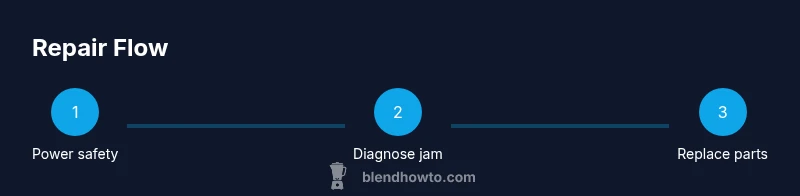
- Check safety interlock and power: Is it powered and jar seated?
- Listen for motor hum or grind: Is there a mechanical issue or electrical fault?
- Inspect blade, housing, and drive coupling for wear or obstruction.
- Test the motor and switch with no load: Any continuity or resistance issues?
- Replace worn parts (coupling, blade assembly) or reassess motor condition.
- Reassemble and run with a small test load to verify successful operation.
Tools & Materials
- Phillips head screwdriver (size #2)(Essential for jar and housing screws)
- Flat-head screwdriver(Useful for prying covers without damage)
- Hex/Allen wrench set(Check for set screws on the blade assembly)
- Needle-nose pliers(Grasp small parts and remove stubborn clips)
- Replacement drive coupling(Choose compatible size for your model)
- Replacement blade assembly(Includes blade, hub, and seal where applicable)
- Gasket/Seal kit(Optional but recommended for watertight seals)
- Electrical contact cleaner(Use on connectors to remove corrosion)
- Soft cloth and microfiber(For cleaning and drying parts)
Steps
Estimated time: 45-60 minutes
- 1
Unplug and remove the jar
Power off the unit fully and unplug it. Remove the blender jar from the base to access the blade and drive components. This prevents accidental startups and protects your hands while working on the assembly.
Tip: Keep the jar and lid in a labeled tray so you don’t lose small parts. - 2
Access the blade assembly
Remove any screws securing the blade hub and gently lift the blade assembly from the jar. Inspect for bending, cracks, or missing blades. If the blade wobbles or sits unevenly, the hub or seal may be damaged and require replacement.
Tip: Use a small magnetic tray to keep screws in order. - 3
Check the drive coupling
Locate the coupling between the motor shaft and blade assembly. Look for wear, cracks, or abnormal play. If the coupling spins independently of the blade, replace it. Ensure the splines align when reinstalling.
Tip: Do not force a misaligned coupling; damage could occur to the motor. - 4
Test the motor and switch
With the jar removed, plug the unit in and briefly run it without a load. If the motor hums but the blade stays still, measure continuity across the switch and motor terminals with a multimeter. A faulty switch or burnt winding requires replacement.
Tip: If you’re unsure about testing with a multimeter, seek a professional evaluation. - 5
Replace worn parts
If wear is evident on the coupling or blade assembly, install new parts following the manufacturer’s wiring and torque specs. Clean all mating surfaces before reassembly to ensure proper seating.
Tip: Verify part numbers match your model before purchasing replacements. - 6
Reassemble and test
Reattach the blade assembly, jar, and base. Reinstall screws, ensure the jar interlock engages, and run a short test with a small amount of liquid. Confirm smooth operation before normal use.
Tip: Run a quick noise and vibration check; any wobble indicates misalignment or loose screws. - 7
Final safety verification
Unplug again for final checks before storage. Ensure the power cord is intact, no exposed wiring exists, and the base remains cool after testing. This reduces the risk of future electrical faults.
Tip: Keep a written record of the parts replaced for future maintenance.
Frequently Asked Questions
Why won’t the blender blade spin even when the motor runs?
Common causes include a jam, a worn drive coupling, a faulty switch, or motor overheating. Systematically test each possibility starting with a jam, then the coupling, and finally electrical components.
Blender blades can stall due to a jam, a worn coupling, or a faulty switch. Start with the easy checks and move to parts replacements as needed.
Is it safe to operate the blender with the jar removed while diagnosing?
No. Always keep the jar in place and unplug the unit when diagnosing. The interlock can prevent the motor from starting if the jar isn’t detected, and running with exposed blades is hazardous.
Do not operate the blender with the jar off. Always unplug it and secure the jar during diagnostics.
Can I repair a blender with a plastic drive coupling at home?
Yes, if you replace the worn coupling with a compatible new part. Worn couplings are a common failure point and replacing them can restore function without replacing the whole unit.
Replacing the coupling is often enough to fix the problem without buying a new blender.
Should I replace the motor or the entire blender?
If the motor shows signs of burning, overheating, or failing windings, replacement may be more cost-effective than repairing. For older units, consider overall replacement.
If the motor is burnt or failing, replacing the blender is usually wiser than repairing it.
How long does a typical blade repair take?
Most repairs can be completed in under an hour if you have the right parts and tools. Complex electrical faults or partial motor failures may require professional service.
Most fixes take under an hour with the right parts, but some problems need a pro.
Watch Video
What to Remember
- Inspect safety interlock and power first.
- Identify whether jam or worn parts cause the stall.
- Replace worn drive coupling and blade assembly as needed.
- Test motor and switch before reassembly.
- Prioritize safety and consider repair-vs-replace decisions.