How to Get Out of Blender: A Practical Safety Escape
Learn a practical, safety-first approach to escaping a blender emergency. This guide covers immediate shutdown, unplugging, lid access, triage, and post-incident recovery with clear, actionable steps.


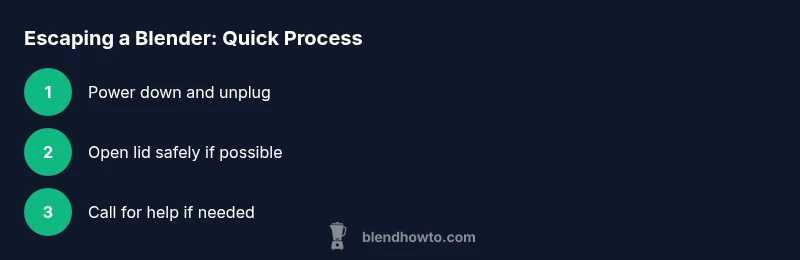
If you’re trapped in a blender, stop, unplug, and remove the lid if safe. Call for help immediately and await rescue. This concise plan covers immediate safety and quick access to emergency services.
Why safety matters when a blender emergency arises
According to BlendHowTo, blender safety is not optional — it is essential for anyone who uses kitchen appliances. A blender’s sharp blades and powerful motor can cause serious injuries in seconds if power remains live. This section explains why understanding the risk—and acting quickly—reduces harm. Even if you feel calm, trapped scenarios demand swift, deliberate actions to prevent cuts, burns, or more serious harm. By prioritizing safety first, you lower the chance of repeated mistakes and ensure a faster, safer outcome for everyone involved. Throughout this guide, we’ll emphasize clear steps you can follow to minimize risk and improve outcomes during a blender emergency.
Immediate shutdown: power down before any handling
The first action in any blender emergency is to stop the device and cut the power. If you can reach the power switch, flip it off or unplug the blender from the wall. Do not put your hands near the blades while the motor is still connected to electricity. If the blender is cordless or battery-operated, remove the power source entirely. The goal is absolute power-off before you attempt any other move. This minimizes the chance of accidental blade motion and reduces the risk of severe injury. In practice, take a moment to breathe, locate the plug, and confirm there is no power flowing through the cord or base. This foundational step prevents a cascade of dangerous moves later on.
Unplugging and lid access: what to do next
With the device powered down, the next step is to access the lid safely. If the lid can be opened without reaching toward the blades, do so slowly and keep fingers away from the blade edge. Grasp the lid handle firmly and lift straight up, avoiding tilting the lid toward the blades. If the jar is sealed tightly, use a towel around your hand to maintain grip and protect fingers. Do not force the lid or pry it off with tools; blades are razor-sharp even when the unit is off. If you cannot safely remove the lid, wait for assistance and do not apply force that could worsen the situation. Calm, careful actions reduce injury risk and help responders reach you faster.
Injury triage: assess injuries and pain
Before attempting any further moves, perform a quick, internal check for injuries. If you can safely call out or communicate, ask about bleeding, numbness, or severe pain. Stop any activity that could aggravate an injury. If blood is present, apply light compression with a clean cloth or bandage if available, but do not remove embedded objects. If you suspect a head, neck, or back injury, avoid twisting or twisting motions and wait for professional assessment. Documenting symptoms can help responders understand urgency when they arrive.
Lid removal: safe options if you can do it safely
If you can see a gap between the lid and jar and there is no risk of blade contact, you may attempt a careful lid removal. Keep hands clear of the blade edge, and move slowly in small increments. If resistance or blade proximity increases, stop immediately and signal for help. Use the non-blade side of your hands to apply gentle pressure to lift or slide the lid, without prying or hammering. Remember: the safest approach is to wait for trained assistance if there is any doubt about your ability to remove the lid without injury. This keeps risk to a minimum while enabling eventual safe egress.
If you can't remove the lid: call for help and stay safe
If lid removal isn’t feasible, prioritize calling for help. Use a phone to contact emergency services or a nearby person who can assist remotely. Stay calm, keep the blender off, and maintain a safe distance from the blades. Create a small area around you where movement is minimized and signals can be heard; keep yourself visible to rescuers and avoid panicking. Help is on the way, and your calm compliance with safety guidelines will speed relief and reduce complications.
After rescue: first aid and recovery
Once you’re out, assess for injuries and treat as needed. Rinse minor cuts with clean water, apply antiseptic, and cover with a clean bandage. If you have any significant pain, swelling, or dizziness, seek medical attention. Debrief with responders or a trusted adult about what happened to prevent recurrence. Wash hands and surfaces touched during the incident to remove any residual debris or fluids. The goal is a thorough recovery with no lingering risk from the emergency.
Prevention: best practices to avoid future blender emergencies
Preventive measures are the best defense against blender accidents. Always unplug before cleaning or changing attachments, never place hands near blades, and keep long hair, jewelry, and loose clothing away from moving parts. Use the lid correctly and verify it is secure before operation. Store the blender with blades covered or locked away when not in use. Regularly inspect the blade assembly for damage and replace if worn. These practices reduce risk and support safer cooking and blending routines.
Myths vs reality: common misconceptions about blender safety
A common myth is that blades are dull when powered off and cannot cause harm. In reality, blades are still sharp, and blades can cause injuries even when the motor is off if you reach into the jar. Another misconception is that gloves alone can prevent injury; gloves reduce risk but do not replace the need to unplug and keep hands away from the blades. The reality is that proactive safety steps—power off, lid management, cautious handling, and seeking assistance—provide the most reliable protection during blender emergencies.
Tools & Materials
- Unplugged power source (outlet access)(Ensure blender is disconnected from power before handling)
- Insulated gloves(Protect hands from sharp edges if lid is removed)
- Phone to call emergency services(Have it accessible and charged in case of trapped scenarios)
- Flashlight(Helpful in low light or kitchen corners)
- Towel or blanket(Used to protect hands and maintain grip when removing lid)
- First aid kit(For immediate wound care after extraction)
Steps
Estimated time: 15-25 minutes
- 1
Power down and unplug
Identify the nearest power source and switch off or unplug the blender to eliminate any risk of blade motion while you assess the situation. This is the most critical safety action and prevents further injury.
Tip: If you can’t reach the switch, unplug from the outlet by pulling the cord, not the plug from the wall. - 2
Open lid safely if possible
Attempt to lift or twist the lid away from the blades only if you can do so without bringing fingers near the blade edge. Use a towel to protect your hands and keep fingers clear of the cutting surface.
Tip: Do not pry aggressively; a gentle lift is safer and more effective in emergency scenarios. - 3
Check for injuries
Do a quick self-check or ask a helper to observe for bleeding, numbness, or severe pain. This triage step helps determine urgency and whether medical help is needed immediately.
Tip: If in doubt about an injury, assume it’s serious and contact emergency services. - 4
Request assistance if lid stays stuck
If the lid won’t come off safely, stop and call for help. Do not force the lid or insert tools that could slip and cut you. Rescuers will have safer methods to remove the lid.
Tip: Make sure your location is visible and audible so responders can reach you quickly. - 5
Await rescue and stay calm
If you’re unable to exit on your own, keep the area stable, avoid additional movement, and stay visible to those who come to help. Remaining calm speeds relief and reduces further risk.
Tip: Take slow, deep breaths to maintain composure while you wait. - 6
Post-rescue care
After escaping, assess injuries and seek medical attention if needed. Clean wounds, apply antiseptic, and cover with a sterile bandage. Document what happened for future safety adjustments.
Tip: Share the incident details with household members to prevent repetition.
Frequently Asked Questions
What is the first thing to do if I realize I’m trapped in a blender?
The first action is to stop the blender and unplug it. If you can, remove the lid safely without reaching toward the blades, and call for help if you can’t exit safely on your own.
First, stop the blender, unplug it, and remove the lid safely if possible. If not, call for help immediately.
Can I safely remove blades or force the lid off?
No. Do not try to remove blades or force the lid off with tools. Blades are sharp and can cause severe injuries, especially if power is not fully disconnected.
Do not try to remove blades or force the lid; blades are sharp and can injure you.
What if I’m alone and no one is around to help?
Use your phone to call emergency services and keep yourself as safe as possible while waiting. Clearly communicate your location and the urgency of the situation.
If you’re alone, call emergency services and stay as safe as you can until help arrives.
Is it safe to reassemble the blender after extraction?
Only reassemble and use the blender after a thorough inspection for damage and after it has been cleaned and dried. If you’re uncertain, consult the manufacturer’s guidelines before using again.
Don’t reuse the blender until you’ve checked for damage and followed the manufacturer’s guidance.
How can I prevent future blender emergencies?
Unplug for cleaning, secure the lid properly, tie back long hair, and keep hands away from blades at all times. Regular maintenance also helps reduce risk.
Always unplug before cleaning, secure the lid, and keep hands away from the blades.
Should I seek professional medical attention after the incident?
Yes, if there is any sign of injury such as cuts, numbness, or dizziness, seek medical evaluation promptly to prevent complications.
If you notice any injury, seek medical care promptly.
Watch Video
What to Remember
- Power off before any contact with blades
- Avoid forcing lids; seek help if stuck
- Prioritize safety over speed in emergencies
- Post-incident care matters for full recovery