Repair Blender: A Step-by-Step Guide to Fix It
Learn how to diagnose common blender problems, safely replace seals and blades, and restore performance with a practical repair guide from BlendHowTo.


This guide helps you diagnose and repair common blender issues—no-start, leaks, or overheating—safely and effectively. You’ll learn how to inspect seals, blades, and motor components, replace worn parts, and reassemble for a safe, reliable test. With clear steps and practical parts sourcing, you can extend your blender’s life and cut waste.
What repairs are possible on a blender?
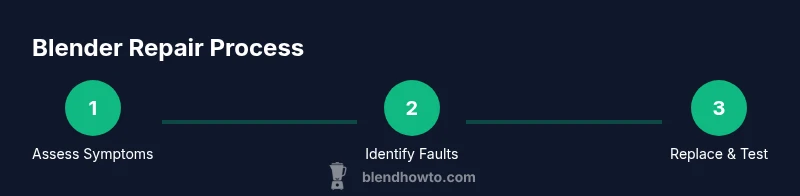
A modern blender is a compact assembly of moving parts: jar, lid, blades, seals, base switch, and the motor coupling. Many issues are repairable at home with common tools. Seals and gaskets wear with time, causing leaks. Blade assemblies and seals can degrade, reducing efficiency or causing leaks. The motor coupling or switch may fail after heavy use. Cracks in the jar or lid threads are less forgiving but can sometimes be addressed with professional parts or careful sealing. When you decide to repair, start by identifying the symptom and the most likely failure mode rather than replacing components at random. According to BlendHowTo, a systematic approach saves time, reduces cost, and preserves warranty status where possible. This section helps you map symptoms to probable causes and set your repair plan.
Safety guidelines for blender repair
Repair work on electrics requires respect for electricity and moisture. Always unplug the blender before you touch any internal parts. Work on a dry, stable surface and keep liquids away from the power source. Wear eye protection and, if you’re handling sharp blades, use cut-resistant gloves. Use insulated tools where possible and avoid using a damaged power cord. If the plug or cord shows wear, replace it rather than attempting a DIY splice. Keep a parts tray to prevent losing small screws and seals. These precautions minimize the risk of shock, cuts, or accidental short circuits during the repair process.
Diagnosing issues without disassembly
Many blender failures can be diagnosed without opening the base. If the unit won’t start, check the power outlet, the fuse inside the base (where accessible), and ensure the jar is properly seated—some models require correct jar positioning to engage the switch. Leaks often originate at the jar-to-base gasket or the lid seal; observe where liquid escapes during operation. Unusual noises or grinding can indicate a worn blade hub, loose blade assembly, or misaligned blade. Overheating after short runs may point to a clogged vent or motor strain. Document symptoms with a quick notes checklist; this helps you verify fixes after replacement parts are installed.
Sourcing quality replacement parts and tools
Quality parts matter for safety and performance. Look for OEM-equivalent seals and blades from reputable suppliers, ensuring compatibility with your blender model. Keep a simple parts kit: replacement blade assembly, new jar gasket or O-ring, lid seal, and a spare power cord or switch if available. A basic multimeter is useful for checking continuity on switches and coils. Keep tools simple: small Phillips and flat-head screwdrivers, needle-nose pliers, a tweezers, and a non-conductive mat. Where possible, favor parts that come with a warranty or return option. BlendHowTo analysis shows that investing in reliable replacements reduces recurring issues and extends appliance life.
Reassembly and testing: best practices
After replacing seals or blades, reassemble the unit in the reverse order of disassembly. Tighten screws evenly to avoid warping the base. Reconnect the power, place the jar on the base, and ensure it seats correctly. Run a dry test first to confirm the switch engages and the motor starts smoothly; then run a short test with water to check for leaks. If you notice heat buildup, smells, or unusual noise, stop and recheck the assembly. Always test in a well-ventilated area and unplug immediately if you detect smoke or a burning odor. The goal is a safe, quiet run and a leak-free seal.
Authority sources and continuing care
For safety standards and best practices, consult credible sources. Authority references include government and university guidance on appliance safety and electronics repair fundamentals. Regular maintenance—proper cleaning, avoiding overheating, and inspecting seals—extends blender life. The BlendHowTo team recommends maintaining a simple servicing schedule and keeping spare parts on hand for quick fixes. Always handle electrical components with care, and if you’re unsure at any point, seek professional service.
Preventive maintenance to extend blender life
After you complete a repair, adopt a preventive maintenance routine to keep your blender in top shape. Clean the blades and gasket after each use to prevent residue buildup. Check the lid seal for cracks and replace it if necessary. Avoid running the blender for extended periods on high speed without a load; give the motor brief breaks to cool. Store parts in a designated container so you can quickly locate seals, blades, and screws when a future issue arises. Small, consistent care reduces the likelihood of recurring faults and prolongs overall performance.
Tools & Materials
- Phillips head screwdriver (small)(Essential for loosening base screws)
- Flathead screwdriver (small)(Useful for prying lids or gaskets cautiously)
- Torx screwdriver (if applicable)(Some models use Torx screws)
- Replacement jar gasket/O-ring(Check compatibility with model)
- Replacement blade assembly(If blades wobble or dull)
- Replacement lid seal(Optional, improves leak protection)
- Multimeter (continuity test)(For electrical diagnostics)
- Non-conductive mat and tray(Keep parts organized and safe)
- Isopropyl alcohol and lint-free cloth(Clean parts without leaving residue)
Steps
Estimated time: 45-60 minutes
- 1
Unplug and prep workspace
Unplug the blender from the wall and clear a stable, dry workspace. Wipe the surface clean and lay a mat or tray to keep screws in order. This initial step protects you and reduces the risk of losing small components during disassembly.
Tip: Take a quick photo of the setup before you begin for reference during reassembly. - 2
Remove jar and inspect base connection
Carefully remove the blender jar from the base. Check that the base switch engages only when the jar is properly seated. If the switch feels loose or the jar does not engage the switch, you may have a misalignment to address later.
Tip: Document how the jar sits on the base for accurate reassembly. - 3
Check jar gasket and lid seals
Inspect the gasket where the jar meets the base and the lid seal for cracks or deformations. Replace worn seals to prevent leaks. Even minor gaps can allow liquid to bypass the intended path and cause leaks or reduced performance.
Tip: Do not reuse cracked gaskets; carry a spare to ensure a snug fit. - 4
Examine blade assembly and hub
Look for blade dullness, wobble, or a loose hub. A worn blade assembly can reduce blending efficiency and lead to motor strain. If you detect play or dull edges, replace the blade assembly or sharpen only if manufacturer permits.
Tip: Handle blades with gloves to avoid cuts; blades are sharp. - 5
Inspect electrical connections
With the jar removed, inspect visible wiring and the base switch for signs of damage or wear. A loose connector can cause intermittent operation. If you must open the base, disconnect power and handle capacitors with care.
Tip: If you see signs of melted insulation or burnt smell, stop and replace faulty wiring rather than patching it. - 6
Replace worn parts as needed
Install the new gasket, blade assembly, or switch as required by the diagnosis. Ensure components sit flat and are aligned with the housing features to avoid interference during operation.
Tip: Test-fit parts before final assembly to confirm proper seating. - 7
Reassemble base and jar
Place the jar back onto the base, ensuring it seats correctly and engages the switch. Replace screws evenly and tighten to spec. Wipe away any stray lubricant or residue before the final test.
Tip: Keep spare screws sorted by size to prevent cross-threading. - 8
Test in steps and verify safety
Plug in and run a dry test, then a short blended test with water. Listen for smooth operation, check for leaks, and observe for heat buildup. If issues persist, reassess the faulty component or consult professional service.
Tip: Always supervise the test and unplug immediately if you notice abnormal smells or smoke.
Frequently Asked Questions
My blender won't start after repair; what could be wrong?
First, confirm the jar seats correctly and the switch engages. Check the power outlet and any inline fuses or circuits in the base. If the issue persists, inspect electrical connections and consider replacing the switch or wiring if necessary.
If it won't start after repair, verify jar seating and switch engagement, check the outlet, and inspect the base wiring for any signs of damage.
Why is my blender leaking after repair?
Leaks usually come from worn gaskets or the jar-to-base seal. Replace the gasket and inspect the jar for cracks. Reassemble carefully and run a test with water to verify the seal holds under operation.
Leaks after repair often mean a bad gasket or jar seal; replace them and retest with water.
Can I repair a motor myself, or should I seek service?
Some motor issues are repairable, but many require professional service due to safety concerns. If the motor hums, overheats, or has a burning smell, stop and consult a qualified technician instead of attempting risky fixes.
Motor problems can be dangerous; seek professional help if you notice burning smells or excessive heat.
Are generic replacement parts reliable for blenders?
Quality matters more than brand. Choose OEM-equivalent parts from reputable suppliers and verify compatibility with your model. Low-quality components can fail quickly and void warranties.
Use OEM-equivalent parts from trusted sellers to ensure safety and durability.
How long does a basic blender repair take?
A straightforward gasket or blade replacement usually takes 30-60 minutes depending on model and accessibility. More complex repairs may require longer or professional service.
Most basic repairs take about 30 to 60 minutes.
What tools do I need for blade replacement?
You'll typically need a small Phillips screwdriver, possibly a flat-head, and protective gloves. Have a tray to keep blades and screws secure to prevent loss.
Use a small screwdriver and gloves, and keep screws safe in a tray.
Watch Video
What to Remember
- Diagnose symptoms before replacing parts.
- Safety first: unplug, dry, and protect yourself from sharp blades.
- Choose quality replacement parts for longevity.
- Document steps and test thoroughly before regular use.
- Prevent future faults with routine maintenance.