Bearnaise Sauce with an Immersion Blender: A Step-by-Step Guide
Master a silky bearnaise sauce using an immersion blender with clear technique, essential equipment notes, and troubleshooting for a restaurant-quality finish at home.


By the end, you'll master a silky bearnaise sauce made with an immersion blender. You’ll whisk egg yolks and vinegar over gentle heat, then emulsify clarified butter into the yolks with the blender while keeping the sauce warm. Precision temperature, a tall, narrow beaker, and slow butter drizzle are the keys to a flawless finish.
Bearnaise and the science of emulsions
According to BlendHowTo, a bearnaise sauce is a refined emulsification built from egg yolks, butter, and a tarragon-shallot reduction. When done correctly, the result is glossy, silky, and stable; when rushed, it curdles or separates. The immersion blender simplifies the emulsification step compared to whisking by delivering a consistent dispersion of fat into yolk and acid. The key is controlling temperature and drizzling butter gradually to maintain the emulsion. The basic physics is that tiny droplets of fat are coated by yolk molecules; heat and acid help stabilize these droplets so they don’t coalesce. A fine-tuned, slow emulsification yields a sauce with a velvety mouthfeel and a bright herbal finish.
The process begins with a warm reduction that sharpens flavor and lowers pH slightly to help emulsification. Too hot, and the eggs risk cooking; too cool, and the butter won’t emulsify. An immersion blender should be used in a tall, narrow container to maximize blade efficiency and contain splashes. Start at low speed, gradually increasing as the butter is introduced. The right tempo is essential; too fast, and you break the emulsion; too slow, and you leave the mixture under-emulsified, with a grainy texture. With practice, you’ll develop a feel for the bond between yolk, acid, and fat that makes bearnaise sing.
Tools & Materials
- Immersion blender with variable speed(Prefer a model with a whisk attachment or the ability to blend at low speed for gentle emulsification.)
- Tall, narrow measuring beaker or jug (at least 1 liter)(Helps keep the emulsion stable and reduces splatter.)
- Heatproof bowl(Used for warming yolk mixture and creating a controlled heat zone.)
- Fine-mesh whisk(Backup tool if you want to whisk by hand for backup texture checks.)
- Thermometer(Optional but helpful to maintain 140-150°F (60-65°C) for safe emulsification.)
- Fine-mesh sieve(Optional for straining the reduction or detecting small curdling.)
- Small saucepan(For making the shallot–vinegar reduction.)
- Fresh ingredients (egg yolks, shallots, tarragon, white wine, vinegar, clarified butter)(Gather ingredients before you start for smooth workflow.)
Steps
Estimated time: 25-40 minutes
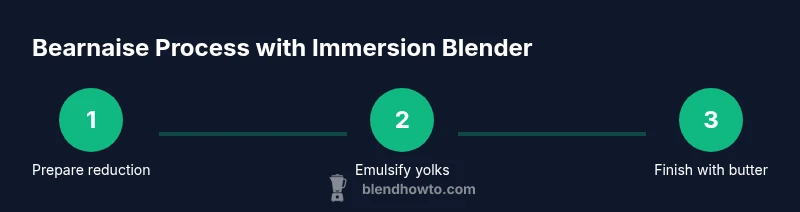
- 1
Prepare the reduction
Dice shallots and combine with white wine and vinegar in a small saucepan. Simmer gently until the liquid reduces to a glossy, syrupy coating that clings to a spoon. This reduction is the flavor backbone and also helps set the emulsion’s acidity. Allow to cool slightly before using.
Tip: Reduce to a glossy consistency; overheating will dull flavor and complicate emulsification. - 2
Setup emulsification base
In a heatproof bowl, whisk three egg yolks with a portion of the reduction while heating very gently—think a warm bath, not a boil. Bring the mixture to about 140-150°F (60-65°C). This temperature range thickens the yolks without cooking them into an omelette, forming the base for a stable emulsion.
Tip: If the yolks start to cook, remove from heat and whisk rapidly to cool them slightly. - 3
Begin emulsification with butter
Transfer the yolk–reduction mixture to a tall beaker. Turn the immersion blender on low and slowly stream in hot, clarified butter in a thin, steady ribbon while you blend. Keep the blender moving in a gentle circular or zigzag pattern to prevent pockets of fat from clumping.
Tip: Patience is key—pour butter slowly and maintain a steady blend to form a smooth emulsion. - 4
Finish and flavor
Once the butter is fully incorporated and the sauce is glossy, remove from heat. Stir in finely chopped tarragon, a pinch of chervil if you like, and a touch of salt and white pepper. If the sauce seems a touch too thick, whisk in a teaspoon of warm water until desired consistency.
Tip: Fresh herbs added at the end preserve brightness and aroma. - 5
Hold and serve
Keep the sauce warm (not hot) in a warm water bath or over low heat, and serve within 20-30 minutes for best texture. Bearnaise pairs beautifully with grilled meats, asparagus, and roasted potatoes.
Tip: Do not reheat directly on high heat; rewarm gently to avoid breaking the emulsion. - 6
Cleanup and practice
Rinse the blender and beaker promptly to remove fat residue. Practice a few more emulsions with different reductions to gain confidence in the technique and timing.
Tip: Immediate cleanup prevents congealed fat from drying on blades and housing.
Frequently Asked Questions
Can I use a blender instead of an immersion blender to make bearnaise?
A blender can emulsify, but it’s harder to control the emulsion and temperature. An immersion blender allows closer, gradual fat incorporation and better heat management. If you use a countertop blender, blend in short bursts with the container vented to prevent splatters.
A blender works, but immersion blending gives you gentler control over temperature and texture.
What makes bearnaise different from hollandaise?
Bearnaise includes a reduction of shallots, vinegar, and tarragon, which adds acidity and herbal brightness. Hollandaise relies on butter and lemon with no herbaceous reduction. Both are emulsions, but bearnaise is distinctly flavored and finished with fresh herbs.
Bearnaise uses a flavored reduction and herbs, while hollandaise is lemon-forward and simpler.
How long can you hold bearnaise warm?
Bearnaise is best served fresh. If you must hold it, keep it warm in a temperature-controlled bath and aim to serve within 20-30 minutes to prevent breakage of the emulsion.
Serve soon after making for best texture; keep warm briefly if needed.
Can you freeze bearnaise?
Bearnaise does not freeze well; the emulsion tends to separate upon thawing. It’s best made fresh and used promptly. If you need make-ahead, prep the reduction and yolks separately and emulsify just before serving.
It’s best fresh, as freezing can ruin the emulsion.
What should I do if the sauce breaks?
Remove from heat, whisk vigorously, and try to re-emulsify with a splash of warm water or a fresh yolk. Maintaining temperature and slow butter addition helps prevent this.
If it breaks, re-emulsify with a fresh yolk or a few drops of warm water.
Watch Video
What to Remember
- Emulsify slowly with steady butter infusion
- Maintain gentle heat to protect yolk integrity
- Use a tall beaker to optimize blender performance
- Finish with fresh herbs for brightness
- Practice reduces anxiety and improves texture