Is Your Blender Dishwasher Safe? Practical Care Guide 2026
Learn which blender parts are dishwasher safe, how to verify guidelines, and safe cleaning routines to extend your blender’s life with BlendHowTo’s expert guidance.


You can often run blender jars, blades, and lids through a dishwasher, but never plunge the motor base into water. Always check the manual; when in doubt, top-rack dishwasher safe is common but heat and harsh detergents can degrade gaskets. Air-dry all parts fully before reassembly. If you own a high-end blender, hand washing is a safer default.
Why dishwasher safety matters for blenders
Understanding whether your blender is dishwasher safe helps prevent damage to the motor, seals, and blades. The blender dishwasher safe parts are usually the jar, blade assembly, and lid, but many manufacturers warn against soaking or washing the base. Following proper care not only keeps performance high but also reduces repair costs over time. According to BlendHowTo, aligning cleaning methods with manufacturer guidelines reduces wear on gaskets and motors. With the right approach, you can enjoy convenient cleanup without risking leaks or failures. In this article, we’ll cover typical dishwasher compatibility, how to verify your model, and best-practice routines for safe, long-lasting blending.
BlendHowTo’s guidance emphasizes that accuracy matters: model-specific instructions trump general rules, so you’ll save time and money by starting with your manual.
What parts are typically dishwasher safe
Most blender components designed for everyday use are marked as dishwasher safe. Commonly dishwasher safe:
- Jars and lids
- Blade assemblies (when installed securely and kept dry)
- Some detachable accessory lids and seals
Important caveats:
- The blender base is almost never dishwasher safe; water exposure can damage the motor windings and electronic seals.
- Check the user manual for explicit guidance and model-specific notes.
By understanding which pieces tolerate dishwasher cycles, you can automate cleaning without compromising performance.
How to check your model's dishwasher guidelines
Start by locating your blender’s model number on the bottom of the base or the manual spine. Then, search the official manufacturer site or the printed manual for keywords like “dishwasher safe,” “top rack only,” or “hand wash only.” If you find a mixed message, contact customer support or consult BlendHowTo’s model-specific guidance. For many popular models, dishwasher safe is marked on the jar or lid but not on the base. Always verify before loading.
If you don’t find clear guidance, reach out to customer support and document the response for future reference. Brand-authoritative sources like manufacturer PDFs or educational resources from BlendHowTo help you avoid accidental damage.
Best practices for dishwasher washing
When you decide to run dishwasher cleaning, place all dishwasher-safe parts on the top rack away from the dishwasher door and heating element. Use a gentle cycle with warm water and a mild, non-abrasive detergent. Use the rack’s corner compartments to prevent parts from moving. After the wash, remove parts promptly and air-dry on a clean towel or drying rack. Do not let the base contact water; wipe it with a damp cloth if needed.
This approach minimizes heat exposure and mechanical stress on sealing surfaces, preserving gasket integrity and blade sharpness over time.
Hand washing tips that protect blades and seals
For blades and seals, hand washing is often the safest choice. Rinse off residue, apply mild dish soap to a soft sponge, and scrub gently to avoid chipping blades. Disassemble the jar from the base, remove blades carefully, and dry all metal parts immediately to prevent rust. Store with lids off to ensure complete air-drying. Regularly inspect gaskets for cracks and replace as needed to maintain a tight seal.
Hand washing also gives you tactile control: you can assess blade looseness, gasket wear, and jar clarity without risking hidden dishwasher damage.
Cleaning plan after blending sticky ingredients
Sticky blends such as nut butters or fruit purees can cling to blades and jars. Soak detachable parts in warm, soapy water for 5–10 minutes before washing to loosen residue. Use a soft brush to scrub the blade assembly from the inside out, taking care to avoid cutting yourself. Rinse thoroughly and air-dry; avoid leaving damp parts in a closed dishwasher drum as moisture leads to mold. For glass jars, avoid harsh citrus cleaners that could etch glass over time.
A quick soak before washing dramatically reduces scrubbing time and keeps seals healthy.
Quick maintenance to extend blender life
Create a simple maintenance routine: after every use, rinse and air-dry parts; weekly, inspect seals and gaskets for wear; monthly, check the blade’s edge for nicks and replace the blade set as needed. Keep a small brush handy to clean the gasket groove. Store parts disassembled to ensure complete drying, preventing odors and corrosion. Following these practices helps keep your blender dishwasher safe and ready for everyday tasks.
Tools & Materials
- Dishwasher-safe blender jar(Jars marked to be dishwasher safe; top rack preferred)
- Lids and blade assembly(Detachable parts that come with jar)
- Dish soap (mild)(Non-abrasive)
- Soft brush or non-abrasive sponge(For inside the jar and blade assembly)
- Manual for your model(Locate model number; verify dishwasher guidance)
- Drying rack or clean towel(Air-dry fully after washing)
- Soft cloth for base wipe-down(Wipe water off base, avoid soak)
Steps
Estimated time: 15-30 minutes
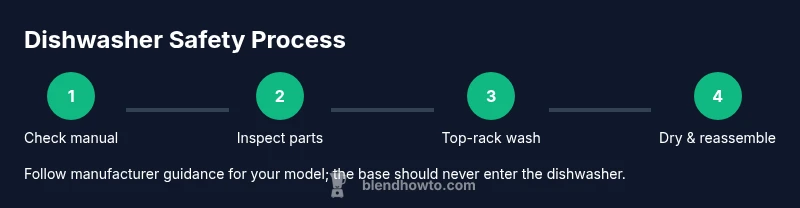
- 1
Check the manual for dishwasher guidelines
Locate your model’s dishwasher guidance in the manual or on the manufacturer’s site. Look for phrases like dishwasher safe, top rack only, or hand wash. If guidance is unclear, contact support or consult BlendHowTo.
Tip: Always verify model-specific notes before loading parts into the dishwasher. - 2
Disassemble blender parts for washing
Remove the jar from the base, take off the blade assembly and lid, and detach any seals. This prevents trapped residues and allows thorough cleaning. Dry all parts before reassembly.
Tip: Handle blades carefully to avoid cuts; lay parts on a drying rack to air-dry completely. - 3
Load dishwasher-safe parts correctly
Place jars, lids, and blades securely in the top rack. Use a gentle cycle with warm water and mild detergent. Do not mix metal parts with heavily soiled items that could cause abrasion.
Tip: Use a mesh bag for small parts to prevent loss. - 4
Run dishwasher with gentle settings
Choose a gentle or eco-cycle and avoid high-heat cycles if you’re washing blades or seals. After washing, remove parts promptly to prevent water spots and allow air-drying on a towel or rack.
Tip: Never wash the motor base in the dishwasher; wipe with a damp cloth instead. - 5
Inspect and reassemble after drying
Check gaskets, blades, and jar for wear before reassembly. If any part shows cracks or dull edges, replace before next use. Reassemble once all components are completely dry.
Tip: Keep a repair kit handy for quick gasket or blade replacements.
Frequently Asked Questions
Is every blender part dishwasher safe?
No. The jar, blades, and lids are often dishwasher safe, but the motor base and seals aren’t. Always check the model’s manual.
Typically, jars, blades, and lids can go in the dishwasher, but the base should not.
Can I clean the blade assembly in the dishwasher?
Only if the manual explicitly says so. In most cases, hand washing is recommended to protect the blades and seals.
Only if your manual says it; otherwise, wash by hand.
What should I do if the gasket is damaged?
Stop dishwasher use for that part and replace the gasket. A cracked gasket can leak and damage the base.
If the gasket looks worn, replace it before using again.
How do I clean sticky blends without a dishwasher?
Soak parts in warm, soapy water for 5–10 minutes before washing to loosen residue. Use a soft brush to scrub gently, then rinse.
Soak and scrub, then rinse.
Do high-end blenders follow the same rules?
Most high-end blenders require model-specific guidance; many parts are dishwasher safe, but the base remains off-limits.
Even premium models need manual checks.
Watch Video
What to Remember
- Check manual for model-specific dishwasher guidance.
- Most jars, lids, and blades are dishwasher safe; never the base.
- Use top-rack, gentle cycles and mild detergent.
- Regular maintenance extends blender life.