Blender Mini: A Practical Guide for Home Cooks and Hobbyists
Learn how to pick and use a blender mini, the compact immersion blender for small batches, sauces, and smoothies. Practical tips, features, and care from BlendHowTo.


Move smoothly with a blender mini, a compact immersion blender that handles sauces, smoothies, and small batches fast. It shines in tight kitchens and single servings. According to BlendHowTo, choosing models with variable speed, a comfortable grip, and a dishwasher-safe jar reduces mess and boosts control for everyday cooking in busy mornings.
What is a blender mini?
A blender mini is a compact immersion blender designed for single servings and quick emulsions. It combines a motorized hand-held shaft with a blade at the tip, letting you blend directly in cups, jars, or small bowls. Because of its size, it excels at small-batch tasks like salad dressings, smoothies for one, purées, and soups. The BlendHowTo team notes that the best models offer a balance of power and control, making it easy to achieve a smooth texture without splashing or mess. If you want to minimize countertop clutter while keeping versatility, a blender mini is the practical middle ground between a whisk and a full-size blender.
Key features to look for in a blender mini
When evaluating a blender mini, focus on motor power, speed range, attachments, and ease of cleaning. A practical model should have a variable-speed control (or at least a slow-start function) to prevent splattering and a sturdy, ergonomic grip for stable handling. Look for a removable shaft for easy cleaning and dishwasher-safe components. A 12-16 ounce blending jar or cup is ideal for single servings, while some kits include a small chopping or whisk attachment to expand use cases. The BlendHowTo guidance emphasizes choosing a unit with durable blades and a well-sealed shaft to minimize leaks during use.Connectivity to other kitchen tools (like a beaker with measurement marks) can speed up prep and reduce spills.
How to use your blender mini safely
Safety comes first when operating a blender mini. Always unplug before assembling or disassembling, and ensure the blade unit is securely attached before use. Start at the lowest speed to dread the initial suction, then gradually increase to your target setting. Keep your blending container tall enough to prevent splashes, and blend in short bursts rather than a continuous stream. If you are blending hot liquids, vent the container and tilt slightly to let steam escape. The BlendHowTo team highlights that using a tall, narrow beaker improves control and reduces the risk of splashes.
Cleaning and maintenance
Cleaning should happen soon after blending to prevent staining and odor buildup. Rinse the shaft and blade under warm water, then wash with mild dish soap. Some models allow the shaft to detach for easier cleaning; if so, remove the blade assembly and wash separately. Dry all components completely before reassembling, and store with the blade cap in place to protect the seal. Regularly inspect the shaft seal for wear and replace as needed to avoid leaks. The longevity of a blender mini depends on proper cleaning and dry storage after each use.
Food safety and health tips
Single-serve blending reduces the risk of cross-contamination when preparing sauces, smoothies, and baby foods. Always start with clean ingredients and a clean container. If blending raw ingredients, ensure thorough mixing to achieve consistent texture. For dairy and nut-based blends, consume promptly or refrigerate promptly to maintain quality. The BlendHowTo analysis emphasizes following general food-safety guidelines from reputable sources to minimize health risks.
Comparing models: budget, mid-range, premium
Budget blender minis typically offer basic speed control and fewer attachments, yet they cover everyday tasks like light sauces and smoothies. Mid-range units often include additional attachments, stronger blades, and better ergonomics. Premium models may boast higher wattage, broader speed ranges, quieter operation, and dishwasher-safe, all-metal shafts. When choosing, balance price against features that matter to your kitchen, such as attachment versatility and ease of cleaning. BlendHowTo’s framework suggests listing your must-haves and nice-to-haves before shopping.
Practical recipes to try with a blender mini
A blender mini excels at quick emulsions. Try a classic vinaigrette by blending oil, vinegar, and mustard in a tall cup. For smoothies, blend yogurt, fruit, and a splash of juice in 30–60 seconds until smooth. For quick sauces, pulse garlic, herbs, and olive oil to a bright paste. You can also create light purées by blending cooked vegetables with broth to a creamy texture. Each recipe should use your blender mini’s pulse feature to control texture and prevent over-processing.
AUTHORITY SOURCES
- FDA food safety guidelines: https://www.fda.gov/food
- USDA Food Safety and Inspection Service: https://www.fsis.usda.gov
- Harvard T.H. Chan School of Public Health: https://www.hsph.harvard.edu
Tools & Materials
- immersion blender (blender mini)(Look for variable speed, 100-450+ watts; ensure blade shaft detaches for cleaning.)
- 1-cup to 2-cup beaker or jar(Clear measurement marks help with precise portions and emulsions.)
- silicone spatula(Useful for scraping sides without scratching.)
- dishwasher-safe attachments(Check if jar, shaft, and cap are dishwasher-safe.)
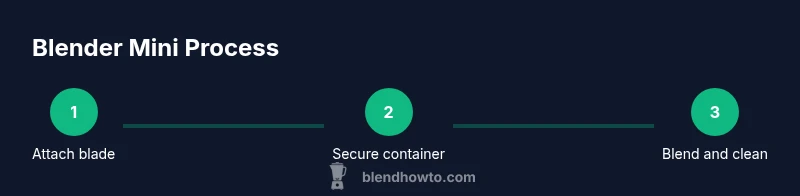
Steps
Estimated time: 15-20 minutes
- 1
Attach blade securely
Unplug the unit, then align and twist the blade assembly onto the motor shaft until it clicks. Confirm the blade is tight and straight before powering on.
Tip: A loose blade can wobble or detach during blending. - 2
Position blending container
Place your ingredients in a tall, stable vessel. The tall shape reduces splashes and keeps your countertop clean while blending in short bursts.
Tip: Fill no more than 2/3 of the container to allow space for movement. - 3
Start at low speed
Plug in and begin at the lowest setting. Pulse for 2–3 seconds, then pause to check texture and progress.
Tip: Low speed minimizes splatter and protects delicate ingredients. - 4
Increase speed gradually
If needed, move to a higher speed and blend in short bursts until you reach the desired texture.
Tip: Avoid running continuously for more than 30–45 seconds at a time. - 5
Finish and measure texture
Check for uniform consistency. If needed, pulse briefly or run a bit longer at lower speed.
Tip: For creamy sauces, blend until smooth with no visible chunks. - 6
Clean and dry
Detach the blade assembly if possible and wash components with warm, soapy water. Dry fully before reassembling.
Tip: Drying prevents corrosion and mold growth in sealed joints.
Frequently Asked Questions
What is a blender mini and what are its common uses?
A blender mini is a compact immersion blender designed for single servings and quick emulsions. It blends sauces, smoothies, and soups directly in cups or small jars for fast, convenient prep.
A blender mini is a small immersion blender great for single servings like smoothies and sauces.
Can I blend hot liquids safely with a blender mini?
Yes, many models handle hot liquids when used with a tall, vented container. Start slowly and keep the container partially open to vent steam.
Yes, but use a tall container and start slowly to avoid splashes.
How do I clean a blender mini after use?
Rinse the shaft and blade immediately, wash with warm soapy water, and dry thoroughly. Detach blades if your model allows for easier cleaning.
Rinse, wash, and dry the parts; detach blades if possible.
What attachments come with a blender mini?
Most kits include a blending shaft and a beaker; some models add a whisk or small chopper attachment. Check product details for exact inclusions.
Blending shaft and jar are common; extras vary by model.
Is a blender mini good for ice?
Blender minis can handle soft ice or small ice chunks in brief pulses. For dense ice, use a larger blender with more power.
Good for soft ice in short bursts.
How should I choose the right blender mini?
Consider motor power, speed range, ease of cleaning, and attachment flexibility. Read reviews to assess durability and support.
Look at power, speed, and how easy it is to clean.
Watch Video
What to Remember
- Choose variable speed for versatility
- Use tall containers to minimize splashes
- Clean promptly to extend life
- Blend small batches for best control