DIY Blender Bottle: Build Your Own On-the-Go Mixer
Learn how to create a safe, functional, and cost-effective DIY blender bottle for on-the-go blending. This guide covers materials, design options, a step-by-step build, maintenance, and troubleshooting.


You can craft a functional, leak-proof diy blender bottle using common, food-safe materials. This guide outlines the essential components, safety considerations, and a concise build workflow so you can blend smoothies, shakes, or dressings on the move without relying on store-bought options.
What is a diy blender bottle?
A diy blender bottle is a homemade blending container designed to mix liquids and soft ingredients on the go. It leverages a food-safe bottle, an internal blending insert (such as a mixing ball or silicone whisk), and a leak-proof cap to create a portable solution for smoothies, protein shakes, dressings, and sauces. The goal is to balance convenience with safety, ensuring the bottle is easy to clean and sturdy enough for daily use. For home cooks and hobbyists, the diy blender bottle offers customization in size, material, and lid design, letting you tailor the device to your preferred recipes and on-the-go lifestyle.
Safety-first: materials that work with food-grade standards
When building a diy blender bottle, prioritize food-grade materials to minimize risk of chemical transfer or odors. Choose BPA-free plastic or glass bottles with FDA-approved seals. The blending insert should be non-reactive stainless steel or food-grade silicone. Avoid unlabeled or recycled plastics, and never heat-cook ingredients directly in a makeshift bottle unless the material is rated for heat. Sanitize all parts before first use and after each cleaning to prevent microbial growth. A well-sealed cap or gasket reduces leaks during shaking, a critical feature for portable use.
Design options: bottle shapes, sizes, and blending mechanisms
There are multiple design paths for a successful diy blender bottle. Classic choices include a tall, cylindrical bottle with a wide mouth for easy loading and cleaning. The internal blending mechanism commonly uses a stainless-steel mixing ball or a durable silicone whisk inserted inside the bottle. Consider mouth width, bottle height, and cap type to balance ease of pouring with secure sealing. If you need more powerful blending for ice or tougher ingredients, look for a bottle compatible with a heavier-duty insert and a cap that tolerates vigorous shaking without leaking.
Essential components for a reliable DIY setup
To build a dependable diy blender bottle, focus on four core parts: (1) a food-safe bottle with a reliable, leak-proof lid; (2) a non-reactive blending insert (ball or whisk); (3) a gasket or seal that fits the cap to prevent leaks; and (4) a means to sanitize and dry the bottle after use. Optional upgrades include measurement marks to track portions, a silicone cap insert for additional sealing, and a protective sleeve or sleeve insert to improve grip and reduce impact when dropped.
How to ensure safe, comfortable use and cleaning
Safety and comfort come from thoughtful design choices. Select a bottle with a wide mouth for easy loading and thorough cleaning, and choose an insert that won’t scratch the bottle. For cleaning, rinse immediately after use, wash with warm soap and a bottle brush, and allow to air-dry completely to prevent mold. If you plan to machine-wash, verify that the bottle and lid are dishwasher-safe. Label the bottle with the contents and date to keep flavor and safety in check.
Troubleshooting: leaks, odors, and performance
Common issues include leaks at the lid seam, lingering odors from ingredients, and insufficient blending power. To fix leaks, re-seat the gasket or upgrade to a better seal. Odors can be mitigated by thorough drying, occasional baking-soda based deodorizing, or rotating between different bottle materials. If blending is inconsistent, check the insert’s fit and ensure the bottle is not overfilled; follow manufacturer guidelines for maximum fill levels. Regular maintenance prevents recurring problems.
Real-world usage: recipes, scenarios, and customization
A diy blender bottle shines in everyday routines: a fast breakfast smoothie, post-workout protein shake, or a quick vinaigrette for salads. Customize with recipe-friendly measurement marks, color-coded lids, or labeling for different flavors. For home-based chefs, this approach reduces waste from disposable containers and supports on-the-go meals. The more you tailor the design to your kitchen, the more convenient it becomes to stick with your blending habit.
Alternatives: ready-made vs. DIY trade-offs
Pre-made blender bottles offer consistent seals and tested safety standards, but a DIY version provides customization and potential cost savings. Trade-offs include time spent assembling and the risk of incompatibilities between parts. If reliability and ease of use are paramount, a purpose-built bottle with adjustable inserts may be a better long-term option; otherwise, a carefully chosen combination of bottle and insert can meet most on-the-go blending needs.
Tools & Materials
- Food-grade bottle with leak-proof cap(Choose BPA-free, durable plastic or glass, prefer wide mouth for easy loading and cleaning)
- Blending insert (mixing ball or silicone whisk)(Non-reactive material; stainless steel or food-grade silicone)
- Gasket or sealing ring(Optional but helps achieve a tighter seal; ensure compatibility with your cap)
- Bottle brush or small cleaning tools(Essential for thorough cleaning and long-term hygiene)
- Measuring marks or label tape(Helpful for portion control and recipe scaling)
- Food-safe silicone sealant (optional)(Only if you’re sealing joints; ensure it’s rated for food contact)
- Funnel (optional)(Use for loading ingredients without spills)
Steps
Estimated time: 20-40 minutes
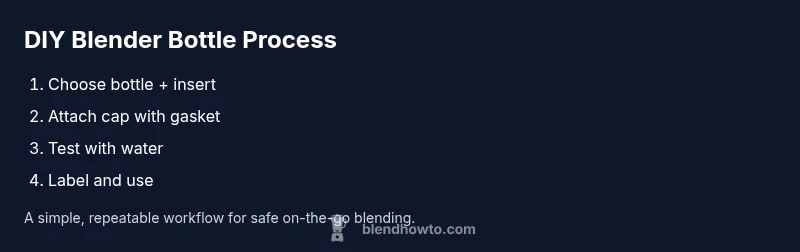
- 1
Gather and sanitize materials
Collect all components and wash them with warm, soapy water before first use. Rinse thoroughly and let them dry completely to prevent mold growth.
Tip: Sanitizing your hands and workspace reduces contamination during assembly. - 2
Inspect bottle and insert compatibility
Check that the bottle threads match the cap and that the blending insert fits freely inside without rattling when shaken.
Tip: A loose insert can reduce blending efficiency; test by shaking with a small amount of water. - 3
Install the insert and seal the cap
Place the blending insert inside the bottle, then attach the cap securely. If you use a gasket, ensure it sits evenly to prevent leaks.
Tip: Do a quick leak test with water before loading ingredients. - 4
Test the build with water
Fill the bottle with water to the halfway mark and shake vigorously to check for leaks and blending performance.
Tip: Listen for unusual sounds; a rattling insert can indicate a loose fit. - 5
Clean and dry after testing
Rinse immediately after testing, wash with mild soap, and air-dry the bottle and lid completely before reuse.
Tip: Avoid letting moisture linger in crevices to prevent odor buildup. - 6
Label and put into daily use
Label the bottle for different recipes or flavors and begin with small portions to gauge taste and texture.
Tip: Start with liquids or soft ingredients to minimize stressing the insert during initial uses.
Frequently Asked Questions
Is it safe to modify a regular bottle into a blender bottle?
Only if every component is food-grade and designed for repeated shaking. Modifying parts like caps or seals can compromise safety and leaks. Prefer a purpose-built bottle with compatible inserts when possible.
Only if you use food-grade parts designed for it; modifying caps or seals can create leaks or contamination. Consider a purpose-built bottle if you’re unsure.
Can I blend ice in a DIY bottle?
Blending ice is possible with a sturdy bottle and a robust insert, but it may be less efficient than commercial options. Start with crushed ice and small amounts of liquid to reduce stress on the bottle.
It’s possible with a strong bottle and insert, but don’t push it too hard. Start with crushed ice and small amounts of liquid.
What materials are best for food contact?
Opt for BPA-free plastics or glass with FDA-approved seals. Avoid unknown plastics or reclaimed materials that could harbor odors or release chemicals.
Choose BPA-free plastics or glass with food-grade seals to stay safe and odor-free.
How should I clean a DIY blender bottle?
Rinse immediately after use, wash with mild soap, and use a bottle brush to reach the corners. If dishwasher-safe, place on the top rack; otherwise air-dry completely.
Rinse, wash, and scrub with a bottle brush. Let it dry completely before reuse.
Where can I find components at a good price?
Look for generic, food-grade bottles and mixing inserts at kitchenware retailers or online marketplaces. Compare cap styles and gasket compatibility to ensure a snug fit.
Check kitchenware shops or online marketplaces for affordable bottles and mixing inserts.
Why might a DIY bottle be preferable to a commercial shaker?
A DIY bottle offers customization, potential cost savings, and sustainability by reducing disposable containers. It may require more setup and maintenance than a ready-made option.
It’s customizable and potentially cheaper, but may take more effort to maintain than a commercial bottle.
Watch Video
What to Remember
- Choose food-grade materials for safety and longevity
- Test for leaks with water before actual use
- Prioritize wide-mouth bottles for easy cleaning
- Maintain and sanitize after every use