Hand Blender How-To: Safe, Easy Blending Guide
Discover a practical hand blender how-to use guide for soups, sauces, smoothies, and batters. Learn setup, safety, textures, cleaning, troubleshooting, and advanced tips to master quick blending in your own kitchen.


A hand blender is a compact tool for blending, puréeing, and emulsifying foods directly in pots, bowls, or cups. To use it safely, attach the blade, choose the right speed, keep the blade submerged, and move slowly to avoid splashes. It’s ideal for soups, sauces, smoothies, and light batters.
What is a hand blender and why use it?
A hand blender, also known as an immersion blender, is a compact, wand-like tool designed to blend directly in the pot, pitcher, or bowl. It excels at turning chunky vegetables into velvety soups, emulsifying vinaigrettes, and whipping light batters without the need to transfer hot liquids to a countertop blender. For beginners, the appeal is immediate: fewer dishes, faster results, and the ability to adjust texture on the fly. When you search for a hand blender how to use, you’ll notice that the best outcomes come from understanding submersion depth, controlling speed, and choosing the right attachment for the task. In this guide, we’ll cover practical steps, safety considerations, and tips that help you achieve consistently smooth textures with minimal mess.
What you’ll learn in this guide
- How to set up your hand blender with basic and optional attachments
- Safe operation tips for hot liquids and dense batters
- Techniques for achieving smooth soups, sauces, and creams
- Cleaning routines that protect the motor and blades
- Quick-start recipes to get you blending right away
Real-world use cases and textures
From a silky carrot soup to a chunky pesto emulsion, your hand blender can handle a variety of textures. For a silky consistency, blend slowly with the blade fully submerged and use short pulses if needed. For chunkier results, keep the blade closer to the bottom and move it less aggressively. The key is to practice with small batches, taste as you go, and adjust the speed and immersion depth. Remember to respect the blade guard; a proper guard reduces splatters and provides stability when blending at different angles. With practice, you’ll know which attachment to reach for each dish and how to control texture with precision.
The core idea behind practical blending
The essence of using a hand blender effectively is steering the motion, not just the speed. Start at the liquid’s surface and gradually plunge the blade deeper to integrate dry ingredients. Keep a steady, slow pace to avoid air pockets and over-foaming, especially with dairy. By coordinating immersion depth, motion, and speed, you can go from rough purée to a polished finish in minutes.
Safety reminders that keep you cooking confidently
Always unplug before changing attachments, and never operate the blender with a damaged cord. Use heat-resistant containers when blending hot liquids, and keep fingers away from the blade area. If your unit has a detachable shaft, disconnect it for thorough cleaning. The goal is to blend with control, not force, to avoid splashes and potential burns.
Quick-start checklist for beginners
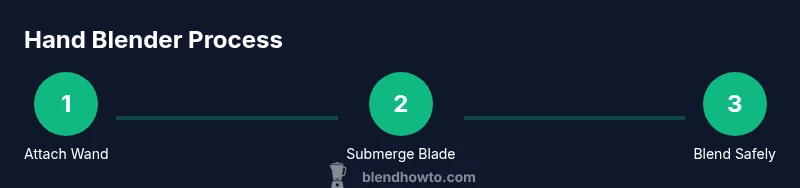
- Attach the correct blending wand and any optional attachments
- Use a tall, stable container with enough liquid depth
- Submerge the blade completely before turning on the motor
- Start at the lowest speed and increase gradually as needed
- Clean blades and shaft immediately after use to prevent residue buildup
A word on attachments and their roles
Most hand blenders include a blade-wand, a beaker or tall cup for blending liquids, and optional attachments like a whisk or mini-chopper. The whisk is great for emulsifying dressings or whipping cream, while the mini-chopper handles small batches of herbs, nuts, or onions. Choosing the right attachment widens your blending repertoire while keeping cleanup simple.
Practical tips for consistent results
- Cut larger pieces into smaller chunks for uniform blending
- Move the wand in gentle vertical or circular motions to avoid splashes
- Pause to check texture and then continue blending if needed
- Always keep the container on a stable surface to prevent spills
Tools & Materials
- Hand blender with detachable blending shaft(Ensure it has variable speed and compatible attachments (blade, whisk, or chopper).)
- Tall, sturdy container (cup or pitcher)(Capacity of at least 1 liter preferred for hot liquids and larger batches.)
- Heat-safe pot or bowl(Use for soups and hot emulsions; avoid thin or unstable vessels.)
- Silicone spatula(For scraping sides without damaging blades.)
- Dish sponge or cleaning brush(Clean after use; keep the motor housing dry.)
- Protective gloves or oven mitts(Useful when handling hot liquids or steam.)
- Instruction manual or safety guide(Refer to model-specific precautions and warranty terms.)
Steps
Estimated time: 25-35 minutes
- 1
Unpack and inspect
Unpack all components and check for damage or missing attachments. Inspect the blade guard and shaft to ensure there are no cracks or loose parts. If you notice any issues, don’t use the unit and contact the manufacturer.
Tip: Look for a user manual that lists compatible attachments for your model. - 2
Attach the correct accessory
Attach the blending wand to the motor housing firmly. If you’re using a whisk or chopper, snap the attachment in place according to your manual. Ensure all connections click securely before plugging in.
Tip: Never force attachments; misalignment can damage the motor. - 3
Choose a safe work vessel
Select a tall, stable container to minimize splashes. For hot soups, a deep pot with a broad base works well, but avoid fragile glass bowls that might crack with heat.
Tip: Fill liquids to about halfway to avoid overflow during blending. - 4
Position the blender correctly
Lower the blade into the liquid until it is fully submerged. Keep the appliance upright and avoid tilting the motor away from the liquid to prevent aerosolizing ingredients.
Tip: Submersion depth matters: deeper immersion reduces splatter. - 5
Power on and start at a low speed
Plug in the device, set to the lowest speed, and briefly test in a small amount of liquid. This helps you gauge the machine’s response and prevent sudden splashes.
Tip: If your model has a pulse option, use short bursts to begin. - 6
Blend in short pulses for control
Blend in 5–10 second bursts, pausing between pulses to check texture. This approach prevents over-blending and reduces heat buildup.
Tip: Pulses give you more control over texture than continuous blending. - 7
Move the wand smoothly
Raise and lower the wand slowly, keeping it near the bottom of the container for even work. Avoid hovering near the top where splashes are likely.
Tip: Use a gentle zigzag motion to distribute ingredients evenly. - 8
Gradually increase speed and depth
If you need a smoother finish, increase speed gradually and deepen immersion as the mixture begins to emulsify or purée. Step back if you notice resistance or overheating.
Tip: Don’t rush—texture improves with patient gradual blending. - 9
Check texture and finish
Stop blending when you reach the desired consistency. For soups and sauces, a quick taste test helps determine if more blending is required.
Tip: If lumps remain, blend briefly at a slightly higher speed with minimal depth. - 10
Clean attachments after use
Disconnect power and detach the shaft. Rinse the blade and guard under running water, then wash with mild soap. Wipe the motor housing with a damp cloth and dry thoroughly.
Tip: Never immerse the motor housing; moisture can damage electronics.
Frequently Asked Questions
What is a hand blender and what can I use it for?
A hand blender is a compact immersion blender used to blend, purée, emulsifiy, and whisk directly in a pot, bowl, or pitcher. It’s ideal for soups, sauces, smoothies, and light batters. Attachments like a whisk or mini-chopper expand its versatility for quick, single-pan cooking.
A hand blender blends directly in your cooking vessel, great for soups, sauces, and smoothies. Attachments add whisking and chopping capabilities.
Can I blend hot soups safely with a hand blender?
Yes, you can blend hot soups with a hand blender, but use a tall, stable container and keep the blade submerged to minimize splatter. Start at low speed, blend in short bursts, and monitor the temperature to avoid overheating the mixture.
Yes, but keep the blade submerged and blend in small bursts to prevent splatters.
What attachments do I need for everyday blending?
At minimum, you need the blending wand. A whisk attachment is helpful for emulsions and whipping, while a mini-chopper expands your ability to process nuts, onions, or herbs. Check your model for compatibility and use the appropriate attachment for each task.
A basic wand plus optional whisk or mini-chopper covers most everyday tasks.
How should I clean a hand blender without damaging it?
Disconnect the power and detach the shaft before cleaning. Rinse the blade and guard under warm water, wash with mild soap, and dry completely. Do not immerse the motor housing in water to protect the electronics.
Unplug, detach the shaft, clean the blade and guard, and dry thoroughly.
Why does my hand blender splatter sometimes?
Splattering usually happens when the blade isn’t fully submerged or when blending at the surface. Submerge the blade, start slowly, and use short pulses to control the spray. A taller container helps prevent splashes.
Most splatter comes from shallow immersion; submerge deeper and blend in short bursts.
Is there a difference between a hand blender and a standard blender?
Yes. A hand blender is portable and used directly in the cooking vessel, ideal for small batches and hot liquids. A countertop blender is larger, usually better for larger quantities and ice blends. Each tool serves different kitchen needs.
Hand blenders are great for quick, small batches; countertop blenders handle bigger jobs.
Watch Video
What to Remember
- Submerge the blade fully before blending.
- Start at low speed and increase gradually.
- Use the right attachment for each task.
- Clean attachments promptly after use.