Blender and Juicer: A Comprehensive Side-by-Side Comparison
A detailed comparison of blender and juicer performance, use cases, cleaning, and price for 2026 home kitchens. Learn which appliance fits your smoothie routines, health goals, and budget.


Choosing between a blender and a juicer shapes your daily routines more than you might expect. In short, a blender and juicer are built for different outputs: smoothies and purees with blended fiber vs. juice with most fiber removed. This comparison highlights when each appliance shines, common tradeoffs, and practical buying tips for home cooks and hobbyists.
The Core Difference Between Blender and Juicer
The blender and juicer are two staple machines in modern kitchens, yet they serve fundamentally different purposes. When you look at the term blender and juicer together, you’re considering two devices that process produce in distinct ways: one pulverizes everything into a thick, nutrient-rich blend, while the other isolates the liquid portion, leaving pulp behind. According to BlendHowTo, your choice should hinge on what you want to drink or eat most often, how you want to manage fiber, and how much you value texture, nutrition, and convenience in a busy 2026 kitchen. In many households, the decision is not an either/or but a “both” that supports varied meals and health goals. A blender is your workhorse for smoothies, soups, and batter-like blends, whereas a juicer excels at maximizing juice yield and clarity. The practical implications go beyond flavor: texture, digestion, satiety, and even storage all shift based on whether you’re blending or juicing. By understanding these core differences, you can design a workflow that minimizes waste, saves time, and aligns with your dietary preferences. The BlendHowTo team notes that most home cooks ultimately benefit from clarifying three questions: Do you want full-spectrum nutrition with fiber or a smoother juice? Is counter space a premium, or can you spare a larger appliance? And how much effort are you willing to invest in cleanup after each use? These questions help determine if you should invest primarily in a powerful blender, a dedicated juicer, or a hybrid solution that covers both worlds.
Fiber retention, sensitivity to seeds, and the texture you enjoy are central to the blender vs juicer decision. A blender embraces the whole fruit or vegetable, delivering a slurry with fiber and sometimes seeds. A juicer extracts the liquid and leaves behind pulp, resulting in a thinner beverage with less fiber. Your long-term health routines, such as fiber intake, hydration, or even nutrient absorption, will be shaped by this fundamental choice. If you routinely prepare smoothies with leafy greens, frozen fruit, and oats, a blender is the versatile ally you’ll lean on most. If your mornings evolve around fresh orange juice, carrot juice, or other beverages where you want a smooth liquid, a juicer can be a time-saver and a clarity-focused option. The key is to map your typical recipes to the outputs you prefer and then select the device that makes those outputs easiest to achieve.
Key Differences at a Glance
- Speed and texture: Blenders are designed for thick textures and emulsions; juicers produce thin, clear liquids with minimal pulp. In blender and juicer terms, you’ll usually get a fiber-rich blend versus a fiber-poor juice. This distinction matters for satiety and digestion, and it guides how you structure meals around each machine.
- Fiber and satiety: Blenders retain most of the fiber from produce, which can help with fullness and slow sugar absorption. Juicers separate most of the fiber, creating a lighter beverage that can be consumed quickly but may not satisfy appetite as effectively.
- Waste and cleanup: Blenders generate more blended residue (pulp) that you may compost or repurpose in recipes. Juicers produce pulp as a byproduct that varies in dryness; cleanup often involves different baskets or strainers depending on model.
- Juice yield and clarity: Juicers are optimized for maximum juice yield and clarity, yielding a smoother glass of juice with minimal solids. Blenders create a dense liquid that may require straining if you want a smoother texture for certain drinks.
- Versatility: A high-powered blender can handle smoothies, soups, nut butters, and batters. Juicers excel at pure juice but can be limited for non-juice tasks. The balance between versatility and specialization is central to the blender vs juicer decision.
- Price and footprint: Both categories span budget ranges, but you’ll typically find premium blenders with powerful motors and accessories, alongside robust juicers with multiple juicing options. Space on the counter and storage may influence your choice, especially in smaller kitchens. The BlendHowTo guidance emphasizes evaluating your kitchen footprint and maintenance tolerance before purchasing.
In practical terms, if your weekly menu focuses on blended meals or protein shakes, prioritize a blender. If you crave fresh juice every morning and want a quick, pulp-free drink, prioritize a juicer. For many households, a compact blender plus a separate juicer or a premium hybrid may provide the best of both worlds without compromising on ease of use.
How to Choose Based on Your Goals
Your goals drive the blender vs juicer decision more than any marketing claim. If your objective is to support a fiber-forward diet while maintaining convenience, a good blender can deliver smooth, creamy textures with whole fruits, vegetables, and add-ins like oats, seeds, or protein powders. The mass of produce blends into a nutrient-dense beverage or meal base, and you can control thickness by adjusting liquid content. On the other hand, if your primary aim is to maximize juice yield, extract crisp liquids from citrus and vegetables with minimal fiber, then a juicer becomes the standout choice. A juicer’s filtering mechanism can concentrate flavors and nutrients in ways that a blender cannot achieve with the same produce.
For health enthusiasts, consider how you plan to use produce. If you routinely blend kale, berries, and yogurt into a smoothie, a blender with a powerful motor and durable blades is essential. If you want a daily citrus or carrot juice with clean, smooth texture, a dedicated juicer will simplify the process. In terms of budget, you should estimate ongoing costs like replacement blades, filters, and cleaning accessories. The BlendHowTo team recommends opting for a device with a robust warranty and accessible replacement parts, as this reduces long-term ownership costs and ensures consistent performance.
If you’re short on time, look for features that cut prep steps: a wide-mouth jar, pre-programmed speeds, and dishwasher-safe components. For those who enjoy batch-prepping, a blender’s ability to handle large batches of soup bases or smoothies can dramatically reduce daily cooking time. Hybrid devices exist but may come with compromises in optimization for either juices or blends. In every case, align the device’s strengths with how you actually cook and drink, not only with what looks appealing in ads. BlendHowTo’s practical testing suggests listing top 5 daily-use recipes and confirming that the appliance performs well across that set before committing to a purchase.
Cleaning, Maintenance, and Durability
Cleaning is often the deciding factor after taste and texture. Blenders require thorough rinsing of the jar, blades, and lid, plus occasional blade maintenance. Juicers demand attention to the juice basket, strainer, and pulp ejection area, which can be more time-consuming if you juice leafy greens or fibrous produce. Durability matters in both categories; look for metal blades, BPA-free components, and seals that resist wear from citrus acids or fibrous produce. The key is regular maintenance—immediate rinse after use, proper disassembly, and occasional deep cleaning to prevent mold and odors. When you compare blender and juicer setups, the better option often depends on how you manage the post-usage routine. The BlendHowTo guidance emphasizes selecting machines with dishwasher-safe parts and straightforward assembly to minimize the daily cleanup burden.
If your kitchen includes frequent guests or family meals, a simpler, modular layout can reduce clutter and make both devices easier to reach. For those who frequently work with nut butters or seed milks, a high-powered blender is superior, but you must keep blades sharp and avoid overheating the motor through dense mixtures. Juicers with easier-to-clean housings and intuitive pulp-control options can reduce the total effort required to maintain a clean, healthy juice routine. Pro tip: expose all removable parts to air-drying between uses rather than leaving damp components in the machine; this helps prevent odor buildup and extends the life of gaskets and seals.
Pricing and Value: Invest or Save?
Pricing for blender and juicer combos spans a broad range, and price alone doesn’t tell the whole story. If you prioritize daily smoothies and protein shakes, investing in a mid-range blender with a strong motor and sturdy blades pays off through durability and flexibility. A high-end blender with multiple pre-programmed modes can perform soups, nut butters, and frozen desserts with minimal prep, delivering significant value if you frequently cook complex recipes. A premium juicer with advanced juicing technology can maximize yield and juice clarity, but the ongoing cost of filters, pulp baskets, and replacement parts adds up. The decision should balance your expected usage, maintenance ease, and the types of beverages you enjoy most. BlendHowTo’s 2026 analysis suggests mapping your typical week and calculating how often you’ll juice or blend, then compare models with similar feature sets to determine which offers the best long-term value rather than the lowest upfront price.
For frugal buyers, consider a capable mid-range blender with a robust warranty and a basic, dependable juicer. For enthusiasts who convert into a daily ritual—green smoothies, nut milks, and fresh citrus—a dual-purpose system or a premium blender-first approach can yield the most satisfaction with the least friction. Always factor in replacement parts and the cost of added accessories when evaluating price, because those are recurring considerations that affect long-term value.
Use Case Scenarios: Best For
- Morning smoothies with a blender and fiber-rich ingredients: If your goal is to sustain energy through the morning, a blender and blender-juice hybrid may be optimal. The blender and juicer are not mutually exclusive, but if you must choose one, begin with your most frequent recipe type. Blend smoothies and blends with a blender, and consider a juicer mainly for dedicated juice days. The makeup of your typical grocery list matters: leafy greens, berries, oats, nuts, and seeds point toward a blender; citrus and celery-heavy recipes point toward a juicer.
- Low-fiber juice cleanups: For quick, clean juice, a juicer shines because you can obtain a smooth liquid with minimal pulp and easier digestion on busy days. In contrast, a blender produces a thicker beverage that contains more fiber, which some people prefer for fullness and slow sugar absorption.
- Batch prep and meal building: If you like large batches of soups, sauces, or nut-based spreads, a blender can replace several separate appliances. Juicers are less versatile in this scenario, but they’re excellent for creating juice-forward meals when you want fresh beverages as sides or quick hydration.
- Budget and space considerations: A single powerful blender may cover many jobs, but a dedicated juicer can be more space-efficient for typical juice routines. If space is at a premium, choose a compact blender with the power to handle a range of recipes, and buy a separate juicer only if your juice habit is consistent and frequent.
Hybrid Appliances and Alternatives
Hybrid machines that combine blending and juicing capabilities exist, but they often trade off some performance in either domain. If your goal is to reduce clutter while maintaining flexibility, a high-quality blender with an optional juice extraction function might be tempting. However, in practice you may end up paying a premium price for a device that is optimized for neither blending nor juicing as effectively as single-purpose machines. The BlendHowTo guidance suggests evaluating whether a hybrid truly saves time and space for your typical recipes, or if a dedicated blender plus a separate juicer would be more efficient and easier to maintain. If you decide to explore hybrids, choose models with independently replaceable blades and a modular design so you can upgrade one function without replacing the entire unit.
Another route is to consider a compact, single-purpose appliance for juice and a larger blender for blending tasks. This approach keeps performance high for both activities and avoids the compromises often found in hybrids. When you pick separate devices, you can upgrade one without affecting the other, and you can store spare parts more easily. If space is extremely limited, prioritize the device that aligns most with your daily routine—blender for blended meals or juicer for juice-centric days—and add the second device only when you have sufficient counter space.
Practical Guide: 5-Step Test Before Purchase
- List your top 5 recipes and mark which require blending versus juicing; 2) Check motor power and blade design to ensure it handles dense greens and frozen fruit without overheating; 3) Compare ease of cleaning, dishwasher compatibility, and the availability of replacement parts; 4) Look for warranties that cover blades and seals for long-term reliability; 5) Test with a grocery bag of typical produce to see how the machine performs in real use. The goal is to simulate your actual kitchen workflow and ensure the chosen blender and juicer options support your routine without becoming a maintenance burden. This practical approach helps you avoid overpaying for features you’ll rarely use. BlendHowTo’s team emphasizes trying key recipes at a local showroom if possible, to observe user-friendliness and noise levels in real life.
Integrating with a Busy Kitchen: Workflow Tips
To make the most of either option, design a simple workflow that minimizes prep and cleanup. Chop ingredients ahead of time, organize sections of the counter by task (blending vs juicing), and use pre-rinsed containers to speed up transitions between tasks. For a blender-heavy routine, you can create batch prep for smoothies, soups, and dips, then freeze portions for quick future meals. For juicer-focused days, pre-prepare fresh produce, keep citrus zesters handy, and set aside a dedicated pulp collection for compost or recipes. The core idea is to build a rhythm that reduces friction and keeps you in the zone, rather than juggling multiple devices and cleanup rituals. BlendHowTo’s insights stress the value of consistent maintenance routines and a clear kitchen layout to support efficient use of both devices when needed.”],
mainTopicQuery
blender juicer
Comparison
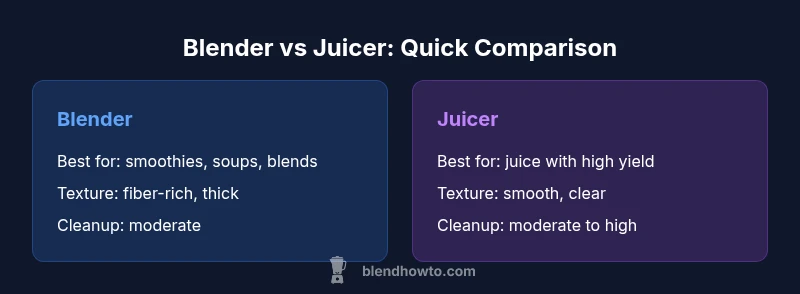
| Feature | Blender | Juicer |
|---|---|---|
| Best for | Smoothies, purees, and blended meals | Pure juice with maximum extraction and clarity |
| Texture and Fiber | Fiber-rich, thick textures; includes pulp | Low-fiber, clear juice with minimal pulp |
| Ease of Cleaning | Moderate; blender jar, blades, lid | Often more parts; juice basket and pulp screen |
| Noise Level | Moderate to high depending on model | Generally moderate to high; citrus juicers can be loud |
| Space and Footprint | Typically larger; sometimes dual-use attachments | Can be compact but depends on model and basket size |
| Price Range | Broad depending on power and features | Broad depending on juicing type and filters |
| Best For | Fibers, textures, versatility in recipes | Juice extraction and clarity of liquids |
What's Good
- Handles a wide range of recipes beyond drinks
- Retains fiber for fullness and slower sugar absorption
- You can customize textures with control over thickness
- High-powered models handle frozen fruit and nuts
- Gives more kitchen flexibility with accessories
The Bad
- Blends whole produce, including seeds, which may be undesirable for some drinks
- Juicers remove most fiber, which can affect satiety
- Higher upfront cost for quality units
- Long cleanup time for some models when juicing pulp or seeds
Blender and juicer each excel in different areas; neither is universally superior for every kitchen need.
Choose a blender if you prioritize fiber-rich smoothies and versatile meal bases. Choose a juicer if you want maximum juice yield and clarity. For many homes, a focused blender plus a dedicated juicer—or a thoughtfully chosen hybrid—delivers the best balance of efficiency and satisfaction.
Frequently Asked Questions
What is the primary difference between a blender and a juicer?
A blender incorporates the entire produce into a thick, fiber-rich blend, while a juicer extracts the liquid and leaves behind mostly pulp. The blender and juicer serve different dietary and texture goals, which should guide your purchase.
The main difference is that a blender uses everything to make a thick drink, while a juicer makes juice with little pulp.
Can I replace a blender with a juicer for smoothies?
Not ideal. Juicers remove most fiber, resulting in a thin beverage that may be less satiating. If your smoothies rely on fiber and texture, a blender is the better choice.
A juicer isn’t a great substitute for smoothies because it strips out fiber, which is important for fullness.
Are hybrid devices worth buying?
Hybrid devices save space but often compromise blending or juicing performance. If your routine genuinely needs both outputs daily, a dedicated blender plus a separate juicer tends to offer better results.
Hybrids save space but might not do either job as well as dedicated units.
How loud are these appliances in typical use?
Blenders and juicers can be loud, especially at higher speeds or with citrus. Look for models with noise-reduction features and better insulation if you’re sensitive to sound.
They can be loud, so check for noise-reduction features before buying.
What maintenance should I expect after juicing leaves and stems?
Rinse parts immediately after use, soak stuck pulp if needed, and perform occasional deep cleans to prevent odors. Regular gasket checks help maintain performance.
Rinse right away and do a deeper clean weekly for best results.
Do high-powered blenders outperform juicers for most tasks?
A high-powered blender handles a wider range of tasks beyond smoothies, including soups and nut butters. Juicers excel when pure juice is your priority and pulp removal is desired.
Blenders are more versatile; juicers specialize in juice quality.
What to Remember
- Identify your top 5 recipes to choose the right device
- Prioritize fiber retention if fullness matters
- Consider a separate juicer for juice-focused routines
- Balance upfront cost with long-term value and maintenance
- Use a simple cleaning routine to extend appliance life