Blender Bottle Sizes: A Practical Guide for 2026
Explore blender bottle sizes and how to choose the right capacity for smoothies, shakes, and batch recipes. Practical buying tips, storage ideas, and size comparisons.


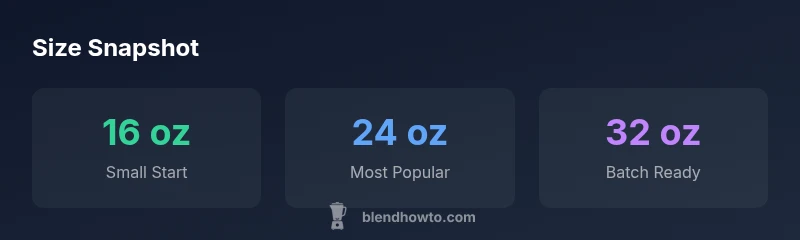
Typical blender bottle sizes span 16 to 32 ounces, with 24 oz and 28 oz leading sales among home cooks. These sizes balance blending capacity, portability, and storage. For everyday use, start with 24 oz as a default, then adjust to 16 oz for on-the-go blends or 32 oz for batch prep, depending on your routine.
Understanding why blender bottle sizes matter
blender bottle sizes are more than just numbers on a label. They determine how much you can blend in one go, how easy it is to store the finished shake, and whether you can transport it without spilling. For home cooks and hobbyists using a standard countertop blender bottle, choosing the right capacity helps control portions, reduce waste, and streamline meal prep. According to BlendHowTo, selecting the correct blender bottle sizes supports consistent blending results and minimizes the need to batch separate ingredients. When you know your typical recipes—fruit smoothies, protein shakes, or green blends—you can map the portions to a size that minimizes leftovers and simplifies cleanup. The goal is to balance performance, convenience, and budget while keeping the primary keyword blender bottle sizes naturally woven into your workflow.
Popular sizes explained: 16 oz, 20 oz, 24 oz, 32 oz
Across most blender brands, you’ll encounter four core capacities that cover the majority of home-use scenarios. A 16 oz bottle is ideal for quick, single-serving blends and on-the-go mornings, especially when you’re trying to keep cleanup minimal. A 20 oz bottle provides a slightly larger canvas for fruits and vegetables without becoming unwieldy. The 24 oz size remains the most popular among everyday users because it offers a comfortable balance of volume and portability. The 32 oz option suits batch prep, family smoothies, or bulk mixes that you portion out later. When evaluating blender bottle sizes, consider how often you share recipes, whether you mix on the go, and the size constraints of your storage area. It’s also worth noting that some brands label capacities differently due to pitcher geometry, so always compare actual usable volume rather than perceived size. This nuance is crucial for anyone focused on detail in blender bottle sizes.
Choosing size by activity: smoothies, shakes, sauces, and more
The intended activity should drive the size you select. For everyday smoothies with yogurt, greens, and fruit, a 24 oz cup is often perfect, offering enough space for leafy greens and ice without overflowing. If you blend protein shakes or meal-replacement drinks, a 28–32 oz option can accommodate powders and add-ins for larger portions. For sauces, nut-butters, or baby foods, smaller sizes like 16 oz may be sufficient. If you frequently prepare batches for the week, lean toward 32 oz so you can freeze portions or refrigerate a larger quantity. BlendHowTo’s guidance emphasizes consistency: pick a size that matches your typical recipe scale, your storage constraints, and how many servings you want to prepare in one go. The right size reduces wasted ingredients and simplifies cleaning.
Design, material, and usable capacity: why numbers aren’t everything
Capacity is only part of the story. The material (plastic, glass, BPA-free resin), wall thickness, and internal geometry affect how much you actually can blend in a given bottle. Tall, narrow shapes may look larger but offer less usable space for bulky blends. Look for convenient lids and mixing cups that minimize spillage, and check whether the bottle’s threads and seal design are compatible with adapters you already own. The takeaway is simple: don’t assume every “x oz” title translates to the same usable volume across brands. Measuring the actual liquid you can fit, or testing with your typical ingredients, gives a true sense of usable capacity in blender bottle sizes.
Practical tips for storage, travel, and cleaning by size
Smaller sizes (16–20 oz) are compact for travel or gym use, making them easy to stash in a bag or car cup holder. Medium sizes (24 oz) strike a balance between space and blend capacity and clean up quickly. Larger bottles (32 oz) excel for batch prep, but they demand more cupboard space and can be heavier to wash. For cleaning, rinse promptly after use to prevent residue from hardening, especially with sticky ingredients like peanut butter or flaxseed. For storage, keep a couple of lids handy and store them disassembled to ensure proper drying. If you’re juggling multiple blender bottle sizes, consider a small storage caddy or drawer organization to keep each size visible and ready for use.
Budgeting for size: sets vs single bottles and value tips
Buying in sets can be cost-effective if you often blend different quantities across the week, but sets can also lead to over-purchasing if you only need one size. As a rule, buy at least one 24 oz bottle for daily use, then pick a second size based on your peak activity—16 oz for busy mornings or 32 oz for batch prep. Look for deals that include essential accessories like spare lids or drink seals, which add long-term value. Consider the long-term cost per serving to evaluate value rather than merely the upfront price. In the end, your decision should align with your routine, cleaning capacity, and storage constraints. BlendHowTo’s practical approach recommends prioritizing usability and maintenance over sheer capacity.
Quick sizing framework you can apply today
Use this simple checklist to decide in under five minutes:
- How many servings do you typically prepare at once?
- Do you need a bottle that fits in your cup holder or gym bag?
- How much storage space do you have for bottles and lids?
- Will you batch prep or blend single servings most days?
- Are there any accessories you rely on that affect compatibility?
If you answer these questions, you’ll have a strong basis for choosing blender bottle sizes that fit your lifestyle. This framework helps you avoid common misfires like oversizing for single servings or undersizing for batch blends.
Frequently asked sizing questions at a glance
Common blender bottle sizes and their typical uses
| Size (oz) | Typical Use | Pros | Cons |
|---|---|---|---|
| 16 oz | Small portions, on-the-go blends | Portable, quick cleanup | Limited capacity for bulky ingredients |
| 20 oz | Single-serve blends, daily shakes | Balanced size, versatile | A bit small for multi-ingredient blends |
| 24 oz | Most popular daily blends | Great balance of capacity and portability | Heavier than 16 oz |
| 32 oz | Batch prep and family blends | Highest capacity for multiples | Bulky and slower to clean |
Frequently Asked Questions
What is the most common blender bottle size?
The 24-ounce size is the most common choice for everyday blending, offering a balance between capacity and manageability. It fits most daily recipes without crowding the countertop.
The 24-ounce size is the most common choice for everyday blending.
Can I blend large recipes in a 16 oz bottle?
A 16 oz bottle is typically too small for large batches or many ingredients. For bigger recipes, consider 24–32 oz options to avoid overflow and ensure thorough mixing.
A 16 oz bottle isn’t ideal for large batches.
Are blender bottle sizes universal across brands?
Sizes are generally similar but labeling and usable volume can vary by brand. Always verify the actual capacity on the bottle and compare to the label.
Sizes vary by brand; always check the label for actual capacity.
How should I measure ingredients for a specific bottle size?
Use the bottle’s volume markings and adjust ingredients accordingly. Start with suggested ratios and tweak for taste and texture to avoid spills.
Use the bottle’s markings and adjust for taste and texture.
Does material affect capacity or weight?
Materials like BPA-free plastic or glass influence weight and feel. Thick walls can reduce usable space, even if the labeled capacity seems similar.
Material affects weight and how much you can actually blend.
“"Understanding blender bottle sizes helps you tailor portions, reduce waste, and speed up meal prep."”
What to Remember
- Assess daily portions to choose the right size.
- Default to 24 oz for most homes.
- Use 16 oz for on-the-go and 32 oz for batch prep.
- Check compatibility with your blender base and cup holder.
- Balance capacity with ease of cleaning and storage.