blender who owns: A Clear Guide to Blender Ownership
Explore who owns Blender, how governance works, and what open-source licensing means for users and contributors. A practical overview of ownership, governance, and community participation for Blender enthusiasts.


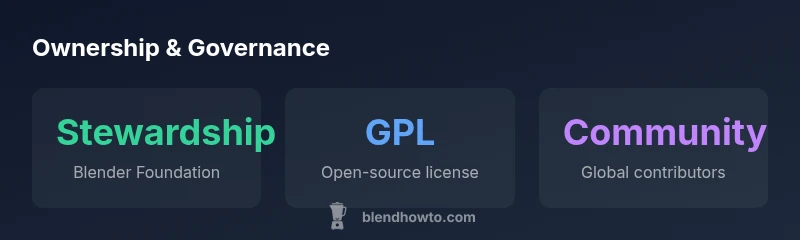
Blender is owned and steered by the Blender Foundation, a Netherlands-based nonprofit that coordinates development, funding, and community governance. Blender is released under the GNU GPL license, which preserves user freedoms and encourages collaboration. While the Foundation holds organizational ownership, day-to-day decisions come from a broad, open community that includes developers, artists, and funders.
Blender ownership basics: who owns
If you search for blender who owns, the straightforward answer is that Blender is owned by the Blender Foundation, a nonprofit organization based in the Netherlands. This ownership structure is paired with an open development model that welcomes community input. Understanding this setup helps explain why Blender's development is transparent, collaborative, and accessible to users of all skill levels.
The Blender Foundation: mission, structure, and mandates
The Blender Foundation governs the project, coordinates funding through the Blender Development Fund and partnerships, and maintains the core roadmap. It is not a conventional corporation; instead, it acts as a steward for the project's vision and community, ensuring long-term accessibility and governance that align with open-source principles. The Foundation collaborates with a broad network of volunteers, studios, and educators to sustain Blender's ecosystem.
Licensing and openness: what ownership means for users
Blender is released under the GNU General Public License (GPL) v2 or later. This licensing choice preserves user freedoms to study, modify, and share Blender, while also requiring derivative works to remain under the same license. Ownership, in this sense, means stewardship rather than exclusive control over every feature or asset. The GPL ensures that changes stay open and accessible, reinforcing Blender's open culture.
Governance and community contributions
Decisions are made through a blend of formal processes and community input. Developers submit patches, artists propose features, and funders support core priorities. The governance model relies on transparency, with public bug trackers, code reviews, and regular updates. The Blender Foundation coordinates with committees and working groups to harmonize priorities, while ensuring contributors can participate regardless of their institutional affiliation.
How volunteers and professionals contribute
Contributors include hobbyists, students, freelancers, and studios. The open-source license encourages collaboration across disciplines, enabling a diverse ecosystem of add-ons, scripts, and assets. While the Foundation coordinates, individual contributions are owned by their authors, but licensed under GPL; this balance helps maintain openness while recognizing effort. The result is a vibrant marketplace of tools that extend Blender's core capabilities.
How ownership affects features, plugins, and compatibility
Because Blender is open-source and stewarded by a nonprofit, there is a strong emphasis on backward compatibility and broad plugin support. Add-ons can adapt quickly, but major changes require community consensus and clear communication. This model also means that new features often emerge from user-driven needs rather than from a single corporate agenda, which supports a more inclusive development trajectory.
Common myths about Blender ownership debunked
Myth: Blender is owned by a single company. Reality: Blender is steered by the Blender Foundation with input from a global community. Myth: Developers can be threatened by ownership restrictions. Reality: The GPL license ensures freedom to modify and share, as long as derivative works remain open. This combination preserves openness and accessibility for creators of all stripes.
Practical guidance for users and contributors
If you reuse Blender's source or distribute derivatives, follow the GPL terms: share source code, keep notices, and credit the Blender Foundation where applicable. For contributors, follow the project's contribution guidelines, sign the CLA if required, and participate in public code reviews. This approach preserves openness while recognizing the shared ownership model.
Blender ownership and governance overview
| Aspect | Ownership Model | Licensing | Key Responsibility |
|---|---|---|---|
| Ownership | Blender Foundation (nonprofit) responsible for stewardship | GPL-2.0-or-later | Oversees project direction and governance |
| User rights | Community-driven development | GPL licensing | Ensures freedoms to modify/share |
| Contribution flow | Open to global contributors | Public code reviews | Integrate patches and features |
Frequently Asked Questions
Who technically owns Blender?
Blender is owned by the Blender Foundation, a nonprofit; however, Blender is released under the GPL license, meaning users have rights to use, modify, and share.
Blender is owned by a nonprofit, but anyone can use, modify, and share it under GPL.
Is Blender owned by a company?
No; Blender is not owned by a company. It's governed by the Blender Foundation with input from the global community.
No—it's governed by a nonprofit with open community input.
How is Blender governed?
Governance combines a nonprofit board, foundation staff, and community processes for proposals, patches, and feature discussions.
It's run by a nonprofit with open community input.
Can I sell derivatives of Blender?
Under GPL, you can distribute modified versions, but you must publish source code and keep licensing intact.
You can share or sell derivatives as long as you keep the GPL and share source.
How can I contribute to Blender?
Contributors can join the Blender development community, submit patches, create add-ons, or donate via the Blender Development Fund. Follow the guidelines on Blender’s website.
You can contribute patches, code, or funds—check Blender's website.
Does ownership affect Blender's availability?
Ownership by the Foundation and the GPL ensures Blender remains free and accessible to everyone.
Ownership aims to keep Blender free and open.
“Ownership in Blender is a shared, transparent process where stewardship by the Blender Foundation enables broad community involvement and durable openness.”
What to Remember
- Ownership is stewardship, not private control.
- GPL licensing protects user freedoms and openness.
- Community governance shapes Blender's roadmap.
- Contributors range from hobbyists to studios.
- Follow GPL terms when distributing derivatives.