How to Blend with Crayons: A Practical Beginner's Guide
A comprehensive, step-by-step guide to blending crayons for smooth gradients, rich shading, and vibrant color. Learn techniques, paper choices, tools, and troubleshooting to elevate your crayon artwork.


Learn to blend with crayons using a practical, step-by-step approach that anyone can follow. This guide covers core techniques—layering, shading, scumbling, and gradients—plus tips on paper choices, tool setup, and common troubleshooting to avoid wax buildup and streaks. By the end, you'll achieve smooth color transitions and polished results in your art projects.
What blending with crayons really means
Blending with crayons is about controlling how wax deposit layers interact on paper to create smooth color transitions, not just slapping color onto the page. The waxy surface of crayons tends to resist uniform blending, so success comes from deliberate layering, light pressure, and gradual color build-up. When done well, blends look seamless, with soft edges and believable depth. In this guide, we’ll explore how to work with a small palette, a few simple tools, and an appropriate paper surface to achieve professional-looking results. You’ll learn how to move from flat patches of color to nuanced gradients that mirror real-world lighting, shadows, and texture. Whether you’re shading a simple illustration or crafting a vivid landscape, the same fundamentals apply: plan, layer, blend, adjust, and protect your finished piece.
Essential materials and workspace setup
Before you begin, set up a clean workspace with good lighting and a flat drawing surface. Gather a basic set of crayons in light, medium, and dark tones for each color family you plan to use. You’ll also want a few blending aids: colorless blender or softer paper stumps, tissues, and a soft cloth. Paper choice matters: a smooth, medium-weight drawing paper with a slight tooth helps grip wax for blending, while very smooth paper can cause uneven melts. Keep a white eraser handy for corrections, and consider taping your paper to a backing board to prevent warping. Finally, establish a light, even pressure routine—pressing too hard can leave visible wax ridges and hinder subtle transitions.
Core techniques for smooth blends
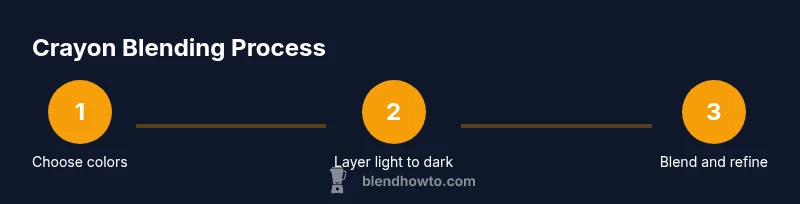
To achieve a seamless blend, start with a light base layer of the lightest color in your planned gradient. Build gradually by adding nearby tones in thin, even layers, letting each layer set slightly before adding the next. For gradients, work with gentle circular motions and short, controlled strokes to avoid harsh lines. Scumbling (a broken, scribbled application) can help soften transitions between colors, while a colorless blender can push pigments together without adding color. Remember: less is more. You can always add more color, but it’s hard to remove excess wax once it’s laid down.
Paper and surface choices that support blending
The surface you choose deeply affects blending results. Papers with some tooth (textured surface) grip wax and stop it from sliding. A mid-weight drawing paper or bristol board with a light texture is ideal for beginners. Avoid ultra-smooth papers for initial practice, as they encourage wax to slide instead of grip. For larger works, consider a heavier stock to prevent buckling. If you must use a smooth surface, use light passes and build gradually to achieve the same depth. Always test blends on a scrap piece before applying them to your main work.
Step-by-step mini project: gradient sky swatch (high-level overview)
Create a simple gradient sky swatch to apply the techniques in a controlled environment. Start with a pale blue at the bottom, gradually layering midtones, then finish with a soft, near-white highlight at the top. Use light pressure, blend in small circular motions, and clean your tool between color zones to preserve color integrity. This exercise helps you understand color relationships and helps you recognize when you need to adjust pressure or layering density. Save this swatch for reference when you tackle more complex scenes.
Troubleshooting common issues and how to fix them
Wax buildup, visible lines, and muddy colors are common obstacles. If you see streaks, try lifting color with a clean tissue or paper stump and re-blend. For a muddy look, wipe the blending tool clean and re-apply with thinner layers, focusing on color separation rather than saturation. If edges appear harsh, blend from the edge inward using a tiny circular motion and lighter pressure. Practice on swatches to build muscle memory for consistent results.
Creative expansion: taking blends further
Once you’re comfortable with basic gradients, experiment with layering underpaintings, using complementary color pairs, or incorporating colorless blotting to create luminous effects. Try cross-hatching with light colors for texture, or mix a warm and cool palette to simulate lighting dynamics. Keep a small journal of color relationships and the outcomes of different pressure and layering strategies. Recording what works helps you reproduce desired effects more quickly on future projects.
Maintenance, cleanup, and display considerations
Keep wax buildup off your workspace by wiping down surfaces and cleaning tools after every session. Store crayons in a cool, dry place to prevent wax from softening or cracking. When displaying finished pieces, handle with clean hands or gloves to avoid transferring oils that can affect the crayon surface. If you want to archive your work, consider photographing under neutral lighting and matting your pieces to protect colors from ambient light. Regular practice with consistent materials builds confidence and ensures longer-term consistency in your blending results.
Tools & Materials
- Crayons (wax-based, in a varied color set)(Choose a small set that covers light to dark tones for each color family you plan to blend)
- Drawing paper or bristol board(Choose medium-weight paper with a subtle tooth to grip wax)
- Blending tools (colorless blender, tortillons, or blending stumps)(Optional: cotton swabs or tissue for gentle lifting and softening)
- Pencil or light graphite for sketching(Useful for planning compositions and light guidelines)
- Eraser (kneaded or vinyl)(For light corrections and lifting stray pigment)
- Masking tape or a backing board(Keeps paper flat and prevents warping during blending)
- Paper towels or soft cloth(For cleaning blending tools and blotting excess wax)
Steps
Estimated time: 30-45 minutes
- 1
Prepare your workspace and materials
Set up a clean, well-lit surface. Organize your colors from light to dark and lay out blending tools within easy reach. Ensure your paper is secured to prevent movement while you work.
Tip: Keep a small scrap swatch to test pressure and color combinations before applying them to your main piece. - 2
Choose a base color and build lightest layer
Select the lightest color for your gradient and apply a thin, even layer across the area. Use light pressure to avoid wax buildup and to keep edges soft for blending.
Tip: Work in short, controlled strokes to avoid large pressure variations that create harsh lines. - 3
Introduce midtones with gentle layering
Add a mids tone color in small, overlapping strokes. Blend outward from the edge of the light layer to minimize hard boundaries, letting the colors mingle gradually.
Tip: Limit color pairs per pass to prevent muddy mixtures; layer gradually. - 4
Refine with blending tools
Use a colorless blender or a clean tortillon to merge edges. Lightly sweep across the join of colors to push pigments together without adding new color tint.
Tip: Wipe the tool between color zones to prevent pigment transfer. - 5
Add shadows and depth
Apply darker tones sparingly where you want depth. Blend inward toward lighter areas to preserve gradient softness and avoid blotchy patches.
Tip: Leave tiny areas of lighter color to catch highlights when you finish. - 6
Check edges and smooth transitions
Review transitions along edges and adjust with tiny circular motions. If a boundary is too strong, retrace with the blender or a light color, gradually feathering outward.
Tip: Take short breaks to view the piece with fresh eyes. - 7
Final touches and cleanup
Add final highlights or subtle color shifts to enhance the sense of light. Clean tools and tidy the workspace to prepare for display or storage.
Tip: Photograph or scan your work in good light to evaluate true color blending.
Frequently Asked Questions
How can I avoid wax bloom or buildup when blending crayons?
Work in light, evenly distributed layers and blend frequently with a clean tool. Lift and reblend if wax starts to bloom. Practicing on swatches helps you refine pressure and technique.
To avoid wax bloom, use light layers and clean your blending tool often. Practice on swatches to dial in pressure and technique.
What paper works best for crayon blending?
Paper with a subtle tooth—like medium-weight drawing paper or bristol—gives wax something to grip, making smoother blends. Too smooth, and the wax slides; too rough, and it can catch and look gritty.
Choose paper with a light texture so the wax grips for smoother blends.
Can I layer colored pencils or oil pastels over crayons after blending?
Yes, you can, but test first. Colored pencils blend well on top of crayon layers with a gentle touch, while oil pastels may over-saturate and muddy the result.
You can add color pencils over blended crayons, but test to avoid muddy results.
Do softer or harder crayons blend better?
Soft crayons tend to blend more smoothly due to their wax consistency and pigment density. Harder crayons can still blend but require more layering and pressure control.
Soft crayons blend more easily; harder ones need patience and more layers.
What are quick practice ideas for beginners?
Start with a small gradient swatch, then mix two or three colors in separate sections. Keep a color journal of blends and note what works best for transitions.
Practice small gradient swatches and keep a color journal of blends.
Watch Video
What to Remember
- Plan your gradient with a light-to-dark approach.
- Layer colors in thin passes to avoid wax buildup.
- Use blending tools to smooth transitions without muddying colors.
- Choose paper with tooth for better grip and blending.
- Practice on swatches to build consistent technique.