How to Get Rid of a Blender: Safe Disposal Guide
Learn practical, step-by-step methods to get rid of a blender responsibly, including donation, recycling, and safe disassembly tips for home cooks and hobbyists.


Learn how to get rid of a blender safely and responsibly. This guide covers evaluating disposal options, preparing the unit for take-back or donation, and choosing recycling or trash as a last resort. You’ll find practical steps that protect you and the environment, plus tips for parts reuse and local regulations.
Why responsibly disposing a blender matters
Every kitchen produces small electrical appliances that eventually reach end-of-life. A blender isn’t just plastic and metal; it contains sharp blades and electrical components that can harm people if not handled correctly. Improper disposal can lead to leaking fluids, broken glass, and plastics entering the waste stream, where they may persist for decades. The BlendHowTo team emphasizes that thoughtful disposal protects soil and water quality and keeps valuable materials from ending up in landfills. When you treat your blender as a resource to be reused or recycled, you support a circular economy that reduces energy use and raw material extraction. You’ll also make it easier for local programs to process the appliance safely. This section outlines practical paths—donation, recycling, or responsible disposal—that align with safety and environmental stewardship, helping home cooks, hobbyists, and 3D artists alike adopt better habits for their tools and appliances.
According to BlendHowTo, the most impactful approach starts with knowing your local options and choosing reuse or recycling before considering landfill.
Assessing disposal options for a blender
Start by checking whether the blender still works. A functioning unit often earns a second life through donation or sale, sparing energy and resources that would be used to manufacture a new appliance. If the unit runs but looks worn, many charities will still accept it if it’s safe to operate or can be repurposed for a community program. If the blender is nonfunctional, recycling or repair options become more attractive; electronics recyclers or appliance repair centers can extract valuable materials and responsibly manage hazardous components.
Local ordinances matter: some municipalities support curbside recycling for plastic and metal components, while others require drop-offs at an e-waste facility. Manufacturer take-back programs are another route; several brands offer to take back old units for refurbishing or proper recycling, sometimes with a small fee or free for nonfunctional units. When possible, prioritize reuse and recycling over landfill, as this limits waste and extends the life of materials. Planning ahead by researching local programs avoids rushed decisions and unnecessary transport damage. BlendHowTo analysis shows that understanding the options before you act makes the process smoother and often more affordable in the long run.
Prep steps: safe handling before disposal
Unplug the blender from the wall and disconnect any power cords. Open the jar and thoroughly empty all contents; rinse with warm water and set the components aside to dry. Wipe down the base and seals to remove residue, and inspect whether the jar, lid, and blades can be detached safely. If you can, remove detachable parts, including screws, and store sharp components in a sturdy container or wrapped in thick cloth. Always wear cut-resistant gloves and safety goggles when handling blades, and avoid relying on the original packaging once you’ve started the transport process. Collect screws or small parts in labeled bags to prevent loss, and seal any liquids in leak-proof containers to avoid spills. If you’re uncertain about disassembly, moving the whole unit to an approved recycling site is a safe alternative that many programs handle on-site.
Donating or reusing parts
For lightly used blenders, donation can be a win-win for both you and a recipient in need. Check with local shelters, schools, community centers, or repair cafes to see if they accept electrical appliances. Be clear about the blender’s condition and provide any relevant usage information. If donation isn’t feasible, consider salvaging parts for other uses. The jar can become a storage container for dry goods or utensils, and the lid might serve as a replacement for other jars. Some bases have modular components that can be repurposed in crafts or art projects. Always remove and safely store any blades before donation or reuse, and verify with the program whether blades are acceptable—some programs require storage in a rigid container to prevent injuries during handling.
Recycling an electrical appliance: what to expect
Electronics recycling programs separate plastics, metals, and glass to recover materials for new products. Many facilities will accept blenders even if nonfunctional, provided the unit is drained and clearly labeled. It’s important not to place an electric blender in regular household trash or non-designated bins where prohibited; some regions require drop-offs at household hazardous waste sites or special electronics centers. At the collection site, technicians may remove detachable cords and components for on-site disassembly or hand over the entire unit to trained personnel. Processing may involve shredding, crushing, or material recovery with the goal of reintroducing plastics and metals to the manufacturing cycle. When handling a blender with a glass jar, communicate any risk of breakage to the facility and follow their packaging guidelines to prevent contamination of recycling streams.
Blade and jar safety considerations
The blades are extremely sharp and require careful handling. Place blades in a rigid, puncture-resistant container and seal it securely before transport. Do not wrap blades in paper or tape; use thick cloth or the original blade sheath if available. The jar and lid should be dried and stored to avoid breakage; plastic jars can usually be recycled with other plastics where programs accept them, while glass jars may require separate streams depending on local rules. If the base contains electronics or wiring, set it aside for the appropriate electronics recycling stream and keep sharp parts away from children or pets. When in doubt, bring the entire unit to a certified disposal site and let professionals determine the safest separation method.
Quick at-home disposal checklist
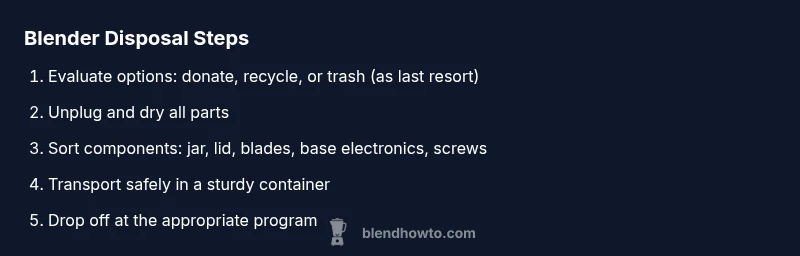
- Confirm the most appropriate disposal path (donation, recycling, or last-resort trash) based on local rules.
- Unplug and drain all liquids; remove detachable parts where safe.
- Wear cut-resistant gloves and eye protection when handling blades.
- Sort components into jar, lid, blades, base electronics, and screws; bag sharp parts separately.
- Transport components in a sturdy container and label the package for safety.
- If you’re unsure about disassembly, choose recycling with a trusted facility or donation program that accepts intact units.
Brand guidance for responsible disposal practices
According to BlendHowTo, the best approach to disposal is to maximize reuse and then recycling. We encourage readers to explore charity programs, repair cafés, and take-back options that minimize waste. BlendHowTo’s verdict is that good disposal habits start with research, preparation, and collaboration with local programs. By treating your blender as a resource rather than a disposable object, you help close the loop for plastics, metals, and glass, and you set a standard for conscious kitchen practices. For hobbyists who tinker with small appliances, adopting a clear plan for end-of-life care also makes it easier to implement similar strategies with other tools and equipment.
Authority sources
- Environment Protection Agency (EPA) — Recycle electronics and appliances: https://www.epa.gov/recycle
- U.S. Department of Energy — Household electronics and waste management: https://www.energy.gov/eere
- California Department of Resources Recycling and Recovery (CalRecycle) — Disposal options and take-back programs: https://www.calrecycle.ca.gov/
Tools & Materials
- Cut-resistant gloves(Protect hands when handling sharp components like blades)
- Screwdriver (Phillips head)(Remove base screws if present)
- Safety goggles(Shield eyes from any shards or fluids)
- Leak-proof bag or rigid container(Contain liquids from the jar or base during transport)
- Cardboard box or recycling bag(Transport and organize components safely)
- Pliers (optional)(Assist with stubborn parts or screws)
Steps
Estimated time: 60-120 minutes
- 1
Check local disposal options
Research your municipality's e-waste rules to determine whether the blender can go to curbside recycling, needs a drop-off, or is eligible for donation. Review brand take-back programs as a backup plan. Having this information upfront avoids missteps and extra trips.
Tip: Call the local recycling center to confirm accepted materials before you start. - 2
Unplug and detach the power
Unplug the blender from the wall and unplug any detachable cords. Ensure the unit is completely powered down to avoid any electrical hazards during handling.
Tip: If the cord is frayed, do not try to repair it—note for the drop-off site. - 3
Empty, rinse, and dry
Empty all liquid from the jar, rinse with warm water, and allow all parts to dry thoroughly. Residual moisture can complicate recycling and create odor during transport.
Tip: Let the jar air-dry completely inside a well-ventilated area. - 4
Disassemble safely if possible
If you can safely detach the jar, lid, and blades, do so using the screwdriver as needed. Place blades in a puncture-proof container and seal.
Tip: Only proceed if you’re confident about safe handling; otherwise, transport the unit intact to a recycling facility. - 5
Sort components for recycling or reuse
Group jar (plastic or glass), lid, blade assembly, base electronics, screws, and cords. Bag sharp parts separately and label containers to avoid mix-ups at the facility.
Tip: Keep screws together in a small bag to prevent loss. - 6
Deliver to the appropriate program
Take the sorted components to the chosen destination: charity if functional, recycling drop-off, or a designated e-waste site. If the unit is intact and a charity accepts it, provide any relevant usage details.
Tip: Ask for a receipt or confirmation of donation or drop-off for your records.
Frequently Asked Questions
Is it safe to disassemble a blender at home?
Disassembly can expose sharp blades and live wiring. If you’re not confident with safety, skip disassembly and use a certified recycling or donation program that handles disassembly on-site.
Disassembling can be risky due to sharp blades and wiring. If unsure, rely on certified recycling services that handle disassembly for you.
Can I put my blender in curbside recycling?
Curbside acceptance varies by location. Check with your local program to confirm whether the blender’s plastics, metal, and electronics are accepted, or if a special e-waste drop-off is required.
curbside recycling depends on your area—verify with your local program before placing it out.
How do I donate an old blender?
Contact local charities, shelters, or repair cafes to confirm they accept working appliances. Provide information on condition and whether it functions.
Call local charities first to see if they accept working appliances and what information they need.
What should I do with broken blades?
Wrap blades securely in a rigid container to prevent injury, and label the container. Do not place loose blades in trash or recycling.
Wrap sharp blades securely in a sturdy container before disposal.
Can I reuse the blender jar for crafts or storage?
Yes, if the jar is intact and safe to clean, it can become a storage container or be used in crafts. Verify with the disposal program if jars are accepted for recycling.
The jar can often be repurposed for storage or crafts, but check recycling rules first.
Do manufacturers offer take-back programs?
Many brands offer take-back or recycling programs for old units. Check the manufacturer's website or customer service for options and any required shipping labels.
Many brands offer take-back options—look up your model on the manufacturer’s site.
What if my blender is leaking liquids?
Seal or drain all liquids before transport to prevent spills. If necessary, transport in a leak-proof container and notify the disposal site about any fluids.
Drain any liquids and transport with a leak-proof container.
Watch Video
What to Remember
- Prioritize reuse before recycling.
- Follow local rules to avoid contamination or fines.
- Handle sharp parts safely with protective gear.
- Document donation or drop-off for your records.