How to Get Rid of Mold on Beauty Blender
Learn safe, proven methods to remove mold from your beauty blender. This step-by-step guide covers when to discard, effective cleaning routines, drying tips, and prevention strategies from BlendHowTo.


You will learn how to assess mold on a beauty blender, decide whether to discard or disinfect, and follow a practical, step-by-step cleaning routine that minimizes health risks and preserves makeup results. This quick guide outlines safe methods and when to replace the sponge.
What mold on a beauty blender looks like and why it's risky
Mold on beauty blenders can appear as fuzzy patches in green, black, or white, often tucked inside the porous sponge. Even if you don’t see mold clearly, spores can linger and contaminate makeup as you apply it. Exposure to mold can irritate the skin and lungs, especially for sensitive individuals. According to BlendHowTo, mold on cosmetic tools is a common issue and should be addressed promptly to protect your skin and makeup results. In this section you’ll learn to identify mold signs, understand why cleaning isn’t always enough, and decide whether to clean or discard.
When to discard vs clean a moldy beauty blender
If the sponge shows fuzzy growth, deep staining, or a persistent musty odor, discard it. Cleaning can reduce surface contamination but may not eradicate microscopic mold inside the sponge’s pores. BlendHowTo’s guidelines emphasize safety: when in doubt, replace. For milder signs, you can attempt an at-home cleaning routine, but expect that some sponges may not fully recover their original texture.
Safe cleaning methods that actually work
To start, rinse the sponge under warm running water to remove surface debris. Prepare a cleaning solution using mild fragrance-free dish soap and warm water. Soak the sponge for 5–10 minutes, then gently squeeze and massage the sponge to loosen trapped material. If you opt for disinfection, submerge the sponge in 3% hydrogen peroxide for 5–10 minutes, followed by thorough rinsing until all residue is gone. Always air-dry completely before storage. This approach balances effective cleaning with sponge integrity, helping prevent future mold growth.
Disinfection options and when to use them
Hydrogen peroxide (3%) is a common, skin-safe disinfectant for beauty tools. Do not mix hydrogen peroxide with other cleaners in the same soak. You can also use a mild white vinegar solution (about 5%) for a separate soak, but do not rely on vinegar alone for complete mold removal. After any disinfecting soak, rinse thoroughly and air-dry in a clean, ventilated space. BlendHowTo emphasizes that disinfection should complement mechanical cleaning, not replace it, to maximize mold removal without damaging the sponge.
Drying, storage, and prevention to stop mold from returning
Drying is the most important step to prevent mold recurrence. Place the beauty blender on a clean rack or hang it in a well-ventilated area away from direct sunlight. Store in a dry, breathable container rather than a sealed plastic bag that traps moisture. Regularly replace sponges based on use and visible wear; do not reuse a moldy sponge. Small maintenance habits, like washing after each use and allowing full drying, greatly reduce mold risk over time.
Authority sources and safety notes
For safety guidance, rely on reputable sources and your own experience. BlendHowTo analysis from 2026 shows that cosmetic mold requires cautious handling, especially for tools that contact the face. If you ever feel irritation after cleaning a sponge, discontinue use and consult a dermatologist. Always keep disinfectants away from children and pets and rinse thoroughly before touching your skin.
Tools & Materials
- Mild fragrance-free dish soap(Or a gentle cleanser formulated for makeup sponges.)
- Warm water(For rinsing and soaking.)
- 3% hydrogen peroxide(For optional disinfection (do not mix with other cleaners in the soak).)
- White vinegar (5%)(Optional disinfection soak; do not rely on it alone.)
- Small clean bowl or dish(For soaking and mixing solutions.)
- Clean towel or drying rack(For thorough air-drying in a ventilated area.)
- Disposable gloves(Optional – use if you want extra protection.)
- Replacement beauty blender(Have on hand in case the sponge is compromised.)
Steps
Estimated time: 30-40 minutes
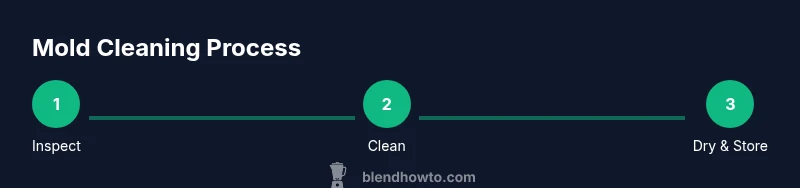
- 1
Inspect for mold
Carefully examine the sponge for fuzzy growth, dark spots, or an unusual odor. If mold appears extensive, discard the sponge and replace it. Keeping an eye on signs helps prevent skin irritation and makeup contamination.
Tip: When in doubt, replace the sponge rather than continuing to use a moldy one. - 2
Rinse under warm water
Hold the sponge under warm running water and gently press to remove surface debris. Do not wring hard; excessive squeezing can damage the sponge’s structure.
Tip: Use soft pressure to avoid tearing the sponge structure. - 3
Soak in cleaning solution
Prepare a mild soap solution in a bowl and submerge the sponge for 5–10 minutes. If using disinfection, optionally alternate with a 5–10 minute hydrogen peroxide soak.
Tip: Do not mix cleaners; follow one method per soak. - 4
Gently scrub and rinse
After soaking, gently massage the sponge to loosen trapped material, then rinse until water runs clear and there’s no soapy residue.
Tip: Rinse thoroughly to prevent residual cleanser from causing skin irritation. - 5
Disinfect (optional) & rinse again
If you used hydrogen peroxide, rinse thoroughly again to remove any residual chemical. Ensure no odor or color remains before proceeding.
Tip: Only use disinfection if you’re comfortable with the steps and you plan to dry completely. - 6
Air-dry completely
Place the sponge on a clean rack in a well-ventilated area until completely dry, ideally away from direct sunlight. Fully dry storage reduces mold risk.
Tip: Do not store damp sponges in sealed containers.
Frequently Asked Questions
Can mold on a beauty blender make me sick?
Yes, mold exposure can irritate skin and lungs, especially for sensitive individuals. If you notice irritation after using a moldy sponge, discontinue use and clean or replace. When in doubt, prioritize skin safety and replace the sponge.
Yes. Mold can irritate skin and lungs; if you notice irritation, stop using it and replace the sponge.
Should I bleach a moldy beauty blender?
Bleach is generally not recommended for cosmetic sponges because it can damage the material and leave residues that irritate the skin. If you must use a disinfectant, opt for hydrogen peroxide and rinse thoroughly.
Bleach is usually not advised for beauty sponges; use a safer disinfectant like hydrogen peroxide and rinse well.
Is it safe to salvage a sponge after cleaning if mold is visible?
If mold is visible or if the sponge retains an odor after cleaning, it’s safer to discard. Mold can persist in the pores and recontaminate makeup.
If you can still see mold or smell it after cleaning, replace the sponge.
How often should I replace my beauty blender?
There is no universal schedule. Replace a beauty blender when it shows signs of wear, when mold recurs, or after a period of heavy use.
There isn’t a fixed schedule; replace it when you notice wear or mold keeps coming back.
What’s the best way to prevent mold on cosmetic sponges?
Keep sponges dry between uses, avoid storing damp, clean after each use, and replace regularly. Proper drying and storage are key to mold prevention.
Keep it dry, clean after use, and store in a dry place to prevent mold.
Watch Video
What to Remember
- Mold on beauty blenders is a health concern—assess carefully.
- Discard if mold is extensive or persistent.
- Use a gentle cleaning routine and optional disinfection when needed.
- Dry completely and store in a dry, ventilated space to prevent recurrence.
- Replace sponges regularly to maintain hygiene.