Juice Recipe Blender: A Home Guide to Fresh Juices
Learn to choose and use a juice recipe blender to create vibrant, healthy juices at home. This guide covers blender types, prep, blending tips, and cleanup for delicious blends.


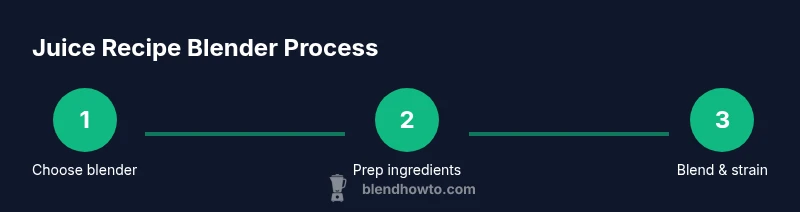
You will learn how to pick a juice recipe blender that fits your needs, build a basic fresh-juice routine, and execute a simple three-step recipe. This guide covers blender types suitable for juice recipes, blade speeds, and cleanup. By the end, you can confidently choose a juice recipe blender, assemble ingredients, and blend vibrant juice recipes at home.
Why a juice recipe blender matters for home cooks
A juice recipe blender is a versatile tool that helps you transform whole fruits and vegetables into smooth, drinkable blends without needing a dedicated juicer. For many home cooks, a reliable juice recipe blender offers better texture control, the option to retain or remove pulp, and the ability to build customized blends with minimal equipment. According to BlendHowTo, the right juice recipe blender can simplify weekday routines and unlock a broader range of flavors, from bright citrus sips to green detox drinks. When you choose a blender designed for juice recipes, you’ll notice faster processing times, consistent emulsions, and easier cleanup. In this section, we explore why a dedicated juice recipe blender matters and what to expect in terms of texture, nutrition, and convenience. The goal is to help you see how a quality juice recipe blender fits into a home kitchen where healthy, vibrant drinks are part of daily life.
Top features to look for in a juice recipe blender
When shopping for a juice recipe blender, you’ll want to evaluate several core features that influence performance and results. Power and blade design determine how well the machine handles fibrous produce, leafy greens, and tough biter fruits. Look for a robust motor, preferably in the 700-1500 watt range for juice recipes, and blade assemblies optimized for quick pulverizing rather than only slow, smoothing action. Jar material matters: glass or high-quality BPA-free plastic resists stains and odors, while a wide mouth eases loading and cleaning. Capacity should match your household size and typical juice batch volume. Pulse mode is valuable for controlling texture during tough blends, and variable speed allows you to tailor the blend from coarse to silky. Finally, check for dishwasher-safe parts and spill-proof lids to keep juice recipe blender cleanup quick and straightforward. In short, a well-equipped juice recipe blender balances power, usability, and cleanability to support consistent, tasty results.
Immersion vs countertop and high-speed options for juice recipes
Juice recipes can be produced with different blender formats, each offering advantages and trade-offs. A countertop high-speed blender can deliver exceptionally smooth textures and extract more juice from greens and fibrous produce, but it’s typically louder and takes up more counter space. An immersion blender is convenient for small batches and is easy to clean, yet it may struggle with very thick blends or large volumes typical of juice recipes. If you frequently blend root vegetables, beets, or leafy greens for juice, a powerful countertop model with sharp blades and a sturdy jar is usually worth the investment. For fruit-forward juices, the best juice recipe blender often combines a strong motor with a well-designed blade set to reduce heat buildup and preserve flavor. In this section, we compare these options, outline when each makes sense for juice recipes, and provide guidance on choosing the best fit for your kitchen and budget. BlendHowTo’s guidance emphasizes matching your choice to your typical batch size and desired texture.
A simple three-ingredient juice recipe you can make today
Here’s a quick, refreshing example you can try with a juice recipe blender: carrot-orange-ginger juice. Start with 3 medium carrots, 2 oranges (peeled), and 1 small knob of fresh ginger. Add a splash of cold water or ice to help the blades move smoothly, then blend on medium speed, using short pulses until the mix is evenly liquefied. If you prefer a smoother juice, strain through a fine-mesh sieve or nut milk bag; if you like more body, skip straining for a light smoothie-like texture. This recipe illustrates how a juice recipe blender enables quick, customizable blends that preserve natural sweetness and healthful nutrients. Adjust sweetness with a squeeze of lemon or a touch of honey if desired. Experiment with leafy greens like spinach or kale for extra vitamins and color without sacrificing flavor.
Cleaning and maintenance for your juice recipe blender
Regular cleanup after blending is essential to maintain performance and taste. Rinse the jar immediately after use to prevent staining from carotenoids and chlorophyll. For stubborn residue, fill the jar halfway with warm water and a drop of dish soap, then run a short blend. Remove the blade assembly carefully to wash all parts thoroughly, paying attention to threads and seals. Dry completely before reassembling to prevent mold or odor buildup. If your juice recipe blender is used frequently, consider a monthly deep clean with a blend of water, a splash of vinegar, and a quick run to neutralize odors. Proper maintenance keeps the blades sharp and the motor running smoothly for many juice recipe blends.
Common mistakes and how to avoid them in juice recipes
Even seasoned home cooks can slip into common pitfalls when using a juice recipe blender. Avoid overloading the jar; large batches overwhelm the motor and can lead to uneven texture. Don’t add hot liquids or steam-prone ingredients, which can create pressure buildup or damage seals. Skipping prep like washing and chopping reduces blending efficiency and texture quality. Always start with liquids or soft produce to help the blades begin moving, then add harder items gradually. Finally, steer away from using metal utensils to dislodge stuck pulp while the blender is running—wait until it’s off and unplugged. These practices help you consistently achieve silky, juice-like textures that highlight the flavors of your ingredients.
Troubleshooting common blending issues in juice recipes
If your juice recipe blender seems loud or struggles to start, check that the jar is properly seated and the lid is locked. A weak blend that leaves chunks usually indicates insufficient liquid, too-large produce pieces, or blunt blades— adjust by adding liquid, cutting produce smaller, or inspecting the blade assembly. Heat buildup can alter flavor; if the motor smells hot, pause blending and let the device rest for a few minutes before continuing. Odors or off-tastes may indicate residue from previous blends; a quick cleaning cycle or a vinegar rinse can restore flavor. In most cases, addressing loading size, texture, and residue will resolve issues and improve the overall quality of juice recipes.
Tools & Materials
- juice recipe blender (high-speed recommended)(Look for 700-1500W power, sharp blades, and a wide-mouth jar.)
- blender jar and lid(Dishwasher-safe preferred for easy cleanup.)
- spatula or silicone scraper(For scraping and jar cleaning.)
- measuring cups and spoons(Precise ingredients help reproducible results.)
- produce wash and clean water(Rinse fruits and vegetables before blending.)
- fine-mesh sieve or nut milk bag (optional)(For smooth juice; leave pulp for a smoothie.)
- ice or cold water(Helps with texture and blending speed.)
- clean-towel or microfiber cloth(Dry and wipe the motor base after use.)
Steps
Estimated time: 25-40 minutes
- 1
Choose your juice recipe blender
Select a model with enough power and a durable jar to handle fibrous produce. Consider your typical batch size and texture goals when choosing between a high-speed countertop unit, an immersion option, or a hybrid. A strong motor reduces heat buildup and ensures consistent blends for juice recipes.
Tip: Verify warranty length and blade replacement availability. - 2
Prepare ingredients and tools
Wash all produce; peel if needed and roughly cut into chunks small enough to fit the blender jar. Gather measuring cups, a spatula, and the optional sieve. Prepped ingredients speed up blending and improve texture for juice recipes.
Tip: Have a tray ready to minimize prep time and keep the workspace organized. - 3
Add liquids and core ingredients first
Pour in liquids (water, juice, or milk) to help the blades start moving, then add softer produce followed by harder items. This order reduces blade strain and yields more even blending for juice recipes.
Tip: Starting with liquids prevents air pockets that stall the blades. - 4
Pulse and then blend to desired texture
Use short pulses to begin breaking down tough bits, then steady blending to reach your preferred smoothness. If the mixture sticks to the sides, stop, scrape with a spatula, and restart. For a lighter juice, blend longer but keep blades under load.
Tip: Avoid running on high continuously; pausing helps prevent overheating. - 5
Decide about pulp: juice or smoothie
If you want a classic juice texture, strain after blending; for a nutrient-rich smoothie, keep the pulp. Both approaches are valid juice recipe outcomes, depending on your nutrition goals and taste.
Tip: Experiment with a short trial batch to determine your preferred mouthfeel. - 6
Clean as you go
Rinse the jar and blades immediately after use to prevent staining and odor absorption. Use warm water with a drop of dish soap; run a quick blend cycle to loosen residue, then rinse again. Dry parts thoroughly before reassembly to avoid mold.
Tip: If stains persist, soak the jar in a vinegar-water mix for 10-15 minutes. - 7
Flavor boosters and recipe ideas
Add citrus juice, ginger, mint, cucumber, or leafy greens to elevate juice recipe flavor profiles. Use a small amount of honey or apple juice to balance tart notes. Keep a small library of quick blends to rotate through the week.
Tip: Label blends with date and contents for easy recall. - 8
Store leftovers safely
Store refrigerated juice in an airtight bottle or jar, ideally consumed within 24-48 hours for best flavor and nutrients. Shake or stir before drinking to recombine separated layers. Freeze portions for longer storage if needed, thaw in the fridge before consumption.
Tip: Leave headspace in the container to accommodate expansion when freezing.
Frequently Asked Questions
Can I use a regular blender to make juice without a juicer?
Yes, a regular blender can make juice-like blends, especially with added liquids. You may need to strain for a smoother juice or enjoy a thicker smoothie with pulp. A juice recipe blender often handles this more efficiently due to blade design and motor power.
Yes, you can blend juices in a regular blender, but for a smoother juice you’ll likely strain or filter out pulp.
What is the best blender for juice recipes?
The best blender for juice recipes balances power, blade design, and jar capacity. Look for a high-speed motor, sharp blades, and dishwasher-safe parts to streamline juice production. Real-world testing shows that strong performers in juice recipes offer consistent texture across batches.
The best blender for juice recipes balances power with ease of cleaning and enough jar size for your typical batch.
Should I strain juice after blending?
If you prefer a classic juice with a smooth mouthfeel, strain after blending. If you want a smoothie-like beverage with fiber, skip straining. Your choice affects texture and nutrient delivery, so decide based on your texture preference and health goals.
Strain for a juice texture, or keep the pulp for a smoothie-like drink—your choice shapes the result.
How do I clean a high-speed blender after juicing greens?
Rinse immediately, then blend warm water with a small amount of dish soap for 20-30 seconds. Rinse thoroughly and dry. For stubborn green residues, a baking soda paste can help lift stains without damaging seals.
Rinse right away and run a quick warm-soap blend, then rinse again and dry.
Can leafy greens be juiced in a blender without a juicer?
Leafy greens blend well in juice recipes when paired with enough liquid. For best results, chop greens and blend with citrus or fruit to improve sweetness and reduce bitterness. You can strain or enjoy as a smoothie depending on texture preferences.
Yes—greens blend nicely with some liquid and fruit to balance flavor; strain if you want a smoother juice.
Watch Video
What to Remember
- Choose the right juice recipe blender for your batch size and texture goals.
- Prep ingredients and liquids to ensure smooth, quick blends.
- Decide whether to strain pulp based on your juice vs smoothie preference.
- Clean promptly to maintain flavor and performance.
- Experiment with flavor boosters to expand your juice recipe repertoire.