How to Make Juice in a Blender: A Complete Guide
Learn how to make juice in a blender with a practical, step-by-step approach. Discover equipment, prep, blending techniques, nutrition tips, flavor ideas, and troubleshooting for fresh, delicious juice.


If you're wondering how do you make juice in a blender, this guide covers a practical, step-by-step approach using fresh produce and a blender with enough power. You’ll learn how to prep ingredients, blend to the right texture, optionally strain for smoother juice, and clean up efficiently. Practical tips help you maximize flavor, nutrition, and texture every time.
Understanding Blender Juicing vs. Traditional Juicing
Blender juicing blends whole produce into a thick, juice-like beverage that contains fiber, pulp, and nutrients. Unlike a dedicated juicer that extracts mostly liquid, blending preserves the whole produce, resulting in a thicker texture and more fiber per sip. If you want smoother juice, you can strain or use a fine-mesh bag after blending; if you prefer a rustic, nutrient-dense drink, skip straining. For many home cooks, blender juicing offers speed, flexibility, and minimal equipment. According to BlendHowTo, mastering blender juicing combines nutrition with convenience, letting you customize sweetness, acidity, and texture to your taste.
In practice, you’ll often treat blender juice as a “milkshake-like” juice with the same flavor profiles as fresh juice, while benefiting from the fiber and plant compounds that traditional juicing removes. The key is balance: you’ll pair fibrous greens or citrus with higher-water-content fruits to achieve a drinkable consistency without overly thick texture. Over time, you’ll learn which produce blends yield your preferred mouthfeel and clarity.
Essential Equipment and Ingredients
To juice successfully in a blender, you need a few reliable tools and ingredients. A high-powered blender (ideally 500–1000 watts) handles leafy greens, fibrous fruits, and tougher vegetables without turning everything into a paste. A tall, sturdy blender jar with a tight lid prevents splashing during quick pulses. For smoother juice, have a fine-mesh strainer, nut milk bag, or cheesecloth handy to separate pulp. A sharp chef’s knife, cutting board, and a measuring cup help with prep, while a pitcher or glass jar makes serving easy.
Common ingredients include: apples, pears, citrus (orange, lemon, lime), greens (spinach, kale, celery), cucumbers, carrots, ginger, herbs (mint, basil), and a splash of water or fruit juice to fine-tune texture. For optional enrichment, you can add a small amount of yogurt, coconut water, or a pinch of salt. Remember to wash all produce thoroughly before prep.
Preparing Produce for Juicing
Start with a thorough wash of all produce to remove dirt, pesticides, and waxes. Trim stems, remove pits from stone fruits, and peel citrus if your goal is a clean, smooth juice. Cut produce into uniform chunks—think 1–2 inch pieces—so the blender handles everything evenly. For very fibrous greens or roots, slightly smaller pieces help with smoother blending and quicker emulsification. If you’re juicing citrus, squeezing or pre-pressing a bit of the juice can help balance flavors later.
Keep a few lemon or lime wedges on the side to adjust brightness as you blend. When using ginger or herbs, start with conservative amounts and increase gradually to avoid overpowering flavors. If your blender has a tamper, you can push ingredients toward the blades during blending; otherwise, use short bursts and a spatula between pulses.
The Basic Blending Method for Juice
Begin with a base of water, coconut water, dairy-free milk, or juice to help the blender process ingredients smoothly. Add your chopped produce, starting with leafy greens or fibrous vegetables, then add fruit for sweetness. Pulse briefly to break down large pieces, then blend continuously until the liquid is uniform and smoothly liquefied. If you prefer very smooth juice, blend longer and then strain.
Taste and adjust acidity with citrus or sweetness with fruit. If the mixture is too thick, add more liquid gradually and blend again. If it foams or separates, a quick stir or a brief rest can help, followed by a short blend to re-emulsify.
Maximizing Flavor and Nutrition
To maximize nutrition and flavor, pair greens with high-water fruits (like cucumber, melon, or citrus) to balance density and sweetness. Ginger, mint, or fresh herbs add aromatic notes without overpowering the base flavors. For extra nutrition, consider adding a small amount of chia seeds or ground flax, blended well and allowed to hydrate briefly before serving. If you want to boost vitamin C, use citrus and kiwi, then finish with a splash of coconut water for natural electrolytes.
Acidic ingredients like citrus brighten flavors and can help preserve color in some blends. If you’re blending dairy or plant-based yogurts, add them after the base juice is smooth to maintain a creamy texture without curdling. Keep portions reasonable; blender juice is often denser than traditional juice, and fiber content can change the mouthfeel.
Flavor Combos and Quick Recipes
Here are flavor-forward combos to get you started:
- Green Glow: spinach + cucumber + apple + lemon + ginger
- Citrus Sunshine: orange + carrot + pineapple + mint
- Carrot-Ginger Zest: carrot + ginger + apple + lemon
- Celery-Apple-Cucumber: celery + apple + cucumber + lemon
- Berry-Burst: watermelon or berries + cucumber + mint + lime
For each combo, start with equal parts fruit and greens, then add water to reach your desired consistency. If you want a cold texture, blend with a few ice cubes at the end or chill your ingredients prior to blending. These blends can be adjusted for sweetness or acidity by adding more fruit or citrus as needed.
Troubleshooting Common Issues
If your juice is too thick, add more liquid and blend briefly to re-emulsify. Foam can form on top; blending with short pulses or using a spoon to release trapped air helps reduce foaming. If the texture is overly gritty, run the blended liquid through a fine-mesh sieve or nut milk bag. Separation is normal for blender juice; stir or whisk before serving. If flavors taste flat, introduce a fresh citrus twist or a pinch of salt to awaken natural flavors.
For greens-heavy blends, consider adding a small amount of pineapple or apple to mask bitterness. If the blender struggles with a particular batch, chop ingredients smaller or pause blending to scrape down sides and reintroduce with a gentle pulse.
Cleaning, Safety, and Maintenance
Disassemble the blender and rinse the jar and blades immediately after use to prevent residue from drying and sticking. Use warm soapy water and a soft brush to clean nooks around the blade well; never submerge the base. Some blender jars are dishwasher-safe; check the manufacturer’s instructions. If you notice lingering odors, blend a small piece of lemon peel with water to freshen, then rinse thoroughly.
Always unplug the appliance before cleaning and handle blades with care. Store accessories in a dry place to prevent mold growth. Regularly check seals and gaskets for wear, and replace them as needed to maintain safety and performance.
Quick-start Juice Blueprint
Use a flexible, forgiving template to begin: start with a base of leafy greens or celery, add a balance of fruit for sweetness, and use a splash of liquid to reach the desired texture. If you want stronger flavor, add citrus or ginger; for milder taste, rely more on cucumber and apple. Remember to taste as you go, adjust with lemon or lime juice, and strain only if you want a smoother texture. This blueprint keeps you within a practical, repeatable routine while allowing for personalization.
Tools & Materials
- Blender with sufficient power (>= 500W)(High-speed blender preferred for smooth texture)
- Large-capacity blender jar(Sturdy, BPA-free if possible)
- Sharp knife(Cleans cuts for quick prep)
- Cutting board(Flat, stable surface)
- Fine-mesh strainer or nut milk bag(Optional for smooth juice)
- Measuring cup or pitcher(For liquids and portions)
- Produce for juice (fruit & vegetables)(Wash thoroughly before prep)
- Ice cubes (optional)(Chill juice or quick-cool blends)
Steps
Estimated time: 20-30 minutes
- 1
Gather ingredients and tools
Collect all produce, liquids, and equipment. Having everything within reach reduces interruptions and keeps the blending process smooth.
Tip: Have a spare cutting board for prep waste to keep work area clean. - 2
Prep produce and measure liquids
Wash, trim, and chop produce into uniform pieces. Measure your liquid and any add-ins in advance to streamline blending.
Tip: Uniform pieces ensure even blending and texture. - 3
Add liquids and produce to blender
Pour liquid into the blender jar first, then add produce. Starting with liquid helps prevent air pockets and uneven blending.
Tip: Add greens first if using a tamper, then heavier fruit on top. - 4
Blend to the desired texture
Pulse briefly to break down large pieces, then run continuously until smooth. Stop when there’s no visible pulp and the liquid looks uniform.
Tip: If necessary, pause, scrape down sides, and blend again. - 5
Optional: strain for smoother juice
If you want a more traditional juice texture, strain through a fine-mesh sieve or bag to remove pulp.
Tip: Squeeze gently to extract as much liquid as possible. - 6
Taste, adjust, and chill
Taste and adjust with citrus or a touch of sweetness. Serve immediately or chill for later.
Tip: A splash of lemon brightens flavors and helps preserve color. - 7
Clean up promptly
Rinse the blender jar and blades, wash the lid and accessories, and dry before reassembly.
Tip: Disassemble while warm for easier residue removal. - 8
Store or serve
Pour into a glass or bottle. Consume fresh for best flavor and nutrition.
Tip: If storing, refrigerate and use soon to preserve quality.
Frequently Asked Questions
Can I juice leafy greens like kale in a blender?
Yes. Blend greens with fruit and liquid to create a green juice. Straining is optional depending on your texture preference.
Yes—greens blend well with fruit and liquid. Straining is optional if you want a smoother juice.
Is it necessary to strain juice from a blender?
Straining is optional and depends on texture preference. Blended juice will include more pulp and fiber than traditional juice.
Straining is optional; it depends on whether you want less pulp or a smoother texture.
Can I use hot liquids in a blender for juice?
Avoid pouring hot liquids directly into a blender; let them cool slightly first to prevent pressure buildup and splatter.
Don’t blend hot liquids right away. Let them cool a bit to avoid pressure and splatter.
How long can blender juice be stored?
Store in the fridge and consume soon for best flavor and nutrition. Quality declines with storage time.
Keep it in the fridge and drink it soon for best taste and nutrients.
What is the difference between a blender and a juicer?
A blender liquefies whole produce (fiber included), while a juicer extracts juice and discards most pulp. Blender juice is thicker and fiber-rich.
A blender blends the whole produce, giving you fiber; a juicer removes pulp to make smoother juice.
Watch Video
What to Remember
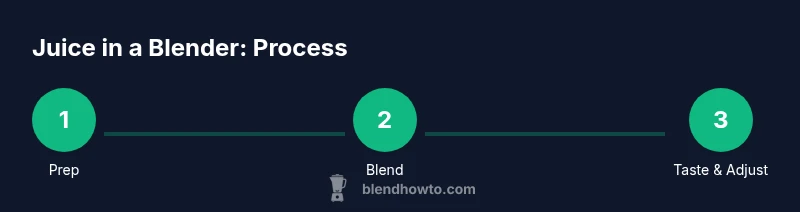
- Grip the basic method: prep, blend, and adjust texture.
- Choose the right liquids to balance sweetness and mouthfeel.
- Strain for a classic juice texture if desired.
- Clean promptly to prevent flavor carryover.