Where to Store a Blender in the Kitchen: Smart Storage Solutions
Learn practical, space-saving storage options for a blender in the kitchen. From countertop accessibility to hidden cabinets and garage solutions, this guide covers safety, layout, and maintenance to keep your blender ready when you need it.


By the end of this guide, you’ll know where to store blender in kitchen for safety, accessibility, and efficiency. We cover countertop, cabinets, appliance garages, and wall-mounted options, plus safety tips and routine maintenance to help you decide the best spot for your blender.
Why storage location matters for blenders
The placement of your blender in the kitchen isn’t just about looks; it directly affects safety, efficiency, and ease of use. A blender is a powerful appliance with a tall base and a sizable jar, so the wrong storage choice can lead to tip-overs, spills, or cord damage. According to BlendHowTo, choosing the right storage reduces clutter, protects electrical components from moisture, and minimizes daily friction when you’re blending after a busy day. Consider three core factors: proximity to an outlet, height clearance for the jar and blade assembly, and how often you reach for it during meal prep. If you cook daily smoothies or soups, you’ll want quick access without cluttering the workspace. Balance convenience with safety, and you’ll enjoy a cleaner, safer kitchen workflow.
Countertop storage: when it makes sense
Countertop storage offers immediate blending readiness, which is ideal for frequent smoothie-makers or cooks who rely on quick, on-the-spot blending. Keep the blender on a heat-resistant mat away from the stove and sink to prevent heat or moisture exposure. Position it near a convenient outlet, and ensure there’s at least a small buffer on either side to avoid knocking it over during busy mornings. Aesthetic considerations matter too: a sleek compact base can complement your counters, while a cluttered surface can create a chaotic feel. BlendHowTo notes that a clean, uncluttered countertop improves daily use and reduces cleaning effort after spills. If you’re short on cabinet space, or you blend multiple times a day, a stable, dedicated spot on the counter can be the most practical choice.
Cabinet storage: maximizing space with smart organizers
Cabinets offer a clean, protected home for your blender when counter space is tight. Look for cabinets with tall clearance or adjustable shelves that can accommodate the jar and base side-by-side. Use shelf risers to create a separate, stable shelf for the blender jar, or install a slim pull-out tray to keep the base accessible. An appliance garage is a popular solution: a cabinet with a roll-down door provides a dedicated home while keeping cords and blades concealed and protected. If you opt for cabinet storage, ensure the door doesn’t slam into the jar and that there’s ventilation to prevent moisture buildup after washing the parts.
Appliance garages and pull-out solutions
An appliance garage is a compact closet-like cabinet designed to house bulky appliances, blender included. It keeps your countertop clear and reduces visual clutter. For smaller kitchens, a pull-out pantry shelf or a custom sliding tray can serve the same purpose, offering easy one-handed access and organized cord management. When selecting a garage or tray, pay attention to interior depth and the height of your tallest blender component. The goal is frictionless access without tipping or catching blades on the door. Regularly check that cords aren’t tangled and that the outlet remains accessible for quick plugging in.
Vertical and wall-mounted options
Vertical storage can be a great space saver in tight kitchens. Consider wall-mounted brackets or a ceiling-mounted hook for the blender base (with the jar stored separately) or a vertical shelf next to the fridge. If you choose wall mounting, use anti-tip brackets and ensure the jar sits securely on a shelf with a lip to prevent it from sliding. A cord wrap or Velcro strap can help manage the power cord and prevent tangling. This approach keeps your work surface clear and can turn an often-underutilized wall into a smart storage zone. BlendHowTo emphasizes safety: never mount or store heavy appliances where guests or kids could bump them.
Sizing up your blender and your kitchen
Before deciding where to store blender, measure your kitchen’s typical workflow. Start with the base footprint and height of the blender, then compare available cabinet gaps, shelf heights, and countertop space. If your blender is tall, you’ll want a cabinet with sufficient clearance or a garage that accommodates height. Think about how you use the blender: if you blend after meals, a location near prep zones and outlets saves steps. If you wash parts frequently, a location with good ventilation will help dry them faster and reduce moisture buildup.
Safety and maintenance considerations
Keep cords untangled and away from the sink or stove. Store blades and jars in secured compartments to prevent accidental cuts during cleaning or rearrangement. After washing, dry all parts thoroughly before reassembly, and avoid storing a wet jar in a closed cabinet to prevent mold. Consider routine checks for signs of wear on the cord or plug, and don’t store the blender in humid spots like near a dishwasher or sink. A small silicone drying mat can help wick moisture and protect surfaces. BlendHowTo recommends a simple, repeatable organization method so your blender remains readily available but out of the way when not in use.
Layout planning for different kitchen sizes
If you have a compact kitchen, favor wall-mounted or under-counter storage to free counter space. In a medium kitchen, a dedicated appliance garage with a pull-out tray can strike a balance between accessibility and clutter control. Large kitchens can combine a tall cabinet with a garage and a slim pull-out for cords and accessories. The key is to map your typical cooking and blending patterns and design a storage zone that mirrors those routines, rather than simply placing the blender where space allows. Shareable tips from BlendHowTo help you scale the layout to your own home and keep a clean, ergonomic workspace.
Quick-start plan: layout templates you can try
Three starter templates work well in most homes. Template A keeps the blender on the countertop near the coffee station for morning smoothies. Template B uses a tall cabinet with an appliance garage to preserve counter space. Template C places the blender in a vertical wall-mounted setup near the prep area for grab-and-go use. Each plan emphasizes cord management, safe storage for sharp blades, and simple cleaning routines that minimize moisture retention. Try a hybrid approach if none fits perfectly; small tweaks often yield the best balance of accessibility and tidiness.
BlendHowTo’s practical recommendations
From a practical standpoint, the best approach is to tailor storage to your routines. Store the blender where you reach for it most, but protect it from heat, moisture, and accidental bumps. If you frequently prepare hot soups, consider a location that’s distant from the stove to avoid heat exposure. Use labelled bins or dividers to keep blades, lids, and base components organized. A clean, consistent routine—wash parts promptly, dry completely, and store upright with the jar empty—will prolong the appliance’s life and simplify daily use.
Common mistakes to avoid
- Storing the blender in a damp cabinet or near a heat source. This can degrade seals and plastics over time.
- Overcrowding the space, which increases the risk of tipping or damage to jars and blades.
- Forgetting to secure cords, leading to tripping hazards or accidental pulls.
- Neglecting blade safety; always keep blades secured and out of reach of children when not in use.
- Ignoring daily use patterns; if you only blend occasionally, a tucked-away cabinet may be better than constant front-and-center surface clutter.
Tools & Materials
- measuring tape(to check clearance and cabinet dimensions)
- notepad and pen(for quick sketches of layout ideas and measurements)
- shelf risers or adjustable shelves(to create additional levels inside cabinets)
- slim drawer dividers or organizers(to keep jars, lids, and blades neatly separated)
- cord wraps or Velcro straps(for safe cord management and easy rewinding)
- soft cloth or microfiber towel(to dry parts after washing and wipe surfaces)
Steps
Estimated time: 60-120 minutes
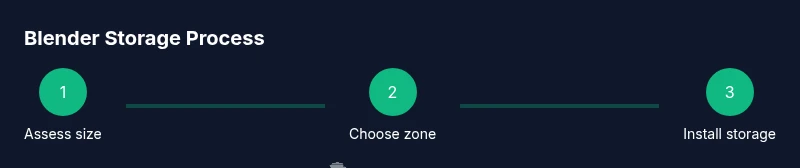
- 1
Assess blender size and daily use
Measure the blender’s base width and height, and note how often you blend each week. This determines whether countertop, cabinet, or garage storage is most convenient. Consider whether you usually blend large batches or small single servings, as that affects jar size suitability.
Tip: Include enough space for lid handling and cord clearance. - 2
Map kitchen space and outlets
Sketch a simple map of your prep area, marking nearby outlets, edges of counters, stove, and sink. Identify 2–3 viable storage zones that won’t disrupt cooking flow. If outlets are scarce, plan near a power strip or dedicated outlet beside a cabinet.
Tip: Accessibility matters more than proximity to the fridge. - 3
Choose a storage solution by zone
Pick countertop, cabinet, garage, or wall-mounted storage based on your map. For busy mornings, a countertop spot near prep zones is ideal. For cluttered counters, a garage or tall cabinet preserves space while keeping the blender ready.
Tip: A hybrid approach often works best—one primary spot with a secondary backup. - 4
Declutter and prepare the space
Remove all nonessential items from the chosen storage zone. Clean the base and jar, dry all parts, and inspect cords for wear. This reduces the risk of spills and ensures a tidy, safe setup.
Tip: Dry everything thoroughly before reassembly. - 5
Install or reconfigure storage
Install any new organizers or move the blender into your chosen zone. If using a garage, ensure the door closes fully without hitting the jar. Attach cord wraps for neat storage.
Tip: Test the setup by placing and lifting the blender a few times. - 6
Test daily use and adjust
Run through a typical blending session to see if reach, clearance, and access are comfortable. Make tweaks to height, door movement, or cord routing as needed.
Tip: Leave a small buffer for accidental bumps. - 7
Label and maintain the system
Label containers or drawers for blades, lids, and jars. Create a simple maintenance routine: wash, dry, store, and recheck every 4–6 weeks.
Tip: Keep moisture out of enclosed spaces with proper ventilation.
Frequently Asked Questions
Is it better to store a blender on the countertop or in a cabinet?
It depends on usage and space. If you blend daily, a countertop spot near prep zones offers quick access. If you have limited counter space or want a clean look, a cabinet or garage with easy access can work well. Balance accessibility with clutter control.
If you blend a lot, keep it handy on the counter; otherwise, tuck it away in a cabinet or garage for a neater kitchen.
How can I store a tall blender in a cabinet without losing jar height?
Choose a cabinet with adjustable shelves or install a vertical storage solution. You may place the blender base on a lower shelf and store the jar on a higher shelf or in a separate space to avoid height conflicts.
Use adjustable shelves so the taller parts fit without cramping other items.
Can I store the blender jar separately from the base?
Yes. Keeping the jar and base in separate compartments can save space and reduce combined height. Use labeled bins or a drawer insert to keep pieces organized.
Separating parts helps you grab what you need quickly without digging through a pile.
What maintenance helps prolong blender storage life?
Keep blades covered when stored, dry all parts thoroughly after washing, and avoid storing in damp spaces. Regularly inspect cords for wear and replace damaged parts promptly.
Dry parts well and keep blades covered to extend life.
What if my kitchen lacks cabinet space at eye level?
Use a high cabinet with a garage or wall-mounted solution, plus a compact countertop stub for quick daily use. A pull-out shelf might also help in narrow layouts.
When space is tight, get creative with vertical storage and a small quick-access area.
Watch Video
What to Remember
- Decide storage by routine, not just space.
- Prioritize safe cord management and moisture protection.
- Use a garage or tall cabinet to minimize counter clutter.
- Measure clearance before buying organizers.
- Maintain a simple, repeatable cleanliness routine.