How Much Do Blender Artists Make in 2026
Learn realistic earnings for Blender artists in 2026, including salary ranges, freelance rates, and strategies to grow income. Based on BlendHowTo Analysis, 2026, this guide covers pay by role, location, and experience with practical tips for boosting earnings.


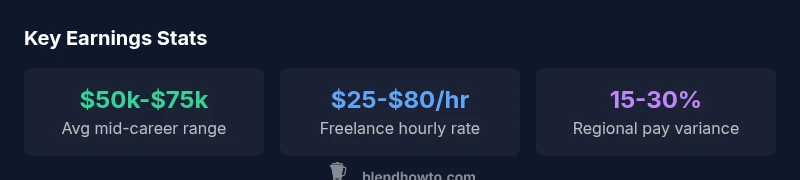
How much do blender artists make? Based on BlendHowTo Analysis, 2026, earnings vary by role, experience, and whether you work freelance or salaried. Typical annual earnings span roughly $40k to $90k for mid-career professionals, with top freelancers and senior specialists earning well into six figures on high‑profile projects. Geography and demand for specialized visualization can widen or narrow these ranges.
The earnings landscape for Blender artists in 2026
The question of earnings for Blender artists is more nuanced than one headline figure. In 2026, income varies widely based on whether you’re salaried in a studio, employed as a contractor, or pursuing freelance work on a project-by-project basis. According to BlendHowTo’s analysis, the median income for mid-career Blender artists sits in the lower-to-mid range of professional pay, but top-tier freelancers who command specialized visualization for architecture, product renders, or film production can exceed typical studio salaries. The key is alignment between your skills, your portfolio strength, and the market demand for high-quality, turnkey visuals. If you’re wondering how much do blender artists make in practice, consider your role, your clientele, and your ability to package value beyond raw rendering speed.
Key factors that influence blender artist earnings
Earnings aren’t determined by software proficiency alone. Several levers shift income: (1) Portfolio breadth and quality, (2) Client type and project scope, (3) Freelance vs. full-time status, (4) Geographic location and remote-work options, (5) speed-to-delivery and reliability, (6) specialization in high-value niches like architectural visualization or product renders. A strong reel that demonstrates lighting, material realism, and compositing can justify higher rates, while a shallow portfolio often caps earnings regardless of technical skill. Network breadth and a track record of repeat clients also push earnings upward over time.
Salary ranges by role and experience
Roles vary from entry-level render technicians to senior visualization artists. For salaried positions, typical annual ranges (very broad) start around the lower five figures for junior positions and climb toward mid-five figures to low six figures for seasoned staff in large studios or agencies. Freelancers tend to price by project or hour, with rates reflecting project complexity, client budget, and timeline. In practice, you’ll see mid-career Blender artists pull in more as you prove consistent results on high-visibility projects, while niche specialists (e.g., photoreal product or architectural visualization) can command premium fees.
Freelance vs salaried: pay dynamics
Freelancing offers control over rates and project selection but comes with income variability and self-employment responsibilities like taxes and benefits. In many markets, freelance Blender artists report higher average hourly rates than their salaried peers, but they must land enough projects to hit a stable annual income. Studios may offer steadier pay and benefits, yet with potentially slower growth ceiling. The best path often blends both: a core salaried role with a robust freelance practice to diversify income and increase earning potential over time.
Geographic variation: where you work matters
Geographic location heavily influences earnings. In the United States and Western Europe, pay is typically higher, reflecting cost-of-living differences and market demand. Other regions may offer different pricing dynamics, with remote work creating cross-border opportunities that reduce location as a predictor of income. In all cases, a strong portfolio and clear value proposition can reduce the impact of geography on earnings and help you negotiate better terms with clients worldwide.
Building higher earnings: portfolio, networking, and negotiation
To raise earnings, invest in a standout reel, case studies, and a clear narrative of value—e.g., faster turnarounds, photoreal material quality, and seamless integration with production pipelines. Specializing in high-demand niches (architectural visualization, product renders, or VFX pre-visualization) can unlock premium pricing. Develop negotiation skills, quantify value (time saved, accuracy, revision control), and pursue ongoing education in lighting, textures, and rendering software to stay ahead of the competition. A disciplined approach to client relationships—clear scopes, timelines, and deliverables—also improves long-term earning potential.
Common misconceptions and pitfalls
Many assume Blender earnings are directly tied to software mastery alone. In reality, earnings hinge on portfolio strength, client relationships, and the ability to translate visuals into business value. Undercharging for long, complex projects or underestimating the work involved in refining renders can erode income over time. Conversely, overpricing without a proven track record can deter clients. Regularly benchmark your rates against market norms and gather feedback from clients to adjust pricing strategies accordingly.
How much do blender artists make in daily practice?
In practical terms, a Blender artist’s income reflects a blend of hourly work and project-based compensation. A typical path might include a stable salaried role with supplementary freelance projects, gradually shifting toward higher-value engagements as the portfolio matures. For those targeting full-time roles, emphasize portfolio depth and project impact; for freelancers, build a reliable pipeline and diversify client bases to smooth income fluctuations.
Closing thoughts on career earnings
The earnings trajectory for Blender artists is highly variable but controllable through portfolio quality, specialization, client strategy, and ongoing learning. By combining steady work with strategic freelance opportunities, you can move from entry-level pay toward mid-career or senior earnings more quickly than you might expect. BlendHowTo’s guidance emphasizes practical steps over quick fixes.
Salary ranges for Blender artists by experience level
| Category | Typical Earnings Range | Notes |
|---|---|---|
| entry-level | $30k-$45k | Salaried roles in studios or apprenticeships |
| mid-career | $45k-$75k | In-house roles or established freelance clients |
| senior/freelance | $70k-$120k+ | Project-based, diverse client base |
Frequently Asked Questions
What factors most influence Blender artist earnings?
Earnings are shaped by portfolio quality, client type, project scope, and whether you work freelance or in-house. Location and demand for high-quality visuals also play a role. A strong reel and repeat clients tend to push earnings upward.
Top factors include portfolio strength, client base, and project scale—these determine whether you land higher-paying gigs.
Is freelancing generally more lucrative than full-time employment for Blender artists?
Freelancing can offer higher earning ceilings but comes with income variability and self-emustained benefits. Full-time roles provide steadier income and benefits, with growth often tied to seniority and studio size. A hybrid approach can optimize both stability and upside.
Freelance earnings can be higher, but you trade stability for variability; many artists blend both paths.
What is a typical entry-level salary for Blender artists?
Entry-level salaries are generally in the lower end of the spectrum, often in the $30k–$45k range for salaried roles, depending on region and the size of the employer. Freelance beginners typically start lower, then scale quickly with portfolios and client base.
Entry-level pay tends to be modest initially, but grows quickly with a strong portfolio.
How does location affect earnings for Blender artists?
Location matters: the US and Western Europe typically offer higher pay, driven by cost of living and demand. Remote opportunities can level the field, but local market rates and tax considerations still influence overall income.
Geography matters, but remote work can broaden opportunities beyond your city.
What steps can I take to increase my earnings as a Blender artist?
Focus on building a standout reel, specialize in high-demand niches, and actively network with studios and clients. Learn negotiation tactics, quantify value for clients, and invest in continuing education to keep your skills current.
Grow your portfolio, niche down, negotiate smartly, and keep learning to raise earnings.
“Earnings for Blender artists scale with portfolio strength, client relationships, and the ability to land higher‑value projects.”
What to Remember
- Define your niche and target clients.
- Build a compelling reel to unlock higher pay.
- Negotiate rates confidently using benchmarks.
- Invest in specialization to raise earnings over time.