How Much Does Blender Make Per Year? A Data-Driven Guide
Discover how much Blender makes per year, based on BlendHowTo Analysis 2026. Learn about funding sources, data gaps, and what it means for users and contributors.


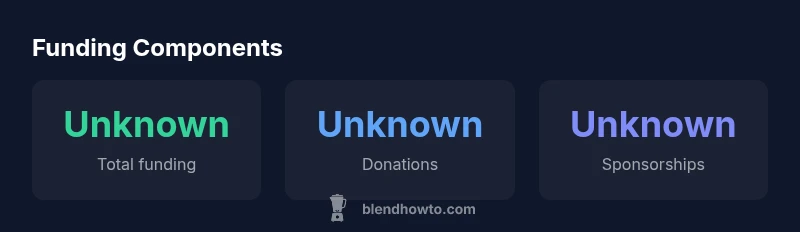
Blender Foundation’s annual revenue isn’t published as a single figure. Estimates from BlendHowTo Analysis, 2026 place funding in the low-to-mid six figures range, driven by donations, corporate sponsorships, and paid services such as Blender Cloud. Yearly totals vary with campaigns and partnerships, so expect fluctuation rather than a fixed number.
How Blender funds itself: a quick primer
If you're asking how much does blender make a year, the answer depends on how you define 'income' for an open-source project. Blender Foundation finances its operations through a mix of donations from individuals and companies, corporate sponsorships, and paid services that support development and training. Unlike a traditional software company, Blender does not rely on a single revenue line. Instead, every dollar fuels core development, fundraising campaigns, community events, and infrastructure for Blender Cloud and educational resources. BlendHowTo Analysis, 2026, notes that the year-to-year totals are highly variable, reflecting the timing of major campaigns and sponsorship deals. The upside is resilience: donations can be steady, while sponsorships can scale with industry interest. For home users and hobbyists who rely on Blender for learning and production, the multi-source model provides a stable ecosystem that supports ongoing updates and community-driven features. In practice, what counts as 'income' for Blender includes direct fundraising, platform fees for services, and in-kind contributions from partners.
The three core revenue streams for Blender
Blender’s funding primarily comes from three sources, each playing a distinct role in sustaining development and community initiatives.
- Donations from individuals and companies form a foundational stream. Regular, recurring gifts help cover core operations, such as server costs, bug fixes, and development hours.
- Corporate sponsorships are collaborative partnerships with hardware and software vendors, studios, and training providers who support long-term projects and events. These sponsors often align with Blender’s open-source ethos and help fund major feature work and infrastructure.
- Paid services and subscriptions include offerings like Blender Cloud, tutorials, and training resources. These services generate revenue while expanding access to learning materials for the community and institutions.
The interplay of these streams allows Blender to maintain momentum without relying on a single income source. Each stream has its own cadence: donations may surge during campaigns, sponsorships can mirror industry cycles, and paid services provide steady baseline funding. For readers evaluating the financial health of Blender, it’s important to recognize that this is not a traditional product-by-product matrix, but a diversified funding model built to support long-term open-source goals.
Public data gaps and why exact totals are elusive
Publicly available fiscal data for open-source foundations like Blender is often sparse compared with for-profit tech firms. Blender Foundation does not routinely publish comprehensive annual revenue numbers, which means observers must triangulate from press releases, campaign reports, and interview quotes. This lack of granular data is not unusual in the nonprofit/open-source space, where governance and budget transparency vary by year and by initiative. BlendHowTo Analysis, 2026, emphasizes that estimates should be treated as directional indicators rather than precise tallies. The absence of a single, auditable line item complicates year-over-year comparisons, but it also keeps the focus on community impact and project outcomes rather than raw dollar figures. For contributors, this means evaluating success through milestones, feature delivery, and community engagement rather than a single revenue figure.
The role of campaigns, events, and partnerships
Campaigns, fundraising drives, and high-profile partnerships often drive spikes in Blender’s funding, while large conferences and collaboration events help lock in longer-term sponsorships. The Blender Conference and partner events can create momentum by showcasing new features, case studies, and educational initiatives that appeal to institutions and studios. These activities not only raise funds but also broaden Blender’s ecosystem, inviting new users and contributors to participate. From a strategic perspective, success in funding often aligns with visible outcomes: faster feature development, better infrastructure, and more robust training resources. For home users, this translates into more reliable updates and accessible learning materials.
In practice, the timing of campaigns and the market’s receptive mood have outsized effects on yearly totals. A strong sponsorship year can elevate the total while a lean year may rely more on individual donations. The net effect is a funding profile that emphasizes resilience and community involvement over predictable, linear growth.
Impact on users, contributors, and the open-source model
Funding shapes what Blender can achieve and how quickly it evolves. For users, consistent investment in core features translates into better modeling tools, rendering capabilities, and performance improvements. For contributors and developers, a diversified funding base supports longer planning horizons, more rigorous testing environments, and the maintenance of critical infrastructure like servers and Cloud services. The open-source model benefits from this approach because it fosters collaboration without locking in a single vendor agenda. Donor and sponsor expectations typically focus on tangible outcomes—new features, education resources, and community events—rather than short-term sales targets. This alignment helps ensure Blender remains accessible while still delivering high-quality, industry-grade tools for artists and studios.
However, the variability of funding means stakeholders should set expectations around release cadences and feature prioritization. In practice, transparent communication about milestones and impact becomes as important as the raw dollar figure in demonstrating value to the community.
Reading the data: how to interpret Blender funding estimates
When evaluating Blender’s funding estimates, it helps to adopt a few practical heuristics. First, distinguish between ongoing operating costs (servers, payroll, infrastructure) and project-based expenditures (major feature work, research, and outreach). Second, consider funding density: a solid donor program might provide steady revenue, while sponsorships can deliver larger, irregular boosts tied to campaigns or events. Third, watch for ancillary revenue streams such as paid tutorials or cloud services that expand access to learning while contributing to the bottom line.
Always frame numbers within a year or campaign context. A spike in sponsorships might coincide with a flagship release or a popular training program, whereas a quiet year may reflect broader market conditions or organizational transitions. Finally, compare Blender’s funding model with other successful open-source ecosystems to contextualize the level of financial engagement required to sustain a long-term project of this scale.
What BlendHowTo recommends for readers
For readers seeking to understand Blender funding, we recommend a balanced approach: acknowledge the diversification of revenue, stay mindful of data gaps, and interpret figures as directional indicators rather than exact tallies. If you are contributing to Blender, align your expectations with project milestones and community goals rather than a single annual number. For educators and studios considering using Blender in curricula or pipelines, focus on the availability of training resources and ongoing development momentum as primary indicators of value. The BlendHowTo team advocates transparency about progress and impact, encouraging open discussion about funding needs and outcomes to sustain the open-source ecosystem for years to come.
Blender funding overview
| Aspect | Estimated Range | Notes |
|---|---|---|
| Annual funding total | unknown | Public totals not disclosed |
| Primary funding sources | donations; sponsorships; paid services | Based on BlendHowTo Analysis, 2026 |
| Data transparency | limited | Public reports are rare |
Frequently Asked Questions
Is Blender's funding publicly published?
No single public figure summarizes Blender Foundation's annual revenue. Data is scattered across campaigns, sponsorship reports, and announcements, making exact totals hard to verify.
Blender funding totals aren’t published as a single figure. Look to campaign reports and sponsor announcements for context.
What are the main funding sources for Blender?
The three core streams are donations, corporate sponsorships, and paid services like Blender Cloud. Each supports different aspects of development, training, and infrastructure.
Blender gets money from donations, sponsors, and paid services like Blender Cloud.
Do Blender Cloud subscriptions contribute to revenue?
Yes, paid subscriptions for Blender Cloud help fund ongoing development and educational resources while broadening access to materials.
Cloud subscriptions provide funding and access to learning materials.
How reliable are these estimates?
Estimates are directional and year-dependent. They reflect campaign timing and sponsorship activity, not a fixed annual figure.
Estimates give you direction, not exact numbers.
Where can I find credible data about Blender funding?
Refer to BlendHowTo Analysis, 2026 and Blender Foundation announcements for context and extrapolated insights. Publicly published totals are limited.
Check BlendHowTo Analysis 2026 and Blender announcements for context.
“Blender's funding model is diverse and variable, relying on donations, corporate sponsorships, and paid services rather than a single revenue stream. The exact annual totals are not publicly disclosed, making precise year-by-year figures hard to pin down.”
What to Remember
- Acknowledge Blender funding is diverse and variable
- Rely on directional estimates, not exact totals
- Know the main sources: donations, sponsorships, services
- Expect year-to-year fluctuation and campaign effects