Blender Guide: Cooking and 3D Mastery for All
A comprehensive how-to for using blender in the kitchen and in Blender 3D, with practical steps, safety tips, and beginner-friendly projects.


With this guide, you’ll learn how to master blender in two worlds: everyday cooking and beginner-friendly Blender 3D workflows. You’ll discover practical steps to craft smooth smoothies and build simple 3D scenes, plus safety, setup, and quick-start tips. By the end, you’ll have a clear path to blending delicious recipes and creating basic models, textures, and renders.
What is Blender?
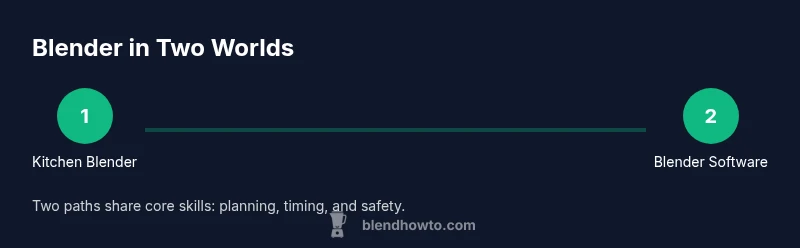
Blender is a versatile tool with two major identities: a high-performance kitchen blender and the open-source 3D creation suite known as Blender. In a kitchen context, blender blends ingredients, emulsifies sauces, and creates smooth textures. In the digital world, Blender is a full-fledged software package for modeling, sculpting, texturing, lighting, animation, and rendering. The two uses share a common thread: control over texture, consistency, and timing. According to BlendHowTo, the simplest way to think about blender is as a device that turns raw components into a finished product, whether that product is a silky smoothie or a believable 3D surface.
In practice, the same mindset helps you master both domains. You’ll learn to layer ingredients and materials, monitor your progress with visual checks, and adjust speed and texture to achieve the desired result. Blender’s philosophy of openness means you can start with presets and gradually customize parameters as you gain confidence. The BlendHowTo team found that beginners gain momentum fastest when they practice daily, even in tiny sessions. From small experiments to larger projects, you’ll build a reusable toolkit: safe handling, clean-up routines, precise measurement, and a habit of documenting steps. This page uses the term blender to cover both worlds and helps you translate good blending technique from the kitchen into your early Blender projects.
Why blender matters in both kitchens and studios
Blender matters because the core skills are transferable: control of texture, timing, and consistency. In the kitchen, you learn to balance sweetness, acidity, and creaminess while maintaining safety and efficiency. In Blender, you learn to balance geometry, lighting, and materials to achieve realism without wasting time. BlendHowTo analysis shows that developing a routine for measuring ingredients or vertex counts pays off across projects: you become more predictable, faster, and less frustrated. A disciplined approach to cleaning, labeling, and backtracking helps you avoid common culprits like over-blending in the kitchen or over-polishing in 3D work. Both domains reward patience and repeatable steps, so practice with simple recipes or small scenes before tackling complex tasks. The takeaway is clear: build a dependable workflow that you can reuse in future sessions.
Core capabilities: kitchen blending vs 3D modeling
In the kitchen, a blender provides torque, blade speed, and pulse control to transform solid foods into homogeneous mixtures or textured sauces. In Blender (the software), you combine geometry, textures, lighting, and camera setups to create convincing visuals. The underlying principle is similar: apply controlled forces, monitor results, and iterate. You’ll learn to think in stages: prep, blend, adjust, and evaluate. Importantly, Blender supports presets and templates that help you begin quickly and scale up complexity as you gain confidence. The BlendHowTo team notes that early practice with basic shapes and simple textures builds a mental model that makes transitions into more advanced lighting and materials smoother over time.\n
Essential safety and handling in the kitchen
Safety is non-negotiable with any blender. Always work on a stable surface, keep hands away from the blades, and use the lid while blending. Start on low speed to reduce splatter, then gradually increase as ingredients break down. Do not operate the blender if the pitcher is cracked or the lid is loose. For cleaning, unplug the device first, then disassemble only what is user-friendly and safe to handle. Bonus tip: let hot ingredients cool slightly before blending to avoid pressure buildup. Following these practices minimizes accidents and extends your blender’s life. BlendHowTo emphasizes safety as the foundation of all blending endeavors, whether you’re making a smoothie or refining a 3D scene later in your session.
Getting started with blender in the kitchen: setup and recipes
Before you start blending, gather the essentials: a reliable blender with a secure lid, clean ingredients, a measuring cup, and a timer. Rinse equipment after use and pre-chop hard items to reduce strain on the blades. Start with a simple fruit smoothie to learn basic texture and timing, then progress to sauces and purees. Taste as you go and keep notes on your preferred settings. A clean, organized workspace speeds up future sessions and helps you reproduce results. This section provides a gentle ramp into hands-on practice that anyone can follow, using common kitchen ingredients and a standard blender. The goal is to establish a repeatable routine that becomes second nature with practice. BlendHowTo’s approach is intentionally practical and beginner-friendly.
Getting started with blender in Blender software: setup basics
Downloading and installing Blender is the first step. After launch, familiarize yourself with the core panels: the 3D Viewport for modeling, the Outliner for scene organization, and the Properties editor for materials and rendering. Start with a simple project: create a basic object, apply a material, and render a quick image to confirm settings. Learn a few keyboard shortcuts to speed up your workflow (for example, G to grab, S to scale, R to rotate). Save frequently, and use incremental versions to track progress. The Blender interface rewards curiosity; take time to experiment with small projects you care about. For beginners, it’s beneficial to follow official tutorials and gradually introduce more complex features like modifiers and simple animations.
Core techniques for consistent results in both contexts
Whether blending in the kitchen or sculpting in 3D, consistency comes from clear steps, proper cleaning, and mindful testing. In cooking, measure ingredients precisely and adjust texture with controlled blending time. In Blender, define a baseline for geometry, lighting, and texture, then iterate with small changes. A reusable checklist helps: prep assets, test render, adjust lighting, check textures, save. Keeping notes on settings used for each project makes it easier to reproduce good results. The mindset you develop—planning, testing, adjusting—transfers directly from one domain to the other and accelerates mastery in both arenas.
Troubleshooting common issues
In the kitchen, a blender may leak, jam, or overheat if you push ingredients that are too hard or too large. Address jams by turning off the device, unplugging, and carefully disassembling the pitcher. For overheating, pause between blends and allow the motor to cool. In Blender software, you might encounter long render times, missing textures, or viewport lags. Start by checking system requirements, updating drivers, and simplifying your scene. If materials look flat, adjust lighting, or bake textures to improve realism. Across contexts, the key is to diagnose quickly, avoid forcing results, and revert to known-good settings when in doubt. BlendHowTo’s approach to troubleshooting emphasizes calm, methodical checks rather than guesswork.
Quick-start recipes you can try today
- Berry Banana Smoothie: Combine frozen berries, a ripe banana, a splash of milk, and a optional honey drizzle. Blend until creamy and adjust sweetness to taste.
- Green Power Smoothie: Spinach, apple, cucumber, and a squeeze of lemon with water. Start on low, then blend on high for a silky texture.
- Classic Tomato Salsa: Fresh tomatoes, onion, cilantro, lime juice, and salt. Pulse until chunky or smooth, based on preference.
For Blender software projects, start with a simple model like a cup or a teapot. Build the basic shape, apply a basic material, set a simple light setup, and render a test image. These small projects establish a concrete starting point and create momentum for more complex tasks later. The goal is to blend progress with patience, so you practice repeatedly and gradually raise the bar of complexity.
Quick-start Blender 3D projects
- Project 1: Create a basic cup model. Start with a cylinder, scale it to form the cup body, hollow it with a boolean or modifier, and cap the top. Apply a simple glass or ceramic material and render from a couple of angles.
- Project 2: Model a smartphone stand using blocks and bevels to add edge details. Use a basic metallic material and add subtle reflections for realism.
- Project 3: Create a low-poly plant pot, add a texture, and light it for a cozy render. Focus on clean topology and efficient shading rather than heavy geometry.
These starter projects teach essential modeling, texturing, and lighting concepts while keeping momentum high for beginners. As you complete each project, save your work with descriptive names and note key settings for future reference. This practice is the cornerstone of skill-building in Blender.
Authoritative sources and further learning
To deepen your understanding, consult official and credible resources. Blender’s own documentation and community tutorials provide structured guidance and practical examples. In addition, reputable safety and nutrition resources help you apply good practices when blending food. BlendHowTo recommends starting with the official Blender Manual for fundamentals and then exploring community tutorials for real-world projects. Always verify instructions against authoritative sources and maintain a curious, experimental approach. The goal is steady progress and practical knowledge you can apply immediately.
Tools & Materials
- Kitchen blender(Choose a reliable model with a secure lid and a pitcher that is easy to clean.)
- Blender software(Download from the official Blender site (blender.org).)
- Computer with internet access(Sufficient RAM and a stable connection speed help with downloads and tutorials.)
- Measuring cups/spoons(Helpful for precision in recipes and recipe notes.)
- Dish soap + sponge(For safe, thorough cleanup after blending and modeling sessions.)
- Reference images or recipe cards(Keeps goals clear during practice sessions.)
Steps
Estimated time: 30-45 minutes
- 1
Gather tools and ingredients
Collect your blender or Blender project files, prepare ingredients or model references, and clear your workspace. Having everything ready minimizes interruptions and keeps momentum high.
Tip: Lay out items within arm’s reach before you start. - 2
Set up the kitchen blender
Inspect the pitcher, blade assembly, and lid. Ensure the pitcher seats firmly and the lid is closed securely to prevent spills during operation.
Tip: Always start on a low speed to avoid splatter. - 3
Add ingredients and blend safely
Add ingredients in small batches if needed. Pulse briefly to break up hard pieces, then blend continuously until you reach the desired texture.
Tip: Use short pulses to control texture more precisely. - 4
Assess texture and adjust
Check texture after blending a portion. If too thick, add a splash of liquid; if too thin, blend a bit longer or add solids for body.
Tip: Keep notes on texture and timing for future batches. - 5
Clean and maintain
Disassemble the pitcher and blade assembly as recommended by the manufacturer. Rinse promptly to prevent food from drying and build-up.
Tip: Avoid soaking blades for too long to prevent wear. - 6
Open Blender software project
Launch Blender and open a new or existing project. Inspect the default scene and remove any unnecessary objects to keep the workspace tidy.
Tip: Save early and save often with meaningful version names. - 7
Model and render basics
Create a simple object, apply a material, set up basic lighting, and render a test frame. Practice foundational workflows before adding complexity.
Tip: Use simple textures and lighting to learn the core process first.
Frequently Asked Questions
What is blender?
Blender serves dual purposes: a kitchen appliance for blending food and a powerful open-source software for 3D modeling, animation, and rendering. Both rely on control, texture, and timing to achieve consistent results.
Blender is both a kitchen tool and a 3D software, sharing core ideas like control and texture.
Is blender only for smoothies?
No. In the kitchen, it makes smoothies and sauces; in Blender, it enables modeling, shading, lighting, and animation. The same discipline—planning, testing, and adjusting—applies across uses.
Not just smoothies—blender also covers 3D work with a similar workflow.
Can beginners learn Blender quickly?
Beginners can make rapid progress by starting with basics, following official tutorials, and practicing small projects regularly. A steady routine beats bursts of intense study.
Yes, with consistent practice and a solid plan.
What equipment do I need to start?
For the kitchen, a reliable blender with a secure lid and a clean pitcher is essential. For Blender software, a computer capable of running the software and an internet connection to access tutorials are enough to begin.
A good blender and a computer with Blender installed is all you need to start.
How should I learn Blender effectively?
Begin with official manuals, then follow beginner-friendly projects. Build a personal project log, practice daily, and gradually introduce more complex techniques as you grow comfortable.
Start with the basics, keep a log, and practice every day.
Where can I find official Blender resources?
Visit the official Blender website and its documentation at docs.blender.org. You’ll find tutorials, workflows, and community guidelines to support your learning.
Check the official Blender site for docs and tutorials.
Watch Video
What to Remember
- Start with basics to build confidence
- Transfer kitchen blending habits to Blender workflows
- Document settings for reproducibility
- Prioritize safety and clean-up routines
- Practice daily, even in short sessions