Crepe Blender Recipe: Easy Batter for Perfect Crepes
Learn a practical crepe blender recipe to whip smooth batter, rest properly, and cook ultra-thin crepes with a blender. Includes dairy-free and gluten-free options, tips for fillings, and quick troubleshooting from BlendHowTo.


Using a blender to make crepe batter delivers a lump-free, ultra-smooth mix in minutes, then cooks into delicate crepes on a hot pan. This guide covers batter ratios, resting, and cooking technique, with adaptable options for dairy-free and gluten-free diets. Ready in under an hour for breakfast, brunch, or dessert.
Why Crepes Benefit from a Blender
Using a blender for crepe batter streamlines the cooking process and helps achieve an ultra-smooth texture. The key is to blend until the mixture is uniform with no lumps, which reduces whisking time and ensures consistent thickness from one crepe to the next. A blender’s blades quickly break down flour lumps, whisk dairy or non-dairy milks into the batter, and help emulsify eggs with fat for a silky base. For home cooks and hobbyists, this translates to less arm fatigue and more reliable results on busy mornings, weekend brunches, or dessert nights. BlendHowTo has found that even budget blenders can produce restaurant-quality crepes when used with the right ratios and resting time. In this section, you’ll learn how to balance liquid, flour, and seasonings, so you can customize batter to your preferred style (classic, gluten-free, or dairy-free) while maintaining a light, flexible texture that tears cleanly when cooked.
Understanding Batter Ratios for Fluffy, Thin Crepes
Crepe batter relies on a balance between flour, liquid, and fat to achieve a thin, flexible film in the pan. A common starting point is 1 cup of all-purpose flour, 2 eggs, and about 1 to 1 ¼ cups of milk, plus a tablespoon or two of melted butter or neutral oil. Adjusting the liquid vs. flour ratio changes the final texture: more liquid yields thinner crepes, while more flour yields slightly thicker edges. If you’re using gluten-free flours, expect different absorption rates; you may need an extra tablespoon or two of liquid. Resting the batter for 20-30 minutes lets the gluten relax and the starch hydrate, producing more forgiving, tear-free crepes. Blend until completely smooth, then rest and proceed to cooking. For sweet crepes, add a touch of sugar and vanilla; for savory, skip sugar and consider a pinch of salt with herbs.
Equipment and Prep: What You Need Before You Start
A smooth crepe begins with the right tools and clean prep. You’ll want a blender with a wide mouth attachment or at least a sturdy 600–900 ml jug, a mixing bowl, a whisk for final smoothing, measuring cups and spoons, a nonstick skillet or crepe pan around 10–12 inches in diameter, and a spatula for flipping. Preheat the pan so it’s hot but not smoking, and lightly grease with butter or neutral oil before the first crepe. Have a clean plate ready to stack finished crepes and a warm towel to keep them pliable. Mise en place reduces stand-and-wait time, so you can stay flexible as you cook.
Step-By-Step: Batter Preparation, Rest, and Cooking Process
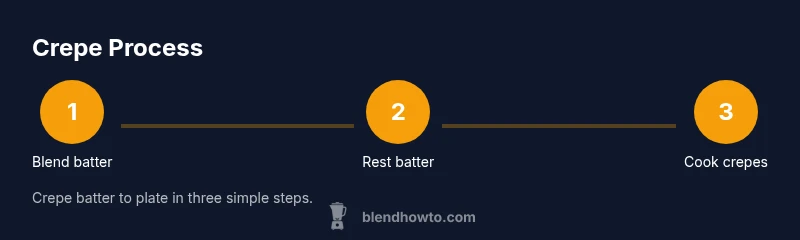
- Gather ingredients and equipment. 2) Blend all batter ingredients until smooth and lump-free. 3) Rest the batter for 20-30 minutes. 4) Preheat the pan and lightly grease. 5) Pour a small amount of batter and swirl to form a thin film. 6) Cook until the edges lift, flip, and cook the other side. 7) Stack crepes and serve hot with desired fillings.
Troubleshooting Common Issues
If your batter is lumpy, blend longer or strain briefly to remove any stubborn lumps. If crepes tear or stick, ensure the pan is properly greased and the batter is at the right consistency—not too thick. If crepes are too thick near the center, add a splash of milk to the remaining batter. For ultra-thin edges, pour slightly more liquid and swirl quickly to form a uniform film. Resting the batter longer can also help thicken the coating and improve handling.
Flavor Variations and Fillings
Savory crepes pair well with fillings like sautéed mushrooms, spinach, cheese, and ham. Sweet options include lemon zest, vanilla, cinnamon, Nutella, fresh berries, or a simple sugar-and-citrus glaze. To keep the batter versatile, you can add a pinch of sugar for sweet crepes or keep it neutral for savory options. Consider a dairy-free version with almond milk and olive oil or coconut milk for a richer finish. The blender makes it easy to experiment with flavors without changing technique.
Healthier Substitutions and Dietary Considerations
Dairy-free options use plant milks such as almond, soy, or oat milk without sacrificing texture. Gluten-free versions can use rice flour, almond flour, or a gluten-free blend; you may need to adjust liquid by 1–2 tablespoons. Egg-free crepes are achievable with a flax egg or chia egg substitute and a small amount of extra milk. Keep in mind that these substitutions can alter flavor and elasticity slightly, so plan to adjust with a bit more fat or liquid as needed. BlendHowTo encourages experimentation within balanced ratios to maintain a soft, flexible crepe.
Storing, Reheating, and Freezing Crepes
Fresh crepes are best on the day they’re made. To store, layer cooled crepes with parchment and refrigerate for up to two days. Reheat gently in a skillet or warm oven, or microwave in short bursts with a damp paper towel to keep moisture content. For longer storage, freeze individual crepes separated by parchment; reheat directly from frozen for best texture. Label and date the packages so you know what you’re pulling from the freezer.
Tools & Materials
- Blender(Wide mouth preferred; at least 600 ml capacity)
- Mixing bowl(1–2 liter capacity)
- Whisk(For final smoothing if needed)
- Measuring cups & spoons(Accurate measurements for ratios)
- Nonstick skillet or crepe pan (10–12 inches)(Preheat before first crepe)
- Spatula(Silicone preferred)
- Ladle or small pitcher(For portioning batter)
- Oil or butter for greasing pan(Light coat to prevent sticking)
Steps
Estimated time: 60-90 minutes
- 1
Assemble ingredients and equipment
Measure out the flour, eggs, milk, butter, and a pinch of salt. Set aside any add-ins like sugar or vanilla. Prepare your blender, mixing bowl, and pan so everything is within arm’s reach.
Tip: Organize ingredients in the order you’ll add them to the blender to avoid backtracking. - 2
Blend batter until smooth
Add liquid (milk or plant milk) first, then flour, eggs, and fat. Blend on medium speed until no lumps remain. Stop and scrape the sides as needed to ensure everything is incorporated.
Tip: If using gluten-free flour, blend a little longer to prevent gritty texture. - 3
Rest the batter
Cover and rest the batter for 20–30 minutes. Resting hydrates the flour and relaxes gluten for a tender crepe and easier handling.
Tip: If you’re short on time, a 10-minute rest still helps; longer is better when possible. - 4
Preheat and grease the pan
Heat the skillet over medium-high heat. Lightly grease with a small amount of oil or butter and wipe away any excess. You want a very thin coating so the first crepe releases cleanly.
Tip: The pan should be hot but not smoking; too hot and the crepe will scorch before cooking through. - 5
Cook each crepe
Pour a small amount of batter into the center and swirl to form a thin film. Cook until the edges lift, flip, and cook the other side for 15–30 seconds. Repeat with remaining batter.
Tip: If batter seems thick, tilt the pan and adjust by rotating the pan during swirls for an even circle. - 6
Stack and serve or fill
Stack cooked crepes on a warm plate, cover with a clean towel to keep them flexible, and fill as desired. Alternatively, refrigerate or freeze for later use.
Tip: Keep crepes warm by covering; ventilation helps avoid soggy edges.
Frequently Asked Questions
Can I use non-dairy milk in crepe batter?
Yes. Any non-dairy milk works (almond, soy, oat, or coconut). Keep an eye on fat content; you may need a little extra butter or oil to help emulsify. Taste may vary, so adjust sweetness or salt accordingly.
Yes. You can substitute non-dairy milks like almond or soy; just adjust fat and sweetness to taste.
Should the batter rest before cooking?
Resting allows the flour to hydrate and the gluten to relax, producing smoother batter and more tender crepes. A 20–30 minute rest is ideal, but even 10 minutes helps.
Yes—let it rest for about 20 to 30 minutes for best texture.
How thin should crepes be and how can I adjust thickness?
Aim for a whisper-thin film that coats the pan. If batter is too thick, add a splash more milk; if too thin, whisk in a touch more flour or adjust the ratio slightly.
Aim for ultra-thin crepes; adjust with small additions of milk or flour as needed.
Can I freeze cooked crepes?
Yes. Layer cooled crepes with parchment and freeze. Reheat in a warm pan or microwave with a damp towel to retain softness.
Yes, you can freeze them and reheat later.
What pan and heat level work best for crepes?
Use a well-seasoned nonstick skillet or crepe pan around 10–12 inches. Cook on medium-high heat and adjust to keep edges crisp without burning.
Nonstick pan, medium-high heat; adjust as needed for even browning.
Watch Video
What to Remember
- Blend batter until smooth for lump-free crepes.
- Rest the batter to improve texture and elasticity.
- Use a hot, lightly oiled pan for ultra-thin crepes.
- Customize with dairy-free or gluten-free variations.
- Store and reheat crepes properly to preserve texture.