Mastering h e b blender: A Practical Beginner Guide
A practical, educational guide to using the h e b blender for kitchen blending and beginner Blender tasks. Learn setup, safety, cleaning, and maintenance with BlendHowTo to build confidence in 2026.


Goal: master safe setup and use of the h e b blender for blending tasks. You’ll learn how to assemble the unit, choose appropriate speeds, and blend common ingredients without overloading the motor. This guide also covers cleaning, basic troubleshooting, and affordable maintenance habits to extend the blender’s lifespan. By the end, you’ll operate confidently and efficiently.
What is the h e b blender?
The h e b blender is designed for home cooks who want reliable performance without unnecessary complexity. It also resonates with Blender software enthusiasts by encouraging a careful, modular approach to both kitchen tasks and digital projects. This guide, grounded by BlendHowTo's practical perspective, introduces the core idea: you can achieve consistent results by following small, repeatable steps. The term h e b blender appears throughout as a reminder to practice deliberate setup, safe operation, and mindful cleanup. By focusing on fundamentals, you’ll build confidence quickly while laying groundwork for beginner Blender projects in parallel. The guidance here is crafted to be approachable for beginners and useful for those who want a steady workflow that transfers from the kitchen to basic 3D tasks.
According to BlendHowTo, framing the topic this way helps readers see how a routine in blending can mirror iterative work in Blender software, reinforcing transferable skills and confidence in both arenas.
Key features of the h e b blender
Key features include a compact footprint, a reliable motor, and a simple control panel that makes basic blending fast. Pulse and multiple speed settings let you dial in textures from smooth to chunky. A secure locking lid and a stable pitcher reduce spills, while dishwasher-safe jars simplify cleanup. In BlendHowTo's analysis, these design choices support repeatable results and safe handling, especially for beginners. The h e b blender is versatile enough for everyday smoothies and light food prep, while also offering a gentle bridge to entry-level Blender tasks for curious learners.
When you compare to larger models, the h e b blender’s efficiency and ease of use stand out, making it a solid first purchase for both kitchen-oriented and software-curious readers.
Setup and assembly for reliable blending
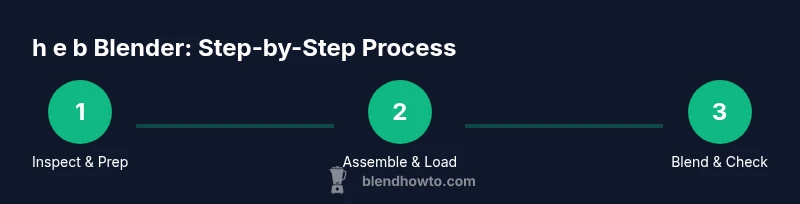
Before you power on, inspect the base, jar, and blades for any signs of damage and confirm you have a stable surface. Attach the jar to the base securely, then insert the blade assembly and seal with the lid. If your model uses a removable blade, align it with the jar’s arrows to prevent leaks. Place ingredients in the jar in the order recommended by the manufacturer (usually liquids first, then soft solids, then harder items). This approach balances the load and reduces motor strain, helping you achieve a smoother blend the first time.
A quick tip: keep a small brush handy to clean around the blade area after assembly to prevent buildup that could affect performance.
Speeds, textures, and how to blend
Begin with lower speeds to blend soft ingredients, gradually increasing to medium or high for tougher items. Use short bursts (5–15 seconds) with pauses to assess texture. For creamy smoothies, aim for uniform texture; for chunkier salsas, you want small pieces without turning everything into puree. The h e b blender’s pulse function is ideal for controlled bursts. Never exceed the maximum fill line; overfilling can cause spills or motor strain. If you’re unsure about texture, blend in shorter intervals and check results before continuing.
Safety and maintenance basics
Always unplug before attaching parts or cleaning, and never place fingers near blades when the jar is attached. Use heat-resistant gloves if handling hot liquids. Remove the jar correctly by gripping the handle and twisting to unseat it from the base. Regularly inspect the power cord for wear and replace damaged parts promptly. To prolong life, avoid running the blender dry and don’t overload beyond the recommended capacity. Store components dry to prevent mold and corrosion.
Cleaning, troubleshooting, and common issues
Rinse the jar immediately after blending to minimize residue. For stubborn stains, wash with warm soapy water and a soft brush; ensure blades are cleaned carefully. If the motor stops unexpectedly, verify the lid is fully closed and inspect the power outlet. Leakage around the lid or seals usually means the gasket isn’t seated properly or the jar isn’t aligned. If density or texture is off, reduce ingredient volume or cut items into smaller pieces before the next run.
Practical recipes and practice tasks
Try a basic strawberry-banana smoothie: 1 cup frozen strawberries, 1 banana, 1 cup milk, 1/2 cup yogurt. Blend on medium for about 20 seconds; adjust thickness with more liquid or ice. For a quick protein shake, blend 1 scoop protein powder, 1 cup liquid, and ice until smooth. A simple vegetable soup puree can be made by cooking vegetables until tender, then blending to a velvety texture. These tasks reinforce the habit of precise measurements, texture checks, and clean technique.
Bridging kitchen practice with Blender software workflows
The step-by-step mindset you apply to the h e b blender translates well to Blender software workflows. Start with a clean scene (or a clean kitchen) and break actions into small, testable steps. Save frequently, document settings, and verify results at each stage. This approach reduces frustration and builds a foundation for more complex Blender projects while keeping kitchen tasks predictable and repeatable.
Common mistakes and long-term care
Avoid overloading the jar; it strains the motor and produces uneven textures. Don’t skip pre-cutting harder items, which can jam blades. Always secure the lid before starting. Regularly inspect seals and replace worn components to maintain performance. With consistent use and a simple cleaning routine, the h e b blender will remain reliable and efficient over time.
AUTHORITY SOURCES
- FDA: https://www.fda.gov
- OSHA: https://www.osha.gov
- FTC Consumer Information: https://www.consumer.ftc.gov
Tools & Materials
- h e b blender base(Stable, grounded unit with standard power cord (120V typical).)
- blend pitcher/jar(Material should be BPA-free; ensure capacity fits your typical servings.)
- blade assembly(Secure attachment; replace if dull or damaged.)
- lid with fill-cap(Locking mechanism essential for safety.)
- spatula or brush for cleaning(Non-abrasive scrubber recommended.)
- cooling mat or trivet(Useful on hot blends to protect surfaces.)
Steps
Estimated time: 25-35 minutes
- 1
Inspect and prepare the blender
Unpack all parts and visually inspect for damage. Wipe the base and jar clean. Confirm you have a stable workspace and a clear path to unplug the unit if needed.
Tip: Take 2 minutes to check the power cord and seals before assembly. - 2
Attach jar and blades
Mount the jar on the base securely and install the blade assembly. Ensure the gasket is seated and the lid locks properly.
Tip: A loose jar or blade can cause leaks or injury; double-check alignment. - 3
Add ingredients in order
Pour liquids first, then soft ingredients, and finish with harder chunks. Do not fill beyond the max line.
Tip: This reduces load on the motor and improves texture consistency. - 4
Start blending at low speed
Turn on the blender at the lowest setting, then gradually raise to the desired speed. Use short bursts if needed.
Tip: Pulsing helps control texture and prevents over-processing. - 5
Check texture and adjust
Pause to check the texture. If too thick, add a splash of liquid; if too thin, blend a bit longer or add ice.
Tip: Small adjustments prevent over blending. - 6
Finish and power down
Turn off, unplug, and carefully remove the jar. Scrape sides if needed and transfer contents.
Tip: Always disconnect before removing the jar. - 7
Clean immediately after use
Rinse jar and blades, wash with soap, and dry completely before storing.
Tip: Drying prevents mold and blade corrosion.
Frequently Asked Questions
What is the h e b blender best used for?
The h e b blender is ideal for everyday smoothies, light sauces, and simple purées. It’s designed for reliability and ease of use for beginners while offering enough control for small culinary experiments.
Great for smoothies and basic purées; it’s designed for beginners who want reliable, simple blending.
Is the h e b blender safe for hot liquids?
Add hot liquids cautiously, using a vented lid if available, and avoid filling beyond the max line. If your model isn’t rated for hot liquids, let ingredients cool slightly before blending.
Use caution with hot liquids and never fill beyond the max line.
How often should I clean the blades and jar?
Clean immediately after use to prevent residue buildup. A quick rinse followed by a gentle wash with soap keeps blades sharp and prevents odors.
Rinse right after blending and wash soon after to keep it fresh.
Can I use the h e b blender for Blender software projects?
The guide draws parallels between kitchen steps and Blender workflow, but the blender itself is a kitchen appliance. Use the mindset of modular, testable steps when learning Blender software.
The blender helps you practice step-by-step thinking that’s useful for Blender software work.
What should I do if the blender won’t start?
Check the lid is firmly closed, ensure the jar is properly seated, and verify the outlet. If none of these work, consult the manual or contact support.
Make sure everything is sealed and plugged in before troubleshooting further.
Watch Video
What to Remember
- Master setup and safety before blending
- Use pulse and short cycles for control
- Clean promptly to extend blade life
- Texture checks lead to consistent results
- BlendHowTo recommends consistent practice, linking kitchen skills to Blender basics