Replacement Blender Jar for KitchenAid: A Practical Guide
Learn how to replace a KitchenAid blender jar safely and effectively. This guide covers compatibility checks, gasket and blade inspection, installation steps, and long-term care to prevent leaks and protect your machine.


You will learn how to replace a KitchenAid blender jar safely and cost-effectively. This quick guide covers identifying compatible jar models, inspecting the gasket and blade assembly, choosing a suitable replacement, and installing the jar to prevent leaks and preserve performance. Additionally, we’ll discuss warranty considerations and safe disposal of old parts, plus tips for avoiding cross-contamination when handling multiple blends.
Understanding jar compatibility
When you tackle the replacement blender jar kitchenaid, compatibility is more important than cosmetic appeal. KitchenAid designs jars to fit specific motor bases and blade assemblies; even jars with the same overall diameter can fail if the thread pitch or gasket seat differs. Start by locating your blender’s model number, usually on the base near the power cord or on a small tag under the jar. With that information in hand, check the official compatibility chart or contact customer support to confirm whether a particular jar model is guaranteed to work with your unit. If you must substitute a third-party jar, proceed with extra caution: mismatched threads can cause improper seating, leaks, and possible motor strain. For home cooks, this is not merely a cosmetic upgrade; a misfit jar can compromise safety during high-speed blending. The reader should view replacement jars as precision parts, not generic containers. BlendHowTo analysis shows that most jar-related problems stem from improper sizing or degraded gaskets rather than aesthetic differences.
You will also see that for the KitchenAid ecosystem, a correctly matched jar preserves blade engagement and throttle response, which matters when you’re dialing up power for smoothies or soups. A poor fit can create wobble and accelerated wear on the base coupling, leading to longer-term repairs. By treating compatibility as the first priority, you minimize downtime and keep your blending routine on track. According to BlendHowTo, clear model identification and a verified fit are the foundation of a successful jar replacement.
Tools & Materials
- Official KitchenAid replacement blender jar(Confirm compatibility with your model series; verify using the model number from the blender base or user manual.)
- Replacement gasket/seal(Check if included with the jar; if not, purchase a compatible gasket to ensure a proper seal.)
- Soft, lint-free cleaning cloth(For wiping gasket seating areas and dry-fit surfaces before assembly.)
- Mild dish soap(Use a gentle detergent to help remove oils without degrading seals.)
- Non-scratch sponge(Optional for stubborn residue, avoid abrasive pads that can scratch the jar.)
- Isopropyl alcohol (optional)(For sanitizing lid threads and surfaces if desired.)
- Protective gloves(Grippy gloves help avoid slips when handling wet jars.)
- Owner’s manual or model number reference(Helpful for double-checking compatibility before purchase.)
Steps
Estimated time: 20-45 minutes
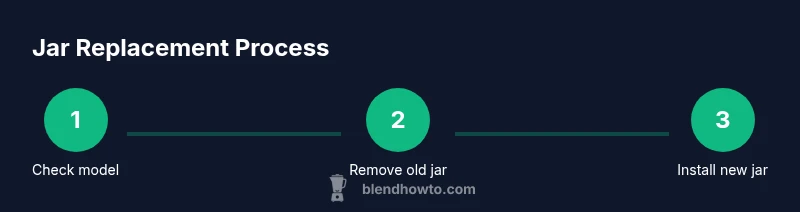
- 1
Identify compatible jar model
Locate your blender’s model number and consult KitchenAid’s compatibility charts or customer support to confirm which jar models are officially compatible. This step prevents a misfit that could cause leaks or motor strain.
Tip: If you’re unsure, photograph the base label and email it to customer support for quick verification. - 2
Power down and prep the workspace
Unplug the blender from the outlet. Clear the counter, lay down a towel to catch any spills, and have cleaning supplies on hand. This creates a safe, organized workspace for replacement.
Tip: Work on a dry surface; moisture can slip tools and shift pieces while you’re handling the gasket. - 3
Remove the old jar from the base
Thoroughly rotate the jar counterclockwise to release it from the base. If it’s tight, gently rock while continuing to unscrew. Do not force if you feel resistance.
Tip: A little wiggling can help, but avoid prying with tools that could scratch threads. - 4
Inspect gasket, blade, and lid
Carefully examine the gasket seating area for wear, cracks, or deformation. Check the blade assembly for any dullness or damage, and inspect the lid threads for smooth operation.
Tip: Replace any worn gasket or damaged blade; a compromised seal or blade can cause leaks or unsafe operation. - 5
Prepare the replacement jar
Unwrap the official replacement jar and verify that the gasket is present and properly seated. If your kit includes a lid insert or silicone seal, confirm it aligns with the jar design.
Tip: Dry-fit the gasket to ensure it sits evenly before attaching to the blade assembly. - 6
Attach jar to base and seat gasket
Align the jar threads with the base and rotate clockwise until snug. Ensure the gasket seats evenly and there’s no cross-threading.
Tip: Do not overtighten—over-tightening can damage threads and seals. - 7
Install the lid and confirm a seal
Place the lid securely and ensure any lid insert is engaged. Hand-tighten the lid and perform a visual check for gaps along the seal.
Tip: A proper seal prevents leaks during high-speed blending. - 8
Test run for leaks and performance
Plug in the blender and run a short test on a low setting with a small amount of water or blended ingredients to check for leaks and performance.
Tip: If leaks appear, stop immediately and re-check gasket seating and jar alignment.
Frequently Asked Questions
Can I use a third-party blender jar with KitchenAid, or should I stick to official jars?
Official jars are designed to fit the motor and blade assembly precisely. Third-party jars may work sometimes but carry a higher risk of leaks, improper seating, or motor strain. If you choose a non-official jar, verify compatibility and proceed with caution.
Official jars are safest, but if you use a third-party jar, double-check fit and seal before blending.
Will replacing the jar affect my warranty, and how should I proceed?
Warranty terms vary by manufacturer. Using an approved replacement jar generally preserves warranty coverage, while misfit parts can void certain terms. Check your warranty document and contact KitchenAid support for guidance.
Check your warranty details; approved parts help keep coverage intact.
How do I know if the gasket is worn, and can I replace just the gasket?
Signs of a worn gasket include visible cracks, tears, or persistent leaks that start after replacement. Some gasket kits allow single-piece replacements; otherwise, replacing the jar with its gasket is recommended.
Look for cracks or distortion in the gasket; consider a full jar replacement if unsure.
Is it safe to operate the blender if a leak is detected after replacement?
No. Stop the blender immediately, unplug it, and inspect the seal and jar seating. Persistent leaks mean the jar may be misaligned or the gasket compromised.
If you see a leak, power down and recheck the seal before trying again.
What should I do with an old jar or gasket?
Recycle or dispose of damaged parts according to local guidelines. If in doubt, contact your local waste management authority for proper disposal.
Recycle the parts where possible and follow local rules for waste disposal.
Watch Video
What to Remember
- Verify jar compatibility before purchase
- Inspect gasket and blade closely during replacement
- Install with a clean seal to prevent leaks
- Test the setup on a short run before full use