Mastering the Blender Deal: A Practical Buying Guide for 2026
Discover how to spot the best blender deal in 2026 with expert tips, price history, and practical buying strategies from BlendHowTo to maximize long-term value and reliability.


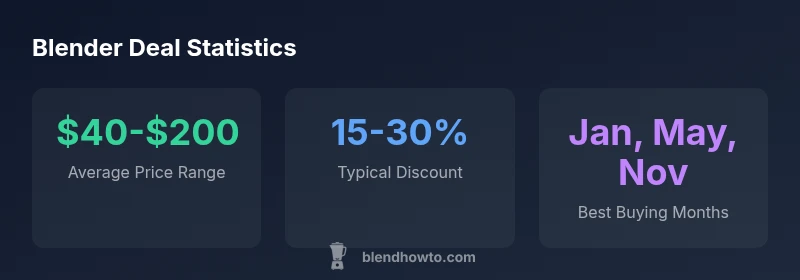
Quick answer: A blender deal isn’t just a low price—it’s value across price, features, and warranty. In 2026, smart shoppers track price history, seek bundled offers, and compare motor power, blade quality, and jar size across leading brands. BlendHowTo shows a repeatable framework to identify genuine deals at reliable retailers. This approach focuses on long-term savings rather than a single sticker price.
Why price variation matters when shopping for a blender deal
Prices for blenders move for reasons that go beyond a simple discount. A model with a stronger motor, tougher blades, a larger pitcher, or a metal housing often carries a higher baseline price, but it can yield longer-term value. Conversely, budget machines may show dramatic sticker drops during a sale yet lack features that save you time or frustrate you with noisy operation. As shoppers, we should distinguish between a temporary markdown and a true value proposition: does the discounted price reflect the appliance’s performance, durability, and warranty? The BlendHowTo team finds that shoppers who compare cores such as wattage, blade design, and jar material against the final price consistently identify deals that survive real-world use. In 2026, seasonal promotions, retailer coupons, and bundle offers shape the price landscape, so it’s essential to track multiple retailers, set alert thresholds, and verify return policies before pulling the trigger on a blender deal.
Key deal drivers to watch
Deals don’t occur in a vacuum. The best blender deal often arises from a combination of several drivers: a high-power motor (1000–1500 watts) in mid-range machines, durable blades, and a washable design that makes daily use easier; a favorable warranty; and a retailer’s seasonal promotions. Bundling with accessories (extra jars, tamper, or recipe book) can shift the value balance even when the sticker price looks similar. Retailers use dynamic pricing, where listed prices react to demand and inventory levels; this is why a price might dip just before a new model launches. Coupon sites, loyalty programs, and credit-card promotions can add another layer of savings. For enthusiasts who want precise control over texture and blending time, a model with variable speed settings offers more consistent results, which reduces the perceived cost over several months of use. BlendHowTo’s analyses show that the smartest blender deals emerge when you compare price trails across at least two trusted retailers over a 2–6 week window.
How to evaluate a blender deal: price vs value
Define what you need before chasing discounts. A great blender deal balances upfront price, build quality, and ongoing costs such as replacement parts. Start with core specs: motor watts, torque, blade design, jar material, and lid reliability. Then weigh non-price factors: noise level, ease of cleaning, and availability of replacement parts. A discount on a flimsy model can feel good at checkout but fail your daily routine. Conversely, a modest price on a well-built model may become the best long-term choice if it lasts several years. When comparing deals, normalize prices to hours of expected use per year and estimate how often you’re likely to replace blades or seals. For most of our readers, a 12–24 month price-in-use calculation helps separate a temporary sale from a genuine, durable bargain. BlendHowTo recommends recording your top three preferred models and monitoring their prices for several weeks during a typical sale cycle.
Types of blender deals you’ll encounter
Blender deals come in several flavors: new-model clearance, open-box discounts, refurbished units, and bundled offers. New-model clearance happens when retailers clear inventory for the next generation; these deals are common after holidays or model refreshes. Open-box discounts appear when customers return items, often with full functionality but minimal cosmetic wear. Refurbished units may be repaired to factory standards and backed by a shorter warranty. Bundled offers add value by including extra jars, travel lids, or accessories. Each type carries its own risk profile: refurbished items may trade higher warranty risk for lower price, while bundles can obscure the true value of the blender itself. To evaluate a bundle, subtract the price of included accessories from the listed deal and compare with standalone purchases. BlendHowTo emphasizes reading warranty terms, checking return policies, and verifying that the retailer has a clear, documented refurb process before purchasing a blender deal.
Practical steps to secure the best blender deal
Practical steps start with a plan. First, identify your must-have specs (power, jar size, and blade type) and set a maximum acceptable price. Next, build a short list of two to four models that meet those specs, then track price history on major retailers for 4–6 weeks around common sale events. Use price-tracking tools and set alerts so you’re notified when a model dips below your threshold. Don’t forget shipping costs and tax; sometimes a higher sticker price with free shipping beats a lower price plus fees. Consider timing: many deals cluster around holidays, back-to-school season, and houseware events. If you’re open to refurbished or open-box items, ensure the seller documents testing results and includes a meaningful warranty. Before you buy, compare return windows and whether you can exchange for a different model without penalties. With a disciplined approach, you’ll maximize savings without sacrificing reliability, and BlendHowTo’s method helps readers convert price drops into real, long-term value.
Common pitfalls and how to avoid them during deal season
Impulse buying is the enemy of a solid blender deal. A huge discount on a low-powered unit might save money upfront but fail your culinary plans. Watch out for bait-and-switch bundles that pile on accessories you won’t use. Always check for compatibility with existing jars or blades and verify the model’s availability of replacement parts. Reading reviews focused on durability and service quality helps separate noise from signal. If a deal looks too good to be true, investigate retailer reliability, verify warranty terms, and confirm return policies before committing. BlendHowTo recommends listing your must-haves and sticking to your price ceiling, even if a more glamorous model pops up. Finally, track post-purchase support and spare-part availability; a strong warranty and easy access to blades and seals can save more money over time than a larger one-time discount.
Deal patterns by blender category
| Model Type | Typical Deal Window | Average Discount | Notes |
|---|---|---|---|
| Budget countertop blender | Nov–Jan | 15-25% | Great for basic crushing and smoothies |
| Mid-range countertop blender | Black Friday season | 20-35% | More power, metal components |
| Immersion blender | Year-round | 10-25% | Ideal for soups and sauces |
| High-end countertop blender | Holiday season | 25-40% | Premium builds and features |
Frequently Asked Questions
What qualifies as a blender deal?
A blender deal should balance price with performance and reliability. Look for a meaningful discount on a model that meets your essential specs, plus a solid warranty and accessible spare parts. Avoid discounts that come with weak build quality or limited post-purchase support.
Look for a real discount on a model that covers your must-haves and comes with a decent warranty.
When is the best time to buy a blender?
The best times are during major sale events like holidays and back-to-school periods, plus seasonal markdowns. Track models over 4–6 weeks to catch dips and compare across at least two retailers.
Watch for holiday sales and mid-season promos, then compare prices over a few weeks.
Should I buy refurbished to save money?
Refurbished units can offer significant savings if the seller provides a warranty and documented testing. Verify the warranty length and parts availability, and buy from a reputable refurbisher.
Refurbished can be a smart save if warranty and testing are solid.
How do I compare prices across retailers?
Use price-history tools and set alerts for your chosen models. Check shipping, tax, and return policies, and confirm compatibility with existing attachments before buying.
Track price history, compare shipping and returns, and verify compatibility.
What features matter most during a deal?
Prioritize motor power, blade design, jar material, and warranty. Features like dishwasher-safe parts and easy cleaning can dramatically affect daily use and long-term satisfaction.
Power, blades, jar, and warranty are the big ones to check.
Is a higher warranty worth paying for?
A longer warranty reduces risk if you rely on the blender regularly. Compare warranty terms, coverage of blades and seals, and whether service centers are convenient.
Yes, if it covers parts you’ll actually use and is easy to claim.
“In any blender deal, the price tag is only half the story; durability, parts availability, and warranty determine true value.”
What to Remember
- Define must-haves before hunting deals
- Track price history across retailers
- Differentiate temporary markdowns from value
- Evaluate bundles based on actual savings