Blender Sales 2026: Trends, Deals, and Buying Guide
A data-driven look at blender sales in 2026, covering timing, discounts, retailer differences, and practical buying strategies for home cooks and hobbyists seeking value during major sale events.


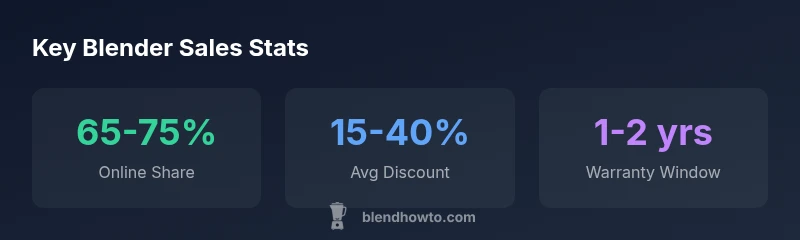
Blender sales reveal a clear pattern: online channels dominate purchases, seasonality drives discounts, and mid-range models deliver the best value for most home cooks. In 2026, expect bigger promotions during major shopping days, while premium high-powered blenders retain value and sell steadily. This quick snapshot helps shoppers time buys and secure reliable kitchen upgrades.
Understanding the blender sales landscape in 2026
The blender market continues to mature, with online retailers and direct-brand stores shaping most purchase decisions. For home cooks and hobbyists, the convenience of online shopping, user reviews, and side-by-side comparisons drive faster decisions than ever. The BlendHowTo team sees a steady growth in mid-range models that balance power, capacity, and price, while premium, high-wattage blenders retain strong appeal for serious enthusiasts. Seasonal events and promotional campaigns create predictable price movement, but the exact timing varies by retailer and region. Shoppers often overlook warranty terms, service networks, and after-sale support when chasing the lowest sticker price; this can lead to disappointing outcomes if blades dull or parts fail. In practice, successful blender buyers combine price awareness with a clear sense of which features matter for their goals, whether they’re making smoothies, hot soups, or fuel for 3D-blender workflows in a design hobby.
Price dynamics: discounts, price history, and seasonality
Price movement around blender sales is driven largely by promotional calendars, retailer strategies, and brand-specific campaigns. Online marketplaces frequently offer tiered discounts, while traditional brick-and-mortar stores push price-match promises and bundled accessories to entice buyers. For a smart shopper, tracking price history and understanding the typical discount window helps separate genuine value from marketing fluff. During peak sales periods, banners and coupon codes can stack, but beware of temporary price bumps immediately after a sale ends. Always compare the final out-the-door price, including shipping and tax, across multiple retailers before committing.
Product categories and value levers
Blenders fall into several practical categories: immersion/blenders, countertop high-power blenders, and personal or compact units. Each category emphasizes different value levers: power and blade design for smoothies and soups, pitcher size and durability for batch processing, and ease of cleaning for daily use. In 2026, mid-range countertop blenders (roughly 600–900W) hit the sweet spot for most households, offering a balance of performance, capacity, and price. For hobbyists pursuing design or food projects, high-watthandling models with robust warranties matter most. When shopping during blender sales, compare the same performance metrics across brands to ensure you’re not trading longevity for a temporary price cut.
Time your purchase: peak sale days and timing tips
Major shopping days like Black Friday, Cyber Monday, and Prime Day consistently drive the largest blender discounts online. If you’re not in a rush, consider waiting for these windows but set a price target and a recall plan if the price drops earlier or later. Mid-year promotions can also offer meaningful savings, especially on last-generation models that still meet common needs. Set price alerts, read user reviews for reliability during repeated cycles, and verify warranty terms so that a great deal isn’t offset by service costs later.
How to evaluate deals: features that matter during blender sales
During blender sales, focus on core features that determine long-term value: motor power and durability, blade design, jar or pitcher material, and warranty coverage. Align specs with your use case: multiple daily smoothies call for durable blades and easy cleaning; hot soups benefit from high power for emulsification. Don’t overlook noise levels, size, and compatibility with accessories (e.g., extra jars, blades). A good sale is not just a lower price; it’s a bundle that includes service, parts availability, and support that outlasts the initial discount.
Practical buyer checklist for 2026
- Define use case: smoothies, soup, or design-related experiments.
- Set a price target and a max budget per category.
- Compare 3–4 models within your budget using power, capacity, and warranty.
- Verify warranty, service network, and replacement-part availability.
- Check bundle contents (attachments, jars, lids) to maximize value.
- Read independent reviews focusing on reliability and after-sale support.
- Track price history over several weeks to avoid impulsive purchases.
Common mistakes during blender sales
- Focusing only on the lowest price without considering warranty.
- Ignoring blade quality or jar material, which affect longevity.
- Not verifying return policies or shipping costs before purchase.
- Missing hidden costs like accessories or extended warranties.
- Assuming refurbished models are always a better deal without checking battery or motor health.
Beyond price: service, warranty, and sustainability considerations
Value during blender sales increasingly includes warranty terms, service accessibility, and repairability. Look for brands with robust customer support, local service centers, and readily available replacement parts. Consider the sustainability of materials and packaging and whether the brand offers recycling programs or trade-in options. A deal that aligns with your environmental values can provide longer-term satisfaction beyond the initial price cut.
Typical blender pricing and discounts by retailer type
| Retail Channel | Typical Price Range | Typical Discount Range | Warranty Window |
|---|---|---|---|
| Big-box retailers | $30-$70 | 5%-15% | 1 year |
| Dedicated blender stores | $50-$150 | 10%-25% | 2 years |
| Online marketplaces | $20-$60 | 8%-20% | 1 year |
Frequently Asked Questions
When do blender sales usually start?
Blender sales typically begin around major shopping days and through seasonal promotions. Monitor retailer calendars and set price alerts to catch early discounts. Keep your use case in mind to avoid buying a model you don’t need.
Sales usually start around major shopping days. Set alerts and compare models to catch the best deals.
Are online prices reliable during blender sales?
Online prices are generally reliable, but they vary by retailer and time. Always compare at least three sources, check for price-match guarantees, and review return policies before purchasing during a sale.
Online prices vary; check multiple stores and note return terms before buying.
Is it worth waiting for a high-end blender on sale?
Waiting for a sale on high-end blenders can pay off, but these models tend to hold value. If you need reliability now, a mid-range model on sale often delivers better overall value given warranty and parts access.
Waiting can pay off, but mid-range on sale often offers the best value.
What features should I prioritize during blender sales?
Prioritize motor power, blade quality, pitcher durability, and warranty. Ensure compatibility with your planned uses—smoothies, soups, or food prep—and check for dishwasher-safe parts for daily use.
Power, durability, and warranty matter most; make sure it fits your use case.
Do refurbished blenders appear in sales?
Refurbished models can appear during sales, but confirm warranty and return terms. Assess the condition and seller reliability, as refurbishments vary in quality and long-term performance.
Refurbs show up sometimes; check warranty and seller reliability.
How can I confirm warranty coverage during a sale?
Check the exact warranty duration, what it covers (motor, blades, seals), and whether it’s through the manufacturer or retailer. Save receipts and verify service options in your region.
Read the warranty terms carefully and keep your receipt.
“Timing matters: the strongest blender deals cluster around major shopping days, and mid-range models consistently offer the best value for most home cooks.”
What to Remember
- Identify mid-range models during major sale events to maximize value.
- Compare price history and warranty before buying.
- Online channels dominate blender sales; verify post-purchase support.
- Watch for banner discounts vs price-matching to avoid overpaying.
- Prioritize warranty and service alongside price during blender sales.