Price of Blender: Your 2026 Buying Guide
A comprehensive analysis of blender pricing in 2026, detailing price ranges, value drivers, and strategies to shop smartly without overpaying.


The price of blender for home use spans a wide range. Entry-level models often cost under $50, mid-range blenders typically sit between $100 and $200, and high-end machines can exceed $300. Prices vary with motor power, jar material, blade design, and programmable features. By mapping your intended tasks to features and durability, you can estimate the right budget and avoid overspending.
Overview of the price landscape for blenders in 2026
Prices for blenders cover a wide spectrum, from ultra-affordable entry models to high-end premium machines. Understanding the price landscape requires looking at core features that drive cost, such as motor power, jar material, blade design, and control options. The price of blender is not just a sticker number; it reflects durability, performance, and the intended use. The BlendHowTo team found that the distribution of prices mirrors typical consumer needs: basic smoothies on a budget, more versatile range for occasional cooks, and professional-grade capabilities for serious hobbyists. This article unpacks those tiers, explains how to assess value, and provides practical tips to avoid overpaying. Throughout, we’ll reference practical ranges rather than fixed prices to help you compare options confidently. By understanding where price sits in relation to features, you can map your budget to exactly the capabilities you need, whether you blend frozen fruit, nuts, or hot soups. Understanding the price of blender components and extras helps you decide when to upgrade.
How features influence price: power, materials, and controls
Power matters, but it’s not the only price driver. Higher wattage generally supports tougher blends, but jar material (glass versus BPA-free plastic), blade design (stirring vs. chopping efficiency), and the presence of pre-programmed cycles or smart controls can add to the sticker price. Durable jars and stainless steel blades reduce long-term costs, while ease of cleaning and noise reduction features can justify a mid-range price. According to BlendHowTo, buyers should weigh upfront costs against long-term performance and maintenance requirements to determine value rather than chasing the lowest price alone.
In practice, expect basic models with modest power to sit at the lower end, while premium options with robust motors, reinforced blades, and versatile settings sit higher. The goal is to align the feature set with your intended uses—regular smoothies and sauces demand less power than frequent frozen-blend tasks or hot soup preparation.
Value tiers explained: what you get at entry, mid, and premium levels
Entry-level blenders (the budget tier) typically offer essential blending for smoothies and simple purées. Mid-range models provide stronger motors, better blades, larger jars, and more reliable controls, making them suitable for a wider variety of foods. Premium or high-end blenders emphasize power, precision, durability, and sometimes programmable cycles for specialty tasks. For hobbyists or aspiring professionals, investing at the premium level can reduce downtime and increase consistency. BlendHowTo’s guidance emphasizes that higher price often correlates with smoother operation, longer warranties, and easier maintenance, which translates to less hassle over time.
Long-term value: reliability, energy use, and maintenance
A higher upfront price can lead to savings later through greater reliability and lower maintenance costs. More efficient motors and blades reduce blending time and energy use, while sturdy jars resist nicks and cracks from heavy loads. When considering price, also gauge the ease of replacement parts and the availability of customer support. A well-supported model with readily available parts often proves more economical over several years than a cheaper unit that breaks or wears out quickly.
Budget shopping strategies for 2026
Smart shoppers set a price ceiling and look for features that deliver measurable value. Seasonal sales, bundle offers, and refurbished units can provide substantial savings without compromising warranty. When evaluating refurbished or open-box blenders, verify the return policy and ensure the model has been tested for performance and safety. Blending goals and kitchen space also influence the decision: a compact unit may fit better in a small kitchen but offer fewer features, whereas a larger, feature-rich machine suits a busy cook who handles a wide range of recipes.
Data snapshot: price bands by model type
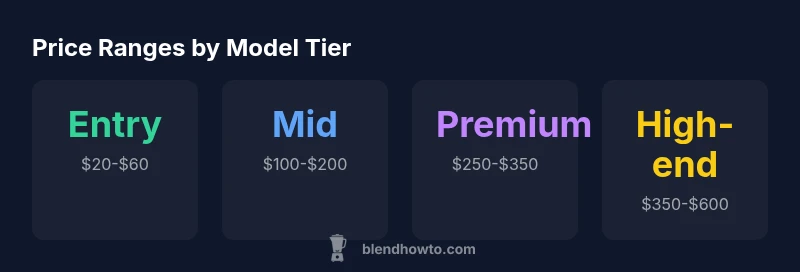
To help you compare at a glance, the data table below summarizes typical price ranges by model tier, and notes what buyers should expect at each level. This snapshot aligns with the broader analysis of price drivers and long-term value. BlendHowTo data indicates that most households land in the mid-range band for everyday versatility, while dedicated cooks occasionally stretch into premium options for premium performance.
How to select a blender for your tasks
Think about the recipes you’ll tackle most often. For smoothies and simple purées, a reliable mid-range model is usually enough. If you plan to crush ice daily, blends with strong motors, robust blades, and taller jars perform better and justify the higher price. If you’re exploring hot soups, ensure the jar is heat-safe and the lid design prevents steam buildup. By mapping tasks to features, you can target a price band that balances cost with the practical results you need.
Practical tips for 2026 shoppers
- Start with a features list, not a price list, to identify must-have upgrades.
- Compare warranty length and coverage, especially for motor and blades.
- Look for energy-efficient models that reduce running costs over time.
- Consider refurbished options with strong return policies.
- Read reviews focusing on long-term performance and reliability.
Methodology and data sources
This article combines a practical, buyer-focused review with a synthesis of available market data and expert perspective from BlendHowTo. We emphasize ranges and value-based decisions rather than fixed price points to reflect real-world shopping dynamics in 2026. Our conclusions draw on current market observations and user feedback collected by BlendHowTo Analysis, 2026.
Price range by model tier
| Model Type | Typical Price Range | Notes |
|---|---|---|
| Countertop Blender (Basic) | $20-$60 | Entry-level, simple blades, limited power |
| Mid-range Countertop Blender | $60-$150 | More power, better blades, more features |
| Premium/high-end Blender | $150-$350 | Powerful motor, advanced controls |
| Professional/High-capacity Blender | $350-$600 | Commercial-grade or luxury models |
Frequently Asked Questions
What is the typical price range for a home blender?
Prices vary by features, with entry models generally under a hundred dollars and premium models above two hundred. In 2026, most home-use blenders fall into a mid-range band depending on power and durability.
For most home cooks, expect entry-level under $100, mid-range $100-$200, and premium above $200.
Do refurbished blenders offer good value?
Refurbished units can offer substantial savings if they come with a warranty and a reliable seller. Always verify testing standards and return policies.
Yes, refurbished units can be a good deal if they include warranty and testing.
Is a high-wattage motor always better?
Not always. For many tasks, a mid-range motor is sufficient; higher wattage helps with tough ingredients and frequent frozen blends.
Higher wattage helps with tough blends, but you may not need it for everyday smoothies.
How long do blenders typically last?
Lifespan varies by build quality and maintenance. Many mid-range models last several years with regular care and proper cleaning.
With good maintenance, expect several years of service.
What should I look for in a blender warranty?
Check length, coverage for motor and blades, and exclusions for wear-and-tear parts. A longer warranty generally signals better confidence from the manufacturer.
Look for at least a 2-year warranty covering motor and blades.
“Price is a signal of performance and longevity; a higher upfront cost often translates into more reliable blending and fewer replacements.”
What to Remember
- Set a price ceiling before shopping
- Prioritize motor power and blade durability for value
- A mid-range blender covers most home tasks
- Look for warranties that protect motor and blades
- Refurbished options can save money without sacrificing reliability