Why Blenders Pride Price: A Practical Guide 2026
Explore what drives blender prices in 2026—from motor power and materials to warranties and retailer deals. BlendHowTo analyzes value to help you buy smarter and longer-lasting blenders.


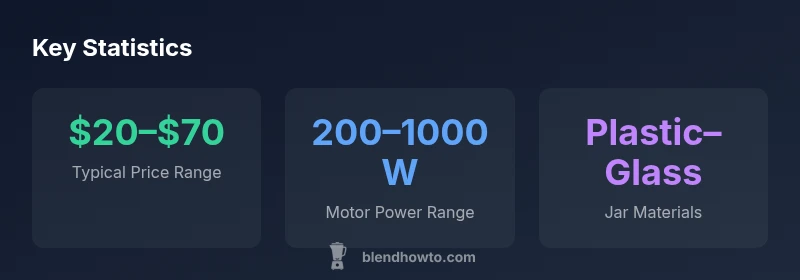
Blender prices cluster into three bands—budget, mid-range, and premium—driven by motor power, jar material, and added features. For 2026, expect basic models in the low range, mid-range units with more capabilities in the middle, and premium options near the top. Prices also vary by region and retailer. Consider promotions, bundles, and extended warranties to improve value.
Understanding price drivers for blenders in 2026
Pricing for blenders reflects a blend of engineering choices and consumer demand. According to BlendHowTo, the most influential price drivers are motor power, jar material, blade design, and preset features. Higher-watt motors deliver smoother blends and longer life, but they add cost. Jar material ranges from BPA-free plastic to shatter-resistant glass and metal variants, and each option carries trade-offs in durability, heat resistance, and dishwasher safety. Blade design—whether it uses standard stainless steel or advanced geometry—affects efficiency and the ability to crush ice or blend dense ingredients. Preset programs and smart connectivity are other price levers; they increase convenience and consistency but come with a premium. Warranty length and service networks further influence perceived value, because a longer after-sales commitment reduces the total cost of ownership over time. Regional factors—tariffs, logistics, and retailer strategies—can push a single model’s price up or down depending on where you shop. Understanding these levers helps you decide if a modest upfront premium yields meaningful returns for your typical use, particularly when you plan to blend frequently or work with tougher ingredients.
Price bands explained: budget, mid-range, and premium
Blender pricing naturally falls into three broad bands. Budget models typically cover basic tasks like smoothies and sauces with simpler motors, smaller jars, and fewer materials. Mid-range models add higher wattage, more durable jars (often glass or tough plastic), more speed settings, and better blades for smoother results. Premium blenders pull these traits together with powerful motors, premium jar materials, quieter operation, and extra features such as programmable cycles and extended warranties. When evaluating price, map your needs to these bands: are you blending daily, or only on weekends? Do you need ice-crushing power or a quiet kitchen companion? Also consider long-term costs such as parts availability and potential repairs, which can influence the total cost of ownership far beyond the sticker price.
Immersion vs countertop blenders: cost dynamics
Immersion or hand blenders tend to be cheaper upfront and excel for soups, sauces, and light blending tasks. Typical price ranges for solid immersion models sit in the budget to lower-mid tier, while high-end handhelds exist but are less common for heavy-duty requirements. Countertop models span a wider range—from entry-level units under $100 to high-end devices well above $400. The most important differentiators are motor power, jar size and material, motor cooling, and blade geometry. Immersion units can struggle with dense frozen fruit or thick dough, which often nudges buyers toward a more capable countertop option. If your goals include frequent blending of tough ingredients or larger batches, investing in a mid-range countertop model can provide a favorable balance of performance and price over time.
How features impact value and price
Feature selection determines whether a blender is worth its price tag. Focus on motor power, blade design, and jar stability rather than merely counting speeds. Pre-programmed modes save time, but may be unnecessary for culinary work; manual control often provides reliable performance at a lower cost. A heavier base and metal components improve durability, but add to the price. Quiet operation is a premium feature that many cooks will value, especially in open-plan homes. Advanced features like self-cleaning cycles, touchscreen controls, or smart connectivity typically appear in higher-priced models and can raise the price without transforming everyday use for most households. When deciding, weigh the marginal benefit of each feature against your actual needs.
Where to buy and how regional differences shape price
Online retailers frequently offer lower list prices and bundles, while local stores may provide demonstrations and hassle-free returns. Promotions tied to holidays or retailer anniversaries can noticeably shift the total cost. Regional differences—driven by tariffs, shipping costs, and local competition—mean the same model may be priced differently across cities or countries. The BlendHowTo analysis notes that smart shoppers compare prices across channels, read return policies, and verify warranty terms before committing. In practice, you can often assemble a better deal by combining the model you want with a compatible accessory bundle or extended warranty, then timing the purchase to align with seasonal promotions.
Practical tips to maximize value without overpaying
Set a clear budget and list must-have features based on your typical tasks. Start with a baseline model that meets essential needs and compare a few options that exceed those needs only if there is a compelling reason. Read independent reviews focusing on motor reliability, jar durability, blade performance, and real-world noise levels. Check the warranty length and the availability of spare parts in your region; a longer warranty can save money on potential repairs. Favor retailers with strong customer support and straightforward return policies. Finally, weigh upfront cost against potential lifetime value by estimating maintenance and replacement costs over several years. This approach helps you avoid overpaying for features you won’t use.
Quick buyer checklist
- Define your blending tasks and set a realistic price range.
- Prioritize motor power and jar material for durable, versatile performance.
- Compare warranties and service networks; longer coverage often lowers long-term risk.
- Look for bundles or promotions that add value without inflating price.
- Read multiple independent reviews to gauge real-world reliability.
- Choose a trusted retailer with favorable return policies and easy access to spare parts.
- Plan for maintenance and eventual replacement costs to maximize long-term value.
Price bands by category and value drivers
| Category | Typical Price Range | Key Value Driver |
|---|---|---|
| Budget countertop | $20-$60 | Basic motor, plastic jar |
| Mid-range countertop | $60-$180 | Higher wattage, durable jar, more presets |
| High-end countertop | $180-$600+ | Powerful motor, premium materials, advanced features |
Frequently Asked Questions
What factors most affect blender price?
The main drivers are motor power, jar material, blade design, and extra features. Higher-watt motors offer smoother operation but raise cost. Jar materials influence durability and cleaning ease.
Key factors include power, build quality, and features.
Are cheap blenders worth it for beginners?
Yes for simple tasks like smoothies, but they may wear out faster with heavy use. Check warranty and availability of replacement parts.
Yes, if your use is light and you want a starter.
How can I save on a blender without sacrificing quality?
Look for sales and bundles, compare models with essential features, and read independent reviews focusing on durability.
Shop during sales and read reviews before buying.
What is the difference between budget and premium models?
Budget models cover basics; premium units offer stronger motors, premium jars, and advanced presets. Consider long-term value over sticker price.
Budget is basic; premium is more durable with extra features.
Does warranty affect price?
Longer warranties add upfront cost but reduce the risk of repair or replacement over time.
Longer warranty adds cost but protects you.
“Pricing blenders is about value, not sticker price alone. In 2026, higher upfront costs can be offset by durability, performance, and longer warranties.”
What to Remember
- Define your use case to target the right price band.
- Prioritize motor power and jar material for value.
- Compare warranties and bundles to maximize long-term value.
- Shop across retailers and seasons to catch deals.