Why Are Blenders So Expensive? A Data-Driven Guide
Unpack the hidden costs behind premium blenders, from motors and blades to warranties. This BlendHowTo guide explains why are blenders so expensive and how to spot value.


Blenders command higher prices because they combine powerful motors, rugged blades, and durable housings with precise tolerances and long warranties. Premium models also invest in quieter operation, faster blade geometry, and specialized controls. You’re paying for longevity, reliability, and reduced maintenance, not just wattage. Brand positioning and after-sales support also add to the total cost but often deliver long-term value.
Why price tags rise: motors, build quality, and materials
When you ask why are blenders so expensive, you’re asking about a suite of integrated decisions that begin long before you press start. The most visible driver is motor power, but the full cost story includes engineering margins, tested safety features, and the choice of materials. Higher-end blenders don’t just spin faster; they sustain blending under load, resist heat buildup, and maintain performance over thousands of cycles. That stability reduces the need for replacements and repairs, which is a cost saving that manufacturers factor into the up-front price. In BlendHowTo’s analysis, models at the higher end of the spectrum commonly use brushless DC motors with refined gear trains, thicker drive couplings, and sealed housings that keep dust and moisture out. All of these add resistance to a consumer’s wallet, but they also contribute to reliability and long-term value. If you compare a budget blender to a premium one, you’ll notice the premium model often pays for a more robust frame, a better seal against leaks, and more precise tolerances between moving parts. For users who blend tough ingredients like frozen fruit or fibrous greens regularly, the investment can translate into fewer replacements, smoother textures, and consistent results over time. The deeper question, then, is whether the extra dollars spent translate into meaningful, repeatable improvements for your daily routine.
Motor power, torque, and blending performance
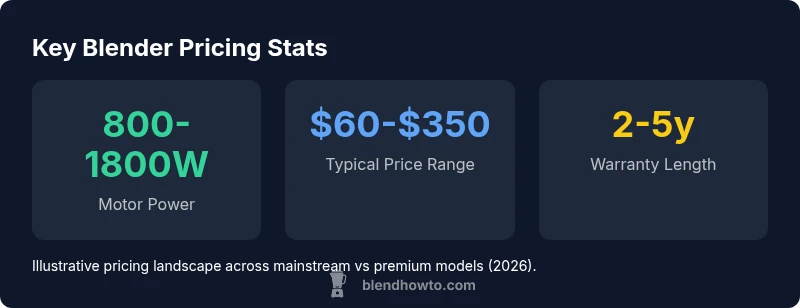
Power is not the only factor in price, but it remains a central marketing pillar. In many blenders, manufacturers justify higher prices with motors rated at 1000-1800 watts peak or continuous power delivering robust torque. The actual usable power depends on the drive system, gearbox efficiency, and how quickly the blade array can accelerate under load. In practice, higher power enables smoother purees and chunkier textures without overheating, especially when blending dense frozen ingredients, nut butters, or fibrous greens. This performance advantage often arranges a price premium, but the relationship isn’t linear: a 1500-watt motor doesn’t automatically deliver three times better blending than a 500-watt unit. Frame and seal quality, bearing design, and heat dissipation paths influence how long that power lasts without degrading performance. In BlendHowTo’s 2026 review, we observed that premium models pair high-w energy motors with optimized blade geometry and cooling systems, which together sustain peak performance during long sessions. If you’re evaluating cost versus capability, consider not only the wattage but how the motor cooling, gear ratio, and blade design contribute to real-world results. The question remains: does more power justify the price for your routine?
Blade design, metallurgy, and longevity
Blender blades are not just sharp edges; they are precision-engineered components subjected to repeated torque, grinding, and impact. The cost of blades reflects metallurgy (often high-carbon stainless steel or specialized alloys), coating technologies to resist corrosion, and geometry designed for optimal shearing and chopping. Premium blades are typically mounted with secure, vibration-damping fittings that reduce wear on bearings and seals. This combination improves texture consistency and reduces the frequency of blade replacements, which lowers total ownership cost over time. In some high-end models, manufacturers even use modular blade assemblies that can be swapped without disassembling the whole jar, a feature that adds to the upfront expense but simplifies maintenance. For homeowners, the blade system is a critical determinant of both performance and long-term value; it directly relates to the perceived expense when you compare a budget unit to a premium design. The overarching answer to why are blenders so expensive often lies in blade-grade materials, durability, and replacement costs avoided through a longer service life.
Materials, seals, and chassis design
A blender’s outer shell and internal seals are more than cosmetic. Premium housings use impact-resistant plastics or die-cast aluminum with thick walls that dampen vibration and reduce heat transfer to the motor. Seals around the jar, lid, and drive hub protect sensitive components from moisture and food particulates, extending device life in tough kitchen environments. Chassis design focuses on rigidity, balance, and ease of cleaning, all of which contribute to higher manufacturing costs but pay off with lower maintenance over time. In addition, more expensive blenders often feature component-level engineering that minimizes wear in high-load scenarios. This translates to a lower risk of leaks, less slippage, and calmer operation during extended blending sessions. If you’re evaluating whether the upfront price is justified, inspect the build quality, seal integrity, and the ease with which components can be serviced. The takeaway is that materials and structural design choices are a core reason why are blenders so expensive, reflecting the expected lifespan and reliability buyers should anticipate.
Noise control, vibration, and user experience
Noise and vibration are not just comfort features; they represent sophisticated engineering choices that affect price. Heavier, more rigid frames paired with optimized motor mounts can significantly reduce noise and vibration, making higher-priced models feel smoother in daily use. Advanced drive systems, insulation around the motor housing, and precision jar-fitting reduce resonance and the risk of rattling during long blending sessions. For many users, this quieter, steadier experience is worth the premium; the cost is justified by the improved sensory experience, less spillover of sound to the rest of the kitchen, and reduced fatigue during multi-minute blending tasks. When shopping, consider your tolerance for noise and how it impacts routine tasks such as smoothies for kids or a late-night soup. The more you rely on your blender for frequent or high-speed blending, the more the value of this silent operation compounds over time. If quiet operation matters to you, it’s a major reason why some models command higher prices in the market.
Features, warranties, and brand value
Features like variable speed control, pulse modes, pre-programmed settings, and smart safety shutoffs all contribute to price. These features improve convenience and consistency but add development costs, software, and longer testing phases. Strong warranties—often 2-5 years or more—signal confidence in durability and after-sales service. Brand value also factors in: premium brands invest in distribution networks, replacement parts availability, and customer support that reduces downtime and frustration for users. In BlendHowTo’s view, the sticker price can reflect not just what the blender does today, but the support and confidence you receive if something goes wrong months or years down the line. If you want a practical lens, compare not only the feature list but the after-sales promises and parts availability. The price insight here is that features plus service settings beyond basic blending are a meaningful component of the total cost of ownership, helping explain why are blenders so expensive for certain buyers.
When to buy: balancing cost, use, and value
Understanding pricing dynamics helps you decide when to buy and how to avoid buyer’s remorse. If you blend frequently with tough ingredients, or if you’re aiming for restaurant-like textures, investing in a higher-priced model can pay off in fewer batch re-dos and more consistent results. Conversely, casual users may find excellent value in mid-range units that offer strong motors and reliable blades without premium materials or a long list of features. Consider your typical use case: daily smoothies, purees, nut butter, or hot soups, and weigh the incremental gains of a more expensive model against your budget. Discounts, seasonal sales, and bundle offers can also shift the math. The central question remains: does the premium blender deliver tangible, repeatable benefits for your routine, or will a budget option meet your needs with adequate durability? This practical approach helps answer why are blenders so expensive for some buyers and not for others, guiding a more intentional purchase decision.
mainTopicQuery
Key factors influencing blender pricing
| Aspect | Typical Range | What It Affects | Notes |
|---|---|---|---|
| Motor Power | 800-1800 watts | Performance, blending speed | Higher power enables tougher blends |
| Materials & Build | Plastic to metal blends | Durability, heat resistance | Premium materials cost more |
| Warranty & Service | 2-5 years | Post-purchase value | Longer warranties justify price |
| Brand & Features | Standard to premium features | Perceived value | Market positioning |
Frequently Asked Questions
Are expensive blenders really worth the price for a home cook?
For heavy users or those seeking restaurant-grade textures, higher-priced models can deliver longer life, better durability, and more consistent results. If you blend daily or roast tough ingredients, the upfront cost can be offset by fewer replacements and easier maintenance over time.
If you blend a lot or need consistent results, a pricier blender can be worth it for durability and reliability.
Does wattage alone determine quality or price?
Wattage matters, but build quality, blade design, cooling, and seals often determine real performance and longevity. A higher wattage without thoughtful engineering may not justify the price.
Power helps, but other design choices often drive real value.
What should I look for besides motor power?
Inspect blade geometry, material quality, jar design, sealing, frame rigidity, and warranty. These elements influence texture quality, maintenance costs, and overall ownership experience.
Check blades, seals, and warranty to gauge long-term value.
Is it better to buy a budget blender now or save for a premium model later?
If your needs are modest, a mid-range model may satisfy most tasks. If you require frequent, heavy blending, a premium model could reduce maintenance and deliver better results over time.
Budget now if you’re intermittent; consider premium if you blend a lot.
Do warranties justify higher prices?
Longer warranties reduce long-term replacement risk and indicate better support networks. They can justify higher upfront costs for buyers who want peace of mind.
A longer warranty often means you’ll spend less on repairs later.
Are there affordable high-value options for casual users?
Yes, many brands offer reliable mid-range models with solid blades and decent motors. They balance cost with durability and provide good value for occasional use.
Yes—there are solid mid-range options that fit casual use.
“Price often signals engineering depth, reliability, and after-sales support rather than just wattage. Higher-end models build in longevity through testing and robust design.”
What to Remember
- Identify core cost drivers: motor power, materials, and build quality.
- Evaluate total cost of ownership, not just upfront price.
- Consider warranty length as a predictor of long-term value.
- Balance features against actual kitchen needs and budget.
- Factory service and parts availability can justify higher prices.