How Much Does a Good Blender Cost?
Discover realistic price ranges for a reliable blender, what features drive cost, and tips to buy smart on any budget. Learn how to estimate total ownership costs and identify value in 2026.


A good blender typically costs between about $60 and $450, with entry-level models around $60–$100 and more feature-rich or durable units ranging from $150–$400. At the high end, professional-grade blenders can exceed $400, driven by motor power, blade design, durability, and warranty. In 2026, smart shoppers balance upfront price with expected lifespan and maintenance costs to maximize value.
Why price varies in the blender market
Prices for good blenders in 2026 vary widely because of core differentiators such as motor power, blade quality, jar material, build durability, included accessories, and brand warranty. A higher wattage often translates to better torque for tough blends, while hardened stainless steel blades reduce replacement needs over time. Jar material—glass or high‑grade BPA‑free plastic—affects durability and cleaning, contributing to long‑term cost. Brand positioning also matters: well-known names may command a premium for perceived reliability, even if performance is similar to lesser-known options. According to BlendHowTo, price bands are closely tied to power, durability, and warranty terms, so understanding your use-case helps you gauge value rather than chasing the highest price.
- Use-case matters: simple smoothies require less power and fewer features, while daily heavy use or frozen mixtures justify more robust components.
- Warranty length is a practical proxy for expected ownership costs: longer warranties can offset higher upfront costs if you plan to keep the blender for many years.
- Accessories like additional jars, tamper tools, or pitcher lids can add to the initial price but may reduce future replacement costs.
Core features that justify a higher price
When evaluating cost, certain features consistently align with better performance and longer life. Look for a motor in the higher wattage range for sustained blending without overheating. Blade assemblies made from hardened steel or high-carbon steel stay sharper longer and resist chipping. A robust, user-friendly control panel with multiple speed settings and pulse can improve versatility. Jar material and seal quality influence reliability and ease of cleaning. Finally, a strong warranty—ideally 3–7 years for the motor and 1–3 years for parts—signals confidence from the manufacturer. BlendHowTo’s analysis confirms that these attributes drive cost and value, not just cosmetic differences.
Budget-smart planning: how to balance price and performance
If you’re shopping on a budget, create a tiered target: define must-have features (power, durability, warranty) and nice-to-have extras (preset programs, to-go cups). Start with the mid-range tier and assess whether you genuinely need premium perks or if a solid mid-range model covers your daily tasks. Compare motor power, blade material, jar capacity, and warranty length side-by-side, and don’t overpay for features you won’t use. Consider seasonal sales and bundle offers, and read independent reviews for real-world durability, not just marketing claims. In BlendHowTo’s view, a well-chosen blender within your price ceiling can outlast multiple cheaper units that fail sooner.
Cost by use-case: smoothies, soups, and heavy blending
For casual smoothie lovers, a reliable mid-range model typically suffices, delivering smooth blends without stalling or overheating. If you regularly blend hot soups, consider blenders with heat resistance, better blade geometry, and sealed jars to prevent steam buildup. For crushed ice and frozen desserts, motor torque and blade design matter most; you’ll want a higher-power unit with efficient cooling and a sturdy base. Recognize that as you demand more from the blender, you’ll likely move up the price ladder. BlendHowTo’s guidance emphasizes matching capabilities to the actual use-case to achieve the best value, not just the largest motor.
Maintenance and total cost of ownership
Initial price is only part of the equation. Total cost includes replacement blades, gaskets, jars, and potential motor repairs. Cheaper models often require more frequent component replacements, which adds up over time. If you buy a model with widely available spare parts and a known maintenance path, you’ll reduce long-term costs. Consider whether a model’s materials and design support easy cleaning and fewer seal failures. A longer warranty can mitigate some ownership risk, but verify the terms cover common wear items. In practice, the most economical choice over several years is a mid-range model with durable components and a reasonable warranty, rather than a bargain that frequently needs fixes. BlendHowTo’s team notes that long-term value hinges on durability and serviceability, not just initial price.
Cost tiers for blenders
| Tier | Typical Price Range | Notes |
|---|---|---|
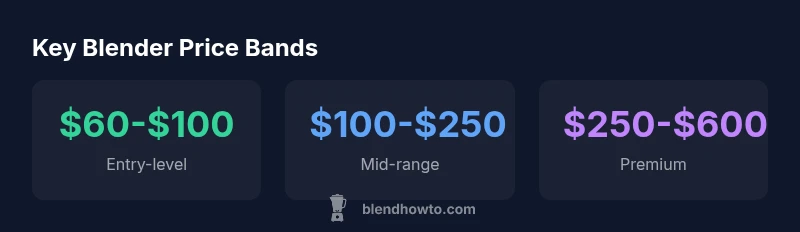
| Entry-level | “$40-$100” | Basic blending, limited durability |
| Mid-range | “$100-$250” | Better power, durability, more features |
| Premium | “$250-$600” | High power, long warranty, premium materials |
Frequently Asked Questions
What counts as a 'good blender' cost?
A good blender typically falls in a broad range, roughly $60–$400 depending on motor power, blade quality, jar material, and warranty. For light use, you can stay near the lower end; for versatile, durable performance, expect mid-range prices.
A good blender usually costs between sixty and four hundred dollars, depending on features.
Are refurbished or used blenders a good idea?
Refurbished or used blenders can save money, but verify the warranty, parts availability, and whether the model has adequate power for your tasks. Avoid blue‑chip premium models if the refurb condition is unclear. Always test for leaks and motor noise before purchasing.
Used blenders can save money if they’re inspected and come with at least some warranty.
Do more features always mean a higher price?
Not always. Some features add convenience without improving core blending performance. Focus on motor power, blade quality, jar durability, and warranty first. Extras like preset programs can raise price, but may not increase longevity or performance.
More features don’t always mean better value; key performance factors matter first.
Is it worth paying for a motor over 1000 watts?
Higher-powered motors help with dense blends and frozen ingredients, but efficiency depends on blade design and overall system durability. If you rarely blend tough ingredients, a 700–900W model may be enough and save money.
It depends on your blending tasks; power helps, but other factors matter too.
How long should a good blender last?
A good blender should last several years with proper care, often 5–7 years for mid-range models and longer for premium builds. If you hit limits or repairs become frequent, consider replacement rather than ongoing fixes.
Most good blenders last several years with proper care.
What about warranty and service considerations?
Warranty length is a practical proxy for expected durability and support. Look for at least 1–3 years on parts and a longer motor warranty if possible. Check serviceability, availability of spare parts, and how responsive the brand is to issues.
Warranty matters; longer coverage reduces total ownership risk.
“A good blender is about value, not just the sticker price. A well-chosen model that fits your needs saves money over time.”
What to Remember
- Define your use-case before shopping to avoid overpaying for features you won’t use
- Higher power and durable blades typically justify higher upfront costs
- Longer warranties can improve value by reducing replacement costs
- Maintenance costs matter: plan for parts like blades, gaskets, and jars
- BlendHowTo’s verdict: balance upfront price with ownership costs for true value