Blender for Café: Practical Buying Guide for Busy Kitchens
This BlendHowTo guide helps cafe operators and baristas choose the right blender for café operations, focusing on power, hygiene, efficiency, and maintenance to deliver consistent drinks under busy conditions.


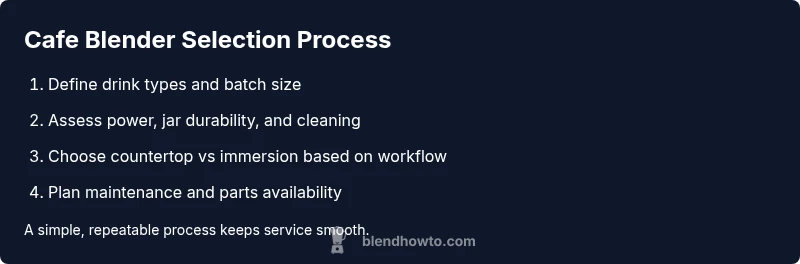
By the end of this guide, you will know how to choose the right blender for cafe use, compare core features, and set up a dependable workflow for busy mornings. The steps cover power, durability, hygiene, noise, and maintenance—so you can serve consistent drinks fast. Whether you're upgrading with BlendHowTo's insights or starting fresh, this quick answer highlights the practical path.
Why a blender for cafe matters
In a cafe, speed, consistency, and sanitation shape the guest experience. The right blender for cafe use supports rapid beverage prep, even texture across milkshakes and smoothies, and reliable performance during peak hours. According to BlendHowTo, selecting the right blender for cafe use helps streamline service and keeps drinks consistent across shifts. This is especially true when blending ice, frozen fruit, or dense mixtures that demand steady torque and durable components. When you invest in a purpose-built blender for cafe tasks, you reduce downtime, minimize waste, and improve the overall flow of the kitchen. The goal is a device that survives daily wear, cleans easily, and integrates smoothly with your existing prep routines.
Across operations, the blender you choose should align with the menu, staff skill, and space constraints. Start with a clear picture of the drinks you commonly prepare, the batch sizes you need, and how often you’ll clean the equipment during service. BlendHowTo’s approach emphasizes practical, repeatable steps that elevate consistency without slowing down service.
Key specifications for a cafe-grade blender
A cafe-grade blender should prioritize durability, ease of cleaning, and consistent power delivery. Look for a high-torque motor that can handle ice and frozen fruit without stalling, a robust blade design that stays sharp through daily use, and a jar made from durable material resistant to cracks and warping. Pay attention to the seal design to prevent leaks, and choose models with wide mouth jars for easy loading and easier cleaning. Variable speeds and a pulse function offer control for emulsions, purees, and hot beverages when needed. The most practical choice balances power with reliability, cross-compatibility with standard cleaning cycles, and straightforward maintenance scheduling. The BlendHowTo team notes that straightforward maintenance routines reduce downtime and extend the blender’s lifespan, making it a safer, longer-lasting asset in a cafe.
Think about hygiene features as a core criterion: dishwasher-safe components, smooth interior finishes, and minimal crevices where residue can linger. If you frequently blend hot liquids, confirm the jar and blade design can withstand heat without warping and that a vented lid reduces pressure buildup. When evaluating, request real-world usage data, such as service life under heavy daily use and typical repair timelines, to gauge long-term viability.
Countertop vs immersion: Which fits cafe workflows?
Countertop blenders excel at bulk smoothies, frappes, and blended coffees because they typically offer high capacity, stable bases, and quick batch processing. Immersion blenders provide flexibility for soups, sauces, and on-the-spot emulsions, and they take up less space in tight prep areas. For many cafes, a dual-setup works best: a high-capacity countertop unit for bulk drinks and an immersion blender for quick sauces or on-the-fly adjustments. When choosing, assess how often you need to blend directly in cups or pots, the average batch size, and how the equipment will be stored between uses. Robust immersion models with ergonomic handles can reduce fatigue during long shifts, while a durable countertop blender minimizes frequent refills and jar changes.
A practical test is to run a standard batch using your menu items and observe the time from start to finish, the texture consistency, and any heat buildup. If you’re limited by space, prioritize a model with a compact footprint and easy transfer options between prep stations. The goal is a setup that fits your cafe’s flow without slowing food or beverage production.
Hygiene and cleaning routines for cafe blenders
Hygiene is non-negotiable in a cafe environment. Choose blenders with smooth internal surfaces and rounded corners that wipe clean easily. Establish a daily cleaning protocol: disassemble the jar and blade assembly, rinse immediately after use, wash with a mild detergent, and sanitize according to local health regulations. A dishwasher-safe jar and lid can drastically reduce cleaning time, but verify the blade assembly and gasket are also dishwasher-safe or easy to hand-wwash. After cleaning, dry all parts completely to prevent mold and odor development.
To minimize cross-contamination, label parts for different ingredients (e.g., dairy, fruit, and allergens) and store components in a clean, organized area. Staff training is essential: create simple checklists that confirm the blender is clean, assembled correctly, and ready for the next batch. If your cafe handles hot liquids, flush the system with hot water to prevent residue buildup and ensure sanitation between uses.
Integrating into a cafe workflow: batches, rotation, and prep
Efficient workflows rely on predictable batch cycles and clean handoffs between shifts. Map out typical blend times, identify peak windows, and align blender use with prep schedules. Batch processing is ideal for items like fruit smoothies, frappes, and protein shakes; keep ingredients prepped and stored in labeled, ready-to-blend containers to reduce prep time. Create a rotation plan so the same staff members handle the blender during a given shift, ensuring consistent technique and texture.
Incorporate a short startup routine: pre-chill jars if ice is used, pre-measure ingredients, and perform a quick texture check on the first batch. Document your preferred speed settings for each drink to maintain uniform results across the team. A well-documented workflow reduces missteps, improves service speed, and supports quality control.
Recipes and consistency: drinks and purees
Develop a core set of menu-tested recipes that emphasize texture, sweetness, and balance. For beverages, define the ideal blend duration, ice-to-ingredient ratio, and preferred texture (smooth, creamy, or chunky). For purees and sauces, note the target consistency and any post-blend resting times to maximize flavor extraction. Keep a small library of standard modifiers (sweeteners, dairy alternatives, or flavor boosts) so staff can tailor drinks to customer preferences without deviating from the core texture.
Taste tests with multiple staff members are valuable. Use a standardized scoring sheet for texture, aroma, and aftertaste to ensure consistency across shifts. Your aim is reliable results from batch to batch, minimizing the need for guesswork during busy periods.
Maintenance schedule and parts lifecycle
A cafe blender benefits from a simple, predictable maintenance plan. Schedule routine inspection of seals, gaskets, and blade sharpness; replace worn parts before they fail; and keep a small stock of common wear-items on hand. Document part lifecycles and note any recurring issues to inform purchasing decisions and warranty claims. A well-maintained blender sustains better performance and reduces the risk of unexpected downtime during service.
Store an end-of-day checklist that confirms cleaning, assembly, and readiness for the next shift. Review the performance of the blender every few weeks, noting any changes in speed or texture and adjusting recipes accordingly. Proactive maintenance protects your investment and keeps the cafe running smoothly.
Budgeting and durability: long-term cost of ownership
When budgeting for a cafe blender, consider initial cost, expected lifespan, replacement parts, and maintenance costs. A higher-quality model often reduces downtime and repair expenses over time, delivering a lower total cost of ownership. Compare warranties and availability of spare parts, since easy access to components can shorten repair times and keep service intervals predictable. While upfront investment matters, you should also budget for accessories and cleaning tools that support efficient operation and hygiene.
Retail price is only part of the story; consider ongoing costs such as energy use, water and cleaning supplies, and potential downtime during repairs. A durable, serviceable blender that remains in good condition through multiple shifts is a smart pick for busy cafes that rely on consistent throughput.
Quick-start checklist for upgrades
- Define the exact drinks and batch sizes you need to support.
- Choose between countertop and immersion options based on space and workflow.
- Verify dishwasher compatibility and ease of cleaning.
- Inspect jar material, blade design, and seal quality for long-term use.
- Confirm a reliable maintenance plan and access to spare parts.
- Train staff on operation, cleaning, and safety protocols.
This checklist helps ensure your upgrade delivers consistent results and minimal downtime. Refer back to your recipes and workflow maps to validate every criterion before purchase.
Common mistakes and how to avoid them
- Skipping hands-on testing with your menu items; always run representative batches.
- Failing to verify hygiene and cleaning capabilities; choose models with easy disassembly and dishwasher-safe parts.
- Overloading the blender beyond its intended batch size; plan batch sizes that align with your prep space and staff capabilities.
- Ignoring noise and vibration; consider models with better insulation or mounting options to reduce disruption.
- Neglecting maintenance planning; implement a simple, documented schedule for inspections and part replacements.
Avoiding these pitfalls helps ensure your cafe blender delivers reliable performance and long-term value.
Tools & Materials
- Commercial-grade countertop blender(High-torque motor and durable drive; prefer metal components over plastic in high-use kitchens)
- Extra jar/jug(At least one spare; 64 oz (1.9 L) capacity recommended; ensure jar is BPA-free)
- Tamper or pusher(Only if the blender design accommodates a tamper; follow safety guidelines)
- Dishwasher-safe cleaning brush(For quick hygienic cleaning between batches)
- Measuring cup and thermometer(For consistency in recipes and temperature control when needed)
- Ventilated shelf or wall rack(Space organization and safe storage between shifts)
Steps
Estimated time: 60-120 minutes
- 1
Assess cafe needs
Identify menu items that will be blended daily, peak service times, and batch sizes. Document the minimum requirements for power, jar capacity, and cleaning ease. This step aligns equipment choices with your actual workflow.
Tip: Create a one-page requirements sheet to compare models quickly. - 2
Select blender type
Decide between countertop and immersion options based on space and primary tasks. If you frequently batch-blend drinks, a countertop unit with a large jar is usually preferable. For on-the-spot emulsions, consider an immersion blender as a supplementary tool.
Tip: Test both types with your most common recipes before buying. - 3
Check cleaning compatibility
Ensure jar, lid, and blades are dishwasher-safe or easy to hand-wash. Confirm the gasket and seals won’t degrade with daily cleaning agents. Quick-clean cycles should be feasible within your shift breaks.
Tip: Ask for real-world cleaning demos from the vendor. - 4
Verify jar and blade durability
Inspect material quality and blade geometry for ice and frozen fruit blending. Durable blades stay sharp longer and resist dulling from dense ingredients.
Tip: Look for corrosion-resistant metals and reinforced blade hubs. - 5
Plan placement and workflow
Place the blender within easy reach of prep stations and ensure cord management minimizes trip hazards. Create a standard operating procedure (SOP) for batch prep, blending, and cleaning.
Tip: Create a quick-start card for staff with speed settings for signature drinks. - 6
Test recipes and textures
Run full-size batches of your top drinks; adjust blending time and speed to achieve consistent texture. Record the final texture and aroma notes for future batches.
Tip: Use standardized texture descriptors so new staff can reproduce results. - 7
Train staff on operation
Provide hands-on training on safe operation, lid sealing, and cleaning routines. Emphasize safety when handling blades and hot liquids.
Tip: Use a short safety checklist at the start of each shift. - 8
Schedule maintenance
Set a recurring maintenance reminder for blade sharpness, gasket checks, and drive unit inspection. Replace worn parts before they fail.
Tip: Keep a parts inventory checklist to simplify ordering. - 9
Implement backup plan
Have a spare blender ready or a quick swap plan during peak hours to avoid service interruption. Document contingency steps.
Tip: Train a second staff member as a backup operator. - 10
Review and iterate
After a few weeks, review performance data, customer feedback, and maintenance logs. Adjust recipes, settings, and SOPs as needed.
Tip: Schedule a monthly review to keep improving efficiency.
Frequently Asked Questions
What type of blender is best for a cafe?
For many cafes, a high-capacity countertop blender handles bulk drinks well, while an immersion blender adds flexibility for sauces and small batches. Choose based on your menu and space.
A cafe often benefits from a countertop blender for bulk drinks and an immersion blender for quick jobs.
How often should a cafe blender be cleaned?
Clean after each shift; sanitize daily and perform a thorough weekly clean. Ensure all parts are dry before reassembly.
Clean after every shift and sanitize daily to maintain hygiene.
Can a home blender work in a cafe?
Home blenders often lack the durability and volume handling required for cafe environments; invest in commercial-grade equipment for reliability and safety.
A home blender isn’t ideal for cafe use; go for commercial-grade models.
What maintenance should I plan for?
Schedule regular inspections of blades, seals, and drive components. Keep spare parts on hand and document service history.
Keep a maintenance schedule and spare parts stock so downtime is minimized.
Are there safe cleaners for blenders?
Use mild detergents and warm water; avoid harsh chemicals that can damage seals. Always follow manufacturer guidelines.
Use mild soap and water; avoid aggressive cleaners.
How important is noise in a cafe?
Noise matters for staff comfort and customer experience. Choose models with good insulation or use during quieter hours when possible.
Consider noise, but prioritize durability and performance.
Watch Video
What to Remember
- Choose cafe-ready blenders with durability and easy cleaning.
- Balance countertop and immersion options for flexibility.
- Integrate the blender into a clean, repeatable workflow.
- Invest in maintenance planning to extend life.
- Train staff and document recipes for consistency.