Blender for Sale: The Practical Buying Guide for Home Cooks
Learn how to choose the best blender for sale with power, capacity, and price in mind. Practical buying tips, value ranges, and care guidance for home cooks.


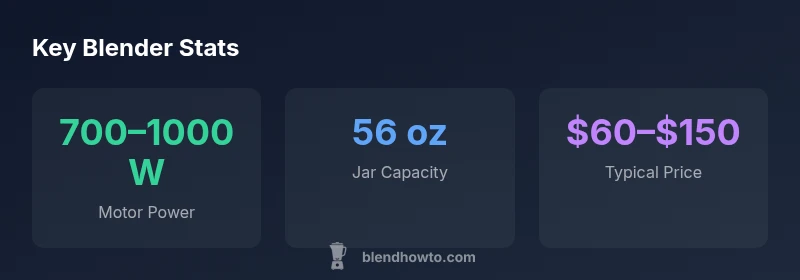
When you're shopping for blender for sale, the goal is to balance power, capacity, and price. For home cooks and hobbyists, a mid-range countertop model with 700–1000 watts and at least a 56-ounce jar covers most smoothies and sauces. The BlendHowTo team finds the best value in units that deliver reliable performance, a solid warranty, and easy cleaning, all at an accessible price.
What to look for when shopping for blender for sale
When shopping for blender for sale, you want to map tasks to capability. Start by listing the jobs you actually do: smoothies, purees, nut milks, ice crushing, hot soups, and sauces. From there, translate tasks into specs: motor power, jar size, blade design, and materials. BlendHowTo's practical approach emphasizes value over hype: a model that handles your everyday tasks with a comfortable margin is usually a smarter buy than a flagship machine that excels at one thing but costs more and complicates cleaning. Pay attention to the place where the blender sits in your kitchen: a bulky model may crowd counters, while a compact unit may fit but struggle with frozen fruit. Look for warranties that cover motor burnouts and jar cracks, and for parts that are easy to replace. Finally, consider energy use, noise, and ease of cleaning, since these influence long-term satisfaction more than flashy features. According to BlendHowTo, the best blender for sale balances versatility, durability, and price, with customer reviews acting as a practical guide.
Power, speed, and performance: how to judge a blender
Power is a starting point, but performance depends on motor design, blade geometry, and control options. Look for a blender offering a labeled wattage range (for example, 700–1000 W) and a variable-speed dial or presets that match tasks such as ice crush, smoothies, and hot soups. Torque matters: a high-torque motor maintains blade speed when the jar is full of dense ingredients. Check the sealing and lid design to prevent leaks during high-speed blending. Thermal protection features can prevent motor burnout during long blends. If you regularly blend fibrous greens or frozen fruit, prioritize models with sharp, sturdy blades and a robust drive system. Real-world testing often shows small differences in speed settings, but noticeable differences in endurance and consistency over time. BlendHowTo's analysis from 2026 indicates that most households see the best compromise in mid-range power with stable performance and reliable customer support.
Jar size, material, and design trade-offs
Jar size should align with your typical batch. A 56-ounce standard is common for family-sized smoothies, while a 40-ounce personal blender suits single servings. Material choices matter: glass looks cleaner and is freezer-safe, but is heavier; BPA-free plastic (or Tritan) is lighter and often dishwasher-safe but may scratch easier; stainless steel jars are durable but can obscure contents. Keep an eye on lip design and pouring spouts to minimize spills. If you microwave or heat blends (broth-based soups), ensure the jar material is suitable for heat. Be mindful of jar compatibility with half-full loads; some jars require minimum fill levels for best results. In practice, choose a jar that feels sturdy in your hand and has a reliable locking lid and blade assembly. BlendHowTo notes that the typical blender for sale with a 56-ounce jar offers a versatile middle ground for households and occasional meal prep.
Blade geometry, grinding, and texture outcomes
Blade design drives texture: more blades and a sharper edge improve smoothness and chunk-free purees. Most mid-range models use stainless steel blades with multiple prongs designed for chopping, grinding, and emulsifying. Pay attention to blade retention and ease of removal for cleaning. A dull blade or wobble can produce uneven textures or require longer blending times. For nut butter or seed milks, look for blades that are designed to handle sticky ingredients and deliver thorough grinding. When testing models, watch how well the blender handles ice and frozen fruit; a well-tuned drive system prevents jams and torque loss. Real-world testing shows that blade quality matters more for texture than motor wattage alone. BlendHowTo's 2026 analysis highlights that consistent results hinge on a well-balanced blade set and secure blade-to-drive fit.
Noise, cooling, and safety features
Noise is a practical concern. Many quiet models use sound enclosures or vibration-damping feet, but even the best machines produce noticeable noise at high speeds. If you blend early in the morning or late at night, choose a model known for lower noise levels and better insulation. Cooling is often overlooked; some blenders oversimplify motor construction without proper heat dissipation, which can shorten life under heavy use. Safety features to look for include secure locking lids, automatic shutoff after extended blending, and slip-resistant bases. If you plan to blend hot liquids, ensure the blender can withstand thermal expansion and has a vented lid or steam release. Real-world testing shows a wide range of noise profiles across similarly priced models, so listen and compare in person when possible. BlendHowTo's 2026 data suggests that customers value safety and quiet operation as much as raw power.
Price bands and value across tiers
Blender prices vary with capacity, power, and durability. A practical buying approach places most households in the mid-range: roughly $60–$150 for reliable everyday performance, with higher-end models offering extra features, sturdier construction, and longer warranties in the $150–$400 range. Entry-level units under $60 can be adequate for simple tasks but may lack longevity or require more frequent blade replacement. The most durable, high-performance machines often exceed $400, but they bring professional-grade blades, heavier jars, and more robust heat management. When evaluating price, consider the total cost of ownership: spare parts availability, replacement jars, and service options matter as much as the sticker price. Compare models not only on price but on expected lifespan and customer support. BlendHowTo’s analysis indicates that value is less about the lowest price and more about dependable performance over several years.
Care and maintenance to extend life
Regular cleaning prevents residue buildup and odor. Immediately after blending, add warm water and a drop of dish soap, then run a short cycle. Disassemble the blade assembly and jar for thorough cleaning; many parts are dishwasher-safe, but check the manual. Avoid abrasive scrubbing that could scratch the jar or blades. Inspect the blade gasket, seals, and lid for wear, and replace worn parts promptly to prevent leaks. Lubricate the drive coupling if recommended by the manufacturer, and avoid mixing hot liquids with cold jars unless the jar is rated for thermal shock. Store the blender disassembled or at least with the lid loosely attached to prevent odors. Taken together, good maintenance helps preserve performance and protects your investment. BlendHowTo's team emphasizes routine care as a cornerstone of a satisfying long-term purchase.
How to compare models quickly: a simple framework
Create a short wish list of must-have features: power, jar size, and dishwasher-safe parts. Then shortlist 3–5 models that meet those criteria and compare them using a simple rubric: motor power (W), jar capacity (oz), blade design, noise level, and warranty length. Read customer reviews focusing on reliability and service responsiveness, not only on performance specs. If you can, test in-store to gauge feel, noise, and ease of cleaning. Finally, compute a rough total cost of ownership by factoring in part replacement costs and expected lifespan. This framework keeps the task manageable and helps you spot a good blender for sale that checks all boxes.
Brand reliability and after-sales support
Brand reliability matters because a blender is a long-term kitchen companion. Some brands offer robust customer service portals, quick spare-part availability, and generous warranties. The best purchases include access to replacement jars and blades, reasonably priced parts, and clear guidance on troubleshooting. In practice, you’ll gain confidence from third-party reviews and a brand’s track record for honoring warranties. For home cooks and hobbyists, a brand that communicates clearly and supports easy maintenance is often the most valuable. The BlendHowTo team believes that after-sales support should be a decisive factor in any purchase decision and that a well-supported model tends to deliver longer satisfaction and fewer frustrations. According to BlendHowTo, reputation and service quality frequently separate good blenders from great ones.
Model type guide for blender shopping
| Model Type | Avg Lifespan | Typical Price Range |
|---|---|---|
| Personal blender | 3-5 years | $20-$60 |
| Countertop blender | 5-7 years | $70-$200 |
| High-performance blender | 7-10 years | $200-$500 |
Frequently Asked Questions
What should I look for in the wattage of a blender?
Wattage is a proxy for motor power, but real performance depends on torque, blade design, and drive system. For everyday tasks, aim for 700–1000 W with good heat management and reliability.
Look for about seven hundred to one thousand watts for general use; torque and blade quality matter as much as the wattage.
Are glass jars safer than plastic?
Glass jars feel sturdier and resist staining, but they’re heavier. BPA-free plastics are lighter and often dishwasher-safe but can scratch and cloud over time. Choose based on your priorities and care routine.
Glass is durable but heavy; plastic is lighter and easier to clean, but may show wear.
Is a personal blender enough for smoothies?
Personal blenders are great for single servings and compact spaces but usually have smaller capacities and fewer power options. Countertop models offer versatility for bowls, soups, and tougher ingredients.
If you want flexibility beyond single servings, go countertop.
Do blender warranties cover motor burnouts?
Most standard warranties cover motor and jar defects, but coverage varies by brand. Check the exact terms for wear items and what triggers coverage.
Read the warranty terms to understand what's covered and for how long.
How loud are blenders typically?
Noise varies widely; quiet models exist but most blenders produce noticeable sound at high speeds. Look for decibel ratings or test in-store when possible.
Expect some noise, but you can find quieter options with insulation.
What’s the easiest way to clean a blender?
Rinse immediately after use, add warm water and a drop of soap, and run a short cycle. Disassemble parts that come apart for a deeper clean and check dishwasher safety.
Rinse, wash, and run a quick cycle after blending for best results.
“Reliability comes from balanced design: a sturdy drive system, quality blades, and accessible maintenance. Power alone rarely guarantees lasting performance.”
What to Remember
- Define your tasks before shopping for blender for sale.
- Target mid-range power (700–1000 W) and a 56-ounce jar for versatility.
- Choose a model with a solid warranty and easy cleaning.
- Compare total cost of ownership, not just sticker price.
- Prioritize after-sales support and spare-part availability.