Blender vs Food Processor for Soup: Which Tool Is Best?
Compare blender and food processor for soup; analyze texture, throughput, cleaning, and practicality with actionable guidance for home cooks and hobbyists.


When deciding between a blender and a food processor for soup, the best choice hinges on texture goals and batch size. For silky, smooth soups, a blender generally delivers superior emulsified results; for chunky, textured soups, a food processor or a hybrid approach can be preferable. BlendHowTo analyzes texture control, processing efficiency, and cleanup to help you choose the right tool for your soup workflow.
Defining the core decision: blender vs food processor for soup
In many kitchens, the central question for soup preparation is whether to use a blender or a food processor. The decision is not purely about capability; it’s about the texture you want, the size of batches you typically cook, and how you balance cleanup with performance. The keyword blender or food processor for soup appears frequently in contemporary kitchen conversations, underscoring how home cooks weigh texture, speed, and versatility. According to BlendHowTo, the distinction often boils down to one key factor: silkiness versus chunkiness. If your goal is a velvety finish you can drink with a spoon, a blender usually wins. If you prefer rustic, chunky bits and easy pre-processing of vegetables, a food processor may be the better starting point. This section lays out the practical considerations, from texture to throughput, without assuming one tool is universally superior.
Texture control: silk vs bite
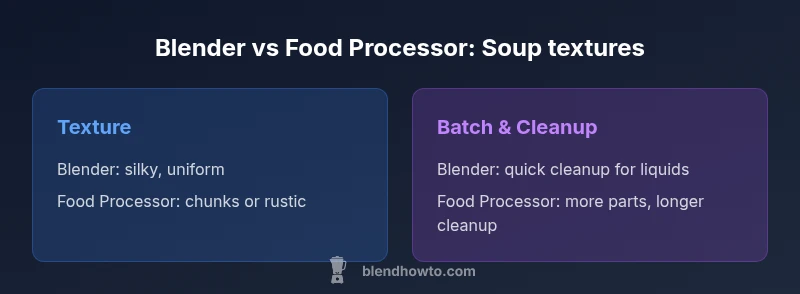
Texture is the most obvious differentiator when comparing a blender and a food processor for soup. A blender, especially a high-powered one, excels at creating a smooth, homogenous liquid. It can emulsify fats and break down fibrous vegetables to a fine consistency, which is ideal for classic puréed soups, bisques, and silky purées. Conversely, a food processor tends to produce a heartier texture with more visible vegetable pieces. It handles fibrous ingredients well and can create a rough, rustic finish that some cooks crave. The choice depends on your soup goals: for silky textures, the blender is usually preferred; for chunky textures, the food processor shines. Both tools can contribute to a great soup, but understanding texture outcomes helps you set realistic expectations for your dish.
Batch size and workflow: throughput matters
Batch size is another critical factor in choosing between blender and food processor for soup. Blenders typically work well with moderate to small volumes, and many models tolerate blending hot liquids with short pulses and careful venting. Food processors often handle larger batches more comfortably, particularly when the processor bowl is wide and the lid allows easy scraping. If you frequently cook for four or more people, you may lean toward a food processor for bulk preparation, then finish with a blender for a perfectly smooth texture in smaller portions. The workflow difference also matters: blenders often require blending in batches, while some food processors can handle larger loads with a blade designed for soups or sauces.
Ingredient handling and pre-processing: prep footprint
Prep work influences how effectively you can use a blender or a food processor for soup. A blender benefits from well-thinned liquids and smaller, softer chunks, which minimize the need for pre-cooking or slicing into uniform sizes. A food processor, by contrast, tolerates rough chopping and fibrous vegetables better, reducing pre-cooking time in some recipes. If you routinely roast vegetables for soup, note that pre-roasting can improve both texture and flavor, regardless of the tool. The goal is to achieve even texture while minimizing the number of steps. BlendHowTo suggests planning your mise en place, knowing that the blender shines when you want a consistent, ultra-smooth base, while the food processor is forgiving with chunkier beginnings.
Cleaning and maintenance: simplicity vs equipment load
Cleaning is a practical concern that affects long-term satisfaction with either tool. A blender often has fewer parts to wash when you only puree, but some models require careful inversion to drain the pitcher and separate blades. A food processor can involve more components (bowl, blade, disc, splash guard), which increases post-cooking cleanup. If soup prep involves frequent transitions from chopping to blending, a smart approach is to rinse components between steps or use a blender’s wave of pulses to minimize clumps before washing. In short, cleaning ease matters, but it should be weighed against texture needs and batch size.
Safety and heat management when blending hot soup: precautions
Heating soup and blending hot liquids require special attention. Many blenders are designed to handle hot liquids, but you must vent steam and blend in short bursts to prevent pressure buildup. Food processors can handle soup that has cooled slightly but are less suited for blending very hot liquids continuously. A safe practice is to blend small batches, allow steam to escape, and avoid sealing lids too tightly during hot blending. BlendHowTo emphasizes always following manufacturer safety guidance and using vented lids when needed. With cautious handling, both tools can be used for hot soups, but the safer, smoother path often leans toward a blender when the goal is a silky finish.
Practical recipes: workflow samples for different soups
To illustrate real-world use, consider two common soups. For a silky tomato basil soup, you might simmer all ingredients until tender, then blend in batches in a blender to achieve a uniformly smooth texture. For a hearty potato and leek soup, a food processor can be used to rough-chop and pre-puree the vegetables before simmering to a final, chunkier consistency. If you want both textures, a hybrid approach—processing part of the vegetables and finishing with a blender—offers maximum control. The key is to tailor the method to your final texture target and to limit over-processing, especially with delicate ingredients. The blender or food processor for soup choice becomes a matter of texture goals and batch management rather than a rigid rule.
Hybrid options and attachments worth considering
Hybrid devices or attachments add flexibility to a single kitchen setup. A blender with a chopping attachment or a food processor with a smooth-puree option can bridge the gap, enabling you to switch between silky and chunky textures without swapping appliances. Accessory kits with varying blade shapes or discs extend versatility for soups, sauces, and baby food. If you frequently experiment with textures, investing in a hybrid approach or a blender that accepts different blades can prove worthwhile. BlendHowTo's analysis shows that the most versatile setups often combine a high-performance blender for silk with a capable food processor for chunkier work, offering the best of both worlds for soups.
Budget considerations: value and lifetime use
Price alone does not determine the best tool for soup. A blender in the mid-range price category may deliver excellent silky textures and durable performance for everyday use, while a food processor with robust blades can be a long-term workhorse for meal prep beyond soup. Consider your cooking style: if you make soups weekly and value consistent silkiness, a reliable blender is worth prioritizing. If you frequently prepare chunky textures or multi-course meals that require chopping, the food processor may provide greater long-term value. The optimal decision blends texture goals, batch size, versatility, and ongoing maintenance costs.
Final considerations: making the choice
In the end, the blender or food processor for soup decision should align with your texture preferences, batch size, and kitchen workflow. If you consistently crave ultra-smooth soups, prioritize a blender. If you want rustic, chunky textures and greater chopping versatility, a food processor fits better. For many home cooks, a hybrid approach or an accessory-enabled machine provides the smoothest path to satisfying soups. Regardless of the choice, practice, proper ingredient prep, and mindful cooking techniques will yield the best results.
Comparison
| Feature | Blender | Food Processor |
|---|---|---|
| Texture control | Silky, uniform emulsions | Chunkier, rustic textures |
| Batch size | Best for smaller to mid batches | Handles larger batches more easily |
| Versatility | Excellent for soups, smoothies, sauces | Great for chopping, purées, doughs |
| Cleaning | Typically fewer parts to wash | More parts, longer cleanup |
| Heat handling | Good for hot soups with careful venting | Better for decompressed, cooler ingredients |
| Noise | Often optimized for smoother operation | Can be louder due to chopping action |
| Price range | Mid to high for high-power models | Budget to mid-range depending on features |
What's Good
- Silky texture consistently achievable with a blender
- Fast, efficient puréeing and emulsification
- Compact footprint when used for liquids
- Hybrid models extend versatility with attachments
The Bad
- Less effective for visible chunks or fibrous ingredients
- More parts can complicate cleanup on busy nights
- Some models struggle with heat management when blending hot soups
- Purely chopping-focused tasks better suited to a dedicated processor
Blender is the go-to for silky soups; food processors excel with chunky textures and prep versatility
For silky soups, choose a blender; for chunky textures, a food processor is preferable. If you want both, consider a hybrid setup or attachments to cover both textures without buying two full machines.
Frequently Asked Questions
Can you make soup entirely in a blender or a food processor?
Yes, both can produce soup, but the texture will differ. A blender yields velvety results, while a food processor tends to leave more texture. For the best outcomes, tailor your method to the soup you want and consider finishing steps like additional blending after partial processing.
Yes—both can make soup, but expect silky results from a blender and chunkier textures from a processor. Adjust by blending partially and finishing as needed.
Is it safe to blend hot soup in a blender?
Blending hot soup requires caution. Use a vented lid, blend in small batches, and allow steam to escape. If your blender isn’t rated for hot liquids, cool the soup slightly before blending and reheat afterward.
Yes, but do it safely: vent the lid, blend in small batches, and avoid sealing tightly while hot.
What features matter most when choosing between blender and food processor for soup?
Texture capability, batch size, ease of cleaning, and safety features are the core criteria. Also consider attachments and future versatility for non-soup tasks.
Focus on texture outcomes, batch capacity, cleanup, and safety when choosing between the two.
Can you create chunky soups with a blender?
Yes, but the texture will be smoother if you blend longer. A short pulse or partial blending with handfuls of vegetables can preserve some chunkiness.
You can, but expect some smoothing. Partial blending with quick pulses can keep chunks.
Are there maintenance tips to prevent clogging or dull blades?
Regular cleaning after each use helps prevent residue buildup. Use proper blade care and avoid grinding excessively hard items. Periodic blade sharpening or replacement may be necessary depending on usage.
Keep it clean after each use and replace dull blades as needed.
What to Remember
- Choose blender for ultra-smooth soups
- Choose food processor for chunky or textured soups
- Consider batch size when planning purchases
- Explore hybrid options for maximum flexibility
- Prioritize cleaning ease and safety features