Blender Size in mm: A Practical Dimension Guide
An in-depth guide to blender size in mm, covering how to measure jar diameter, base footprint, and height; category-based size ranges; and a practical buying checklist.


Blender size in mm refers to the external dimensions that influence fit and storage: jar diameter, base footprint, and total height, all expressed in millimeters. For home cooks and hobbyist 3D artists, mm specs help you judge whether a blender will fit on your counter, inside cabinets, or in a pantry. In short, measure the space and compare mm ranges across models to choose confidently.
What "blender size in mm" means in practical terms
In everyday use, blender size in mm is a practical shorthand for three primary dimensions that determine fit: jar diameter, base footprint, and overall height. For immersion blenders, the focus is the blending head diameter and the space it occupies near the hand; for countertop models, jar width often drives the footprint. The millimeter metric lets you compare across brands with precision, which is especially helpful if you’re tight on counter depth or cabinet clearance. According to BlendHowTo, the mm spec is a quick proxy for fit, but it should be read alongside other factors like lid design, spout shape, and handle protrusions. This section will guide you through parsing those numbers, reading model specs, and aligning them with your kitchen or studio workspace.
When you search for "blender size in mm," you’re comparing three dimensions simultaneously, not just one measurement. A model with a slightly larger jar diameter but a dramatically smaller overall height could fit a crowded shelf; another model may offer a slim base yet a tall jar that compromises under-cabinet clearance. The goal is to translate numbers into an actionable buying decision that supports both performance and storage realities.
Measuring the important dimensions: jar diameter, base footprint, and overall height
Begin with your space: measure the width available on the countertop, the depth from the edge to the wall, and the vertical clearance under any cabinets. For each blender you’re considering, record three key mm figures: jar diameter (the widest part of the jar, including any rims or handles that extend outward), base footprint width, and the total height from the counter to the top of the tallest part (usually the motor). If a model lists height without a jar, add the jar height to the base height for a realistic total; some blenders include protrusions like spouts or cords that extend when in use, so include those in your measurement plan. When comparing models, convert all dimensions to the same unit (mm) and align with your space measurements.
Distinguishing between common blender types by size: personal, countertop, and immersion
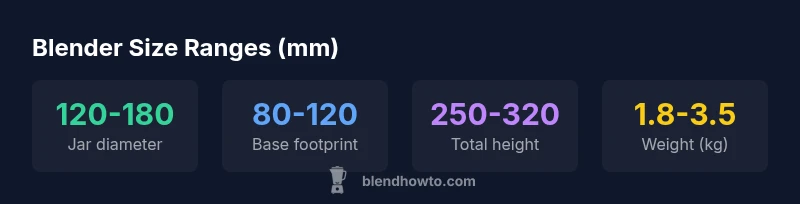
Size expectations differ by category. Personal blenders often have compact jar diameters (roughly 120–180 mm) and low overall heights, prioritizing storage simplicity and one-handed operation. Countertop blenders typically span jar diameters from around 150–220 mm and overall heights around 260–350 mm, balancing capacity with footprint. Immersion blenders focus on the blending wand diameter and handle footprint, with shorter heights but varying wand lengths. The blender size in mm becomes a quick gatekeeper: if the mm numbers exceed your space, you’ll know early that model won’t fit, even before you compare power settings or speeds.
Influence of size on performance, stability, and storage
Larger jar diameters and taller units can offer higher capacity and steadier blending for dense ingredients, but they may be harder to store or maneuver. A wider base footprint improves stability during high-speed blending, reducing the chance of tipping when blending hot soups or thick batters. Height matters for under-cabinet clearance and for how you stack appliances in a pantry. If you often blend in small apartments or shared kitchens, a compact model with favorable mm specs can save precious counter and cabinet space. The key is to balance capacity and stability with the vertical space you actually have.
Practical tips for choosing the right size across real-world scenarios
Create a shortlist: for each category, pick 2–3 models and note their mm specs. Use a simple decision rule: if jar diameter plus any protrusions is within your available width, and the total height fits under your cabinet, then proceed to compare other features like motor wattage and blade design. Remember to consider lid extensions, pouring spouts, and handle shapes that might add to the effective footprint. In small kitchens, prioritize width and height first, then verify that the jar can be easily removed and replaced without requiring rearrangement of nearby items.
Conversion tips: mm to inches and practical examples
While mm is the standard for precision, many retailers list inches as well. A quick conversion helps when you compare models from different markets: 25.4 mm equals 1 inch. Round to the nearest tenth for quick shopping decisions. If you’re evaluating a model with a jar diameter of 180 mm, that translates to about 7.1 inches. Use the same conversion for height and base width to avoid miscalculations. When you’re working with a space that’s, say, 30 inches wide, a model with a jar diameter of about 9–10 inches is a good starting point, leaving room for lids and cords.
A practical sizing checklist you can use before buying
- Measure available counter width and cabinet clearance.
- Record jar diameter, base footprint, and total height in mm.
- Check that there’s no protrusion that would collide with nearby appliances.
- Compare mm specs across models within your space budget.
- Consider your use-case: smoothies vs. hot soups may demand different jar forms and blade designs.
- Double-check dimensional data with the seller if any measurements are unclear.
Real-world measurement scenarios: under-cabinet clearance, drawer space, and pantry storage
If you’re installing beneath wall cabinets, you’ll need not only the height but clearance for lid lifting and for any attached cords or handles. For drawer storage or pull-out pantries, base footprint becomes the deciding factor; a compact base can allow you to fit more units in a tight space, but ensure you don’t compromise stability or jar capacity. When space is severely limited, look for models with compact mm footprints that still offer a practical jar size for your everyday blending tasks. The end goal is to match the model’s mm footprint to your usable space while preserving convenience and safety.
Measuring for nonstandard spaces: irregular counters and quirky cabinet designs
Not all kitchens follow standard dimensions. If you have a curved counter edge, slanted walls, or unusually shallow cabinets, bring a tape measure and sketch a quick diagram of your space. Note the maximum width you can accommodate and the minimum vertical clearance you have above the counter. In such cases, mm-based comparisons are even more valuable, because they provide objective data you can verify against physical space. Always verify model specs on the retailer site or manufacturer manual, and don’t rely on photos alone.
Size-related dimensions by blender type
| Dimension | Typical range (mm) | Notes |
|---|---|---|
| Jar diameter | 120-220 | Footprint varies by model |
| Base footprint width | 80-150 | Storage clearance matters |
| Total height | 230-350 | Space under cabinets |
| Motor height | 60-120 | Impact on clearance |
| Weight (approx) | 1.5-3.5 | Category dependent |
Frequently Asked Questions
What does 'blender size in mm' include?
It includes jar diameter, base footprint, and total height. Some models also show height with handle or spout extended.
It includes jar diameter, base footprint, and total height. Some models include protrusions like handles or spouts.
What is the typical mm range for a countertop blender?
Typically jar diameter ranges from about 120 to 220 mm, with total heights from roughly 250 to 350 mm depending on design.
Most countertop blenders are about 120 to 220 mm wide and 250 to 350 mm tall.
Do immersion blenders have smaller mm sizes than countertop models?
Yes, immersion blenders tend to be shorter in height and narrower in base footprint, but size varies with attachments.
Immersion models are usually shorter, but size varies with attachments.
How do I measure for under-cabinet clearance?
Measure from the countertop to the bottom of the cabinet, add room for lid opening and any protrusions.
Measure clearance under cabinets and allow room for lid and spout.
Should I worry about mm accuracy when shopping online?
Yes, compare mm specs to your space and request exact dimensions from the seller if needed.
Always verify exact mm dimensions with the seller.
“Size in mm is the practical gateway to fitting a blender into your kitchen and studio workspace. By focusing on jar diameter, base footprint, and height, you can quickly filter models that meet both space and performance needs.”
What to Remember
- Measure your space before buying.
- Read jar diameter and height in mm.
- Expect wide mm ranges across blender types.
- Convert mm to inches for quick comparisons.
- Prioritize countertop clearance and cabinet fit.