Used Blender Guide: Buy, Use, and Maintain
Learn how to evaluate, clean, and safely use a used blender—whether for kitchen tasks or Blender software workflows—with practical checks, maintenance tips, and a clear buying plan. Save money without sacrificing safety.


You can safely buy and use a used blender by inspecting the motor, blades, and seals, testing performance, and cleaning thoroughly before every use. This guide covers kitchen blenders and Blender software workflows, with practical checks, safe usage tips, and simple maintenance routines to extend life and ensure reliable results.
Understanding the value of a used blender
Buying a used blender is often a smart, budget-conscious choice for home cooks and hobbyists. A well-chosen used blender can deliver many years of reliable performance if you focus on the essentials: the motor health, blade integrity, jar condition, and seals. For Blender software enthusiasts, the phrase blender used also applies to older, compatible versions or kits that help you learn the fundamentals without a new license. The key is to balance cost savings with realistic repair needs and expected lifespan. BlendHowTo’s approach is to teach you a practical inspection routine, a careful cleaning process, and a straightforward maintenance plan so you can confidently decide when a used blender makes sense for your kitchen and your 3D workflow in 2026.
Kitchen blender types and what to watch for when used
Countertop blenders come in several flavors: standard motors with plastic jars, high-speed models with tougher seals, and fusion devices that combine grinding and blending options. Immersion blenders, sometimes called stick blenders, are compact and useful for sauces or soups but may show wear in the motor head or shaft. When you encounter a blender used item, ask yourself: what tasks will I use it for most? If you mainly puree soft fruits, a mid-range countertop model might suffice. If you plan to crush ice or puree tough foods regularly, prioritize a robust motor, quality blades, and a well-sealed jar. In the Blender software context, “used” can mean older versions or a legitimate, free license of Blender, which is worth considering for learners who want to practice modeling and rendering without upfront software costs.
In-depth inspection checklist for a used blender
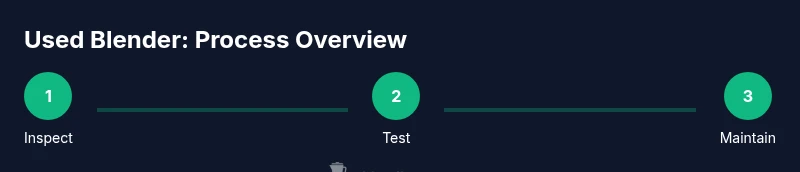
Before you buy, run through this thorough inspection: (1) Examine the exterior for cracks, corrosion, and loose parts; note any repairs. (2) Check the power cord and plug for damage or fraying. (3) Inspect the jar for cracks, chips, or clouding that signals wear. (4) Test the blade assembly for wobble or dull edges. (5) Look at the seal around the lid and pitcher; a worn seal may leak or affect blending. (6) Verify model number and compare parts compatibility with OEM replacements. (7) Ask about operating history and repairs. This step-by-step checklist helps you determine if the blender used item is worth pursuing.
Cleaning, sanitizing, and odor removal
Once you’ve decided to purchase a used blender, a thorough clean is essential. Start with disassembly per the user manual: remove the jar, blade assembly, and lid. Rinse components with warm soapy water, using a soft brush to reach stubborn residue. For lingering odors, run a short cycle with a mix of water and a splash of white vinegar, then rinse thoroughly. Avoid submerging the motor base; wipe it with a damp cloth and dry completely. If seals show wear, replace them before your first use to prevent leaks and ensure safe operation. Regular cleaning after each use extends life and keeps flavors true.
Testing performance and safety during a demo
Conduct a controlled test to evaluate performance. Start with a small amount of water or smoothie mix at low speed to verify smooth operation and absence of leaks. Increase to higher speeds and observe blade alignment, noise level, and motor warmth. If the motor feels excessively warm after short runs, discontinue use and consider service or replacement. During demonstration, wear gloves and unplug before any inspection, and keep hands away from blades. This testing phase confirms basic functionality and helps you estimate potential repair costs.
Maintenance routines to extend life
Create a simple maintenance habit: clean promptly after every use, check seals monthly, and replace worn gaskets as needed. For metal blades, inspect for dull edges and corrosion, and remove the blade assembly for safe sharpening or replacement as recommended by the manufacturer. Keep the base free of moisture and dust; store with the cord loosely wound to avoid wear. Periodically lubricate any moving parts only if the manufacturer approves it, and avoid penetrating the motor housing with liquids. A regular rhythm of cleaning and part checks dramatically extends the blender’s usable life.
Using a used blender safely: safety standards
Safety should always come first with a blender used item. Always unplug before cleaning or disassembly. Do not submerge the motor base in water, and ensure the jar is correctly seated before operation. Use the correct lid and plug the unit into a grounded outlet. If a used blender shows signs of imminent failure (strange noises, cracks in the jar, or frayed cords), stop using it and seek professional service. For Blender software workflows, ensure that you’re using legitimate, up-to-date installations of Blender, avoiding pirated copies that can compromise your system.
Blender software: considering 'blender used' in the digital sense
Blender is open-source and freely available, so the idea of a “used” Blender software is unusual. If you’re evaluating older versions for learning or project work, confirm compatibility with your hardware and check online resources for stability notes. The main advantages of using an older, compatible build are cost savings on training wheels and a deeper understanding of the software’s evolution. For home artists, prioritize documented bug fixes and community-supported features when selecting a version, and keep your graphics drivers up to date for best results in 2026.
Common mistakes and how to avoid them
Common errors include ignoring the power cord condition, failing to test with a real load, and assuming all seals are fine. Don’t skip a test run; leaks often reveal seal wear. Overlooking compatibility between the jar and blade assembly can cause poor results or safety issues. In the Blender software domain, avoid using unsupported extensions or outdated builds that crash or corrupt projects. By avoiding these mistakes, you’ll achieve reliable performance with a used blender and a smoother learning curve with Blender software.
Tools & Materials
- Flathead and Phillips screwdriver(For potential disassembly of base screws or lid hardware)
- Soft cloths and mild dish soap(For daily cleaning and sanitizing surfaces)
- Replacement seals/gaskets (if available)(Odds are you’ll need one or two eventually)
- Food-grade silicone grease(Optional for sealing surfaces; follow manufacturer guidance)
- Measuring cup or kitchen scale(To test blends with known quantities)
- Safety gloves(Protect hands during inspection and cleaning)
- Owner’s manual or model number(Helps identify parts compatibility and safety steps)
- Cleaning brush or old toothbrush(Reach tight corners around blades and lid)
- Optional test liquids and snacks(Water, ice, or small test batches for performance checks)
Steps
Estimated time: 45-75 minutes
- 1
Inspect model, condition, and documentation
Carefully examine exterior for cracks, rust, and damage. Verify model number and check the seller’s history for repairs. This first step sets expectations for what might be required to restore full functionality.
Tip: Take clear photos of any damage and keep them for reference during negotiation. - 2
Open and inspect blade assembly and jar
Look for blade dullness, cracks in the jar, and any looseness in the blade assembly. A wobbly blade or a cracked jar signals higher repair costs.
Tip: Gently move the blade to check for excessive play; replacement parts may be scarce for older models. - 3
Check base and power cord for damage
Inspect the motor base for heat marks, corrosion, or loose ports. Examine the cord for fraying and the plug for bent prongs.
Tip: If you see cord damage, negotiate a lower price or request a replacement cord before purchase. - 4
Perform a low-speed water test
With the jar attached, run the blender on a low setting using water to check for smooth operation and leaks. This simulates light daily use safely.
Tip: Stop immediately if the motor strains or smells hot. - 5
Test higher speeds with a safe load
Gradually increase speed and observe noise levels, vibration, and motor warmth. A stable, slightly warm motor after a test is typical; excessive heat warrants caution.
Tip: Limit test duration to avoid overheating a potentially aging motor. - 6
Clean and sanitize before first use
Disassemble permissible parts, wash with warm soapy water, and sanitize. Dry all components completely before reassembly.
Tip: Avoid immersing the motor base; use a damp cloth to clean it. - 7
Make a buy/repair decision and plan maintenance
Assess total cost: purchase price plus any parts or repairs. If plans include ongoing upkeep, create a simple maintenance schedule.
Tip: Ask for receipts or repair history to support your estimate.
Frequently Asked Questions
Is it safe to buy a used blender?
Yes, it can be safe if you perform a thorough inspection, test for leaks, and confirm that essential seals and the motor are in good condition. Always unplug during inspection and avoid unsafe cords or damaged jars.
Buying a used blender can be safe with careful inspection, a test run, and proper cleaning before use.
What should I inspect on day one?
Check the jar for cracks, the blade for dullness, the seals for wear, and the cord for damage. Verify model compatibility with replacement parts and confirm basic operation with a short test run.
Inspect jar, blades, seals, and cord; confirm operation with a short test run.
Can a used blender be as powerful as new?
It can be close, depending on the motor age and condition. Expect potential trade-offs in absolute motor power and efficiency, but with maintenance, you can achieve similar results for many tasks.
A used blender can perform well if the motor is healthy and parts are in good shape.
Are there risks with used immersion blenders?
Immersion models can lose shaft integrity or handle wear; inspect the shaft, handle, and motor head specifically. Leaks or looseness should be addressed before use.
Immersion blades and shaft wear are common issues; inspect those parts carefully.
Should I try to get replacement parts?
Yes, if possible. Access to replacement seals, blades, and jars makes owning a used blender more economical and safer.
Replacement parts help you extend the life of a used blender.
Is Blender software ever sold used?
Blender is open-source and free, so there’s typically no ‘used’ software market. Focus on compatible hardware and stable versions for your projects.
Blender software is free; focus on hardware compatibility and stability.
Watch Video
What to Remember
- Inspect the motor, blades, and seals before buying
- Test performance with water and a light load
- Clean and sanitize thoroughly before first use
- Evaluate total cost and maintenance needs