Difference Blender and Juicer: A Comprehensive Comparison
A practical guide comparing blenders and juicers: how each appliance processes ingredients, nutrient retention, cleaning needs, cost, and ideal uses for smoothies and juices.


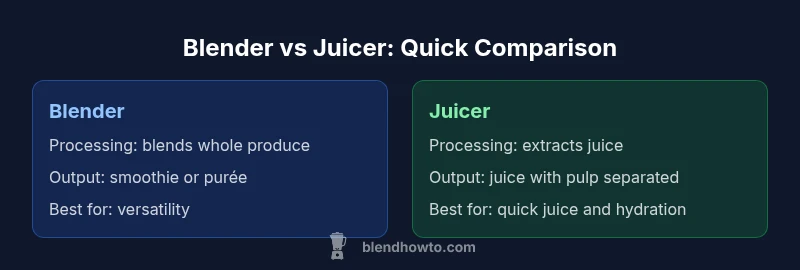
Blenders and juicers serve different roles in the kitchen. The difference blender and juicer is that blenders pulverize whole produce into a smoothie or purée, while juicers extract liquid from fruits and vegetables and discard most pulp. For most homes, the choice depends on whether you want a versatile blending tool or a dedicated juice machine; both can fit into a practical healthy routine.
What is the difference blender and juicer? A practical starting point
The difference blender and juicer is not a branding issue; it's a functional distinction that shapes how you approach meals and snacks. In this guide we explore the core mechanics, typical outcomes, and how to decide which tool fits your weekly routine. According to BlendHowTo, understanding this distinction helps home cooks align equipment with daily routines rather than chasing novelty.
A blender treats produce as a whole, using high-speed blades to pulverize fruits, vegetables, ice, and add-ins into a thick drink or creamy purée. A juicer, by contrast, focuses on extracting liquid from produce and discarding most of the solid fiber. The separation means juices are smooth and light, while smoothies carry fiber and body. The practical takeaway from the difference blender and juicer is simple: choose based on whether you want volume and texture or liquid concentration in your daily beverages and meals.
How they process produce: mechanical realities
To understand the difference blender and juicer, examine how they interact with produce. Blenders blend, chop, and emulsify everything you put in, so nothing is wasted—except perhaps the ice shards or hard bits that you choose to remove. Juicers isolate juice by squeezing or centrifuging, then ejecting pulp. In a centrifugal juicer, high-speed blades shred produce while a spinning basket separates liquid from solids; a slow, masticating juicer gently presses juice out. The result is a clear liquid with minimal pulp, but some fiber is left behind in the pulp, which you can repurpose in baking or soups. Because juicers remove most solids, you get a lighter beverage with a different flavor profile, while blending preserves the entire produce spectrum, including fiber and micronutrients that ride along in the liquid portion. The difference blender and juicer thus becomes a matter of process: intact produce versus extracted juice.
Fiber, nutrients, and absorption: what changes in your body
Fiber matters for digestion, satiety, and blood sugar response. The difference blender and juicer is most noticeable in fiber distribution. When you blend, you retain the fiber, though it’s broken down into a more viscous texture; the drink becomes a meal-like beverage that satisfies longer. Juicing removes most of the insoluble fiber, concentrating sugars and nutrients into a more portable liquid. However, some micronutrients—like certain antioxidants and vitamins—can be lost or degraded during processing and exposure to air, light, and heat. The state of the produce matters too: fresh, ripe fruits and vegetables yield different results than older, bruised produce. BlendHowTo notes that choosing between blending and juicing should account for your fiber intake goals and how you plan to consume nutrients throughout the day. In short, fiber-rich smoothies support fullness, while juices provide hydration and quick nutrient delivery without the bulk.
Texture, flavor, and use-cases: when to reach for each
Texture defines the experience. A blended drink offers a creamy body, with the mouthfeel of smoothie or soup—dense, satisfying, and versatile for adding seeds, nuts, or dairy-free milks. Juicing delivers a clean, smooth liquid with a lighter texture and faster sip. If you crave a thick breakfast smoothie, a blender is your friend; if you want a fast green juice for hydration, a juicer fits best. There are also culinary use-cases: a blender can emulsify sauces and soups, grind nuts into meal, or blend ingredients for a baby-food stage; a juicer excels at creating concentrates for cocktails, cold-pressed beverages, and flavor-forward drinks. In practice, many kitchens adopt a two-step approach—juice for a refresh, blend for a meal component—though this requires more counter space and ongoing maintenance. The difference blender and juicer thus informs your grocery planning and meal prep calendar, helping you balance nutrition and convenience across the week.
Cleaning, maintenance, and longevity: practical realities
Maintenance shapes long-term value. Blenders typically require cleaning of a single pitcher, lid, and blade assembly, which is straightforward but can create stubborn residue if sticky ingredients are involved. Juicers, especially slow masticating models, present more parts to manage: a feed chute, filters, strainers, and pulp containers. Disassembly can take more time, and thorough cleaning is important to prevent pulp buildup, which can harbor odors or mold. From a durability perspective, most mainstream devices are designed to handle daily use, but quality varies across brands and price points. A well-maintained blender can last many years with proper care. A juicer’s longevity often depends on the quality of its filter and gears. In both cases, using warm, soapy water and promptly drying components helps prevent rust or residue. For the difference blender and juicer to remain manageable, schedule a quick post-use cleaning ritual and store parts in a dry area.
Cost, value, and long-term considerations: not all price is equal
Cost considerations hinge on features, build quality, and included accessories. Blenders range from compact, entry-level models to high-powered, multi-functional devices; juicers span centrifugal and slow-press varieties with similar tiering. The initial price is only part of the story: long-term costs arise from replacement parts like filters, seals, or gaskets, and from electricity usage, which may be higher for a heavy motor in a blender when used frequently. In terms of value, a blender can serve many roles beyond smoothies—sauces, soups, and even some ice-cream- or nut-maste recipes—so it can be a better all-around investment if you cook large meals or regularly entertain. Juicers, when used frequently for fresh juice or for recipes that rely heavily on juice, can be equally valuable, but consider how often you’ll juice, whether you’ll repurpose pulp, and if you have space for cleaning after each use. The difference blender and juicer in cost becomes a trade-off between versatility and specialized performance.
Best-use scenarios: smoothies, juice, soups, and sauces
For daily life, a blender shines in versatility: smoothies, purées, soups, sauces, and even gravies. If your goal is to create thicker beverages and meal components in one pot, blending is ideal. A juicer excels when you want a quick, concentrated beverage or when you’re focusing on hydration with minimal fiber. For athletes or busy households, the decision often boils down to routine: if you drink juice daily and value speed, a juicer can be a time-saver; if you value flexibility and batch cooking, a blender is the better generalist. In some kitchens, a hybrid approach makes sense: use a blender for meals and a juicer for a weekly juice routine. The difference blender and juicer thus informs shopping plans and helps you balance nutrition and convenience across the week.
Quick decision framework: 4 steps to clarity
- Step one: identify your primary goal (juice speed versus versatile blending).
- Step two: review your weekly menu to see how often you would use each tool.
- Step three: measure your counter space and storage; consider whether you want a compact model or a full-featured device.
- Step four: set a budget, and compare build quality, warranty, and ease of cleaning against your desired outcomes. By following this framework, you’ll translate the abstract idea of the difference blender and juicer into a concrete purchase that fits your home.
Common myths and misconceptions debunked
- Juicing is not inherently healthier than blending; it depends on your ingredients and fiber goals. Juices concentrate nutrients but remove most fiber, affecting satiety and digestion. - Blenders do not automatically destroy nutrients; consuming blended foods promptly minimizes nutrient loss and preserves fiber. - Premium models often justify their price through durability and longevity, but price alone isn’t a guarantee of better results; match features to your use case.
Comparison
| Feature | Blender | Juicer |
|---|---|---|
| Processing method | Blender pulverizes whole produce into a puree or drink | Juicer extracts juice and discards most solids |
| Output type | Full-spectrum blend or purée | Filtered juice with pulp separated |
| Texture after processing | Creamy, thick, and fiber-containing | Clear juice with minimal pulp |
| Fiber retention | Retains most fiber in the final drink | Fiber mostly removed with pulp |
| Versatility | High versatility for smoothies, sauces, soups, and more | Specialized for juice extraction |
| Ease of cleaning | Moderate; pitcher and blades rinse quickly | More parts (filters, chute) requiring thorough cleaning |
| Best for | Versatile meals and bulk prep | Quick, concentrated juice and hydration |
| Space and storage | Typically larger but multi-use | Often compact but with pulp containers and screens |
| Price range | Wide range by model; generally mid to high | Wide range by model; often mid to high |
What's Good
- High versatility for blending foods and drinks
- Fiber is retained in smoothies when you include whole produce
- Can consolidate several kitchen tasks into one appliance
- Good value for households that cook frequently
The Bad
- Juicers provide quick, liquid output with less prep time
- Juicers remove most fiber, which may affect satiety
- Juicers have more components to clean and maintain
- High-end models can be costly and bulky
Blender wins for versatility; juicer wins for dedicated juice.
Choose a blender if you want a flexible tool for smoothies, sauces, and soups. Choose a juicer if your primary goal is quick, concentrated juice with minimal fiber. Your decision should align with weekly meal plans and cleanup tolerance.
Frequently Asked Questions
What is the main difference between a blender and a juicer?
The main difference is output: a blender processes whole produce into a drink or purée with fiber, while a juicer extracts liquid and leaves behind pulp. Your choice depends on whether you value texture and fiber or a quick, concentrated juice.
Blenders puree with fiber; juicers extract juice with little fiber.
Can you make smoothies with a juicer?
Juicers are not designed to make smoothies because they remove most of the solids. You can drink juice or repurpose the pulp in other recipes, but a blender is typically better for smoothies.
Juicers aren’t ideal for smoothies; use a blender instead.
Are there 2-in-1 blender-juicer appliances?
Yes, some hybrids blend and juice, but they often compromise performance. If you mostly blend, pick a blender; if you juice a lot, consider a dedicated juicer.
There are combo machines, but they’re usually mid-range in performance.
Which is healthier: juice or smoothie?
Health effects depend on ingredients and fiber. Juices deliver concentrated nutrients with less fiber; smoothies preserve fiber and can be more filling. A balanced approach often includes both.
Juice has less fiber; smoothie has more fiber—both can be healthy in context.
How much counter space do they require?
Model size varies. Blenders can be compact, while some juicers are larger due to pulp containers and filters. Measure your space and check height clearances before buying.
Measure your counter space to avoid overcrowding.
What maintenance tips help prolong life?
Regular cleaning, prompt drying, and timely replacement of seals or filters extend lifespan. Follow the manufacturer's care guide for your model and avoid soaking blades for long periods.
Clean after every use and dry thoroughly to extend life.
What to Remember
- Define your primary goal: juice or blending.
- Fiber matters: blending preserves fiber; juicing concentrates nutrients.
- Assess space, noise, and maintenance before buying.
- Consider a future-proof option with good warranty.
- If unsure, a high-quality blender covers many tasks; a juicer adds the juice option.