Blender vs Juicer: Practical Kitchen Comparison Guide
Explore a clear, data-driven Blender vs Juicer comparison for home cooks. Learn performance, cost, cleanup, nutrition, and use cases to choose the right kitchen appliance.


If you must choose between a blender or juicer, start with your daily tasks: smoothies, soups, and purées favor a blender, while fresh juice and nutrient extraction favor a juicer. This comparison weighs performance, cleaning, cost, nutrition, and use cases to help you decide what fits your kitchen best.
Performance and Nutrition
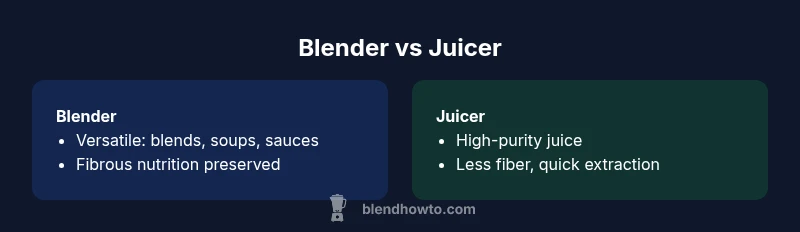
In kitchen work, performance and nutrition are the core axes of blender vs juicer decisions. A blender grinds, purees, and emulsifies with blades that chop through solids, which makes it excellent for smoothies, creamy soups, nut butters, and puréed sauces. The texture is generally versatile and can incorporate whole ingredients, including fibrous greens and frozen fruits, to deliver a nutrient-dense, fiber-rich result. A juicer, on the other hand, excels at extracting liquid juice while leaving behind a dry pulp. The result is a smooth beverage with a high concentration of certain nutrients and enzymes, depending on the fruit or vegetable. According to BlendHowTo, the choice often hinges on whether your priority is fiber-rich meals or high-purity juice. In practical terms, think about your typical meals and snack routines: a blender helps you round out meals with texture and saturation, while a juicer helps you maximize juice yield for hydration and quick nutrient intake. BlendHowTo’s analysis, 2026, emphasizes that both appliances can support overall diet quality when used thoughtfully and with varied produce.
Texture and Versatility
Texture and versatility are what separate the two devices in day-to-day use. A blender produces thick, creamy textures that can incorporate seeds, skins, and stems when desired, enabling full-spectrum smoothies and blended soups. It also handles hot liquids well when using heat-safe containers, which makes it suitable for making soups and sauces directly in the pitcher. A juicer yields liquid juice with limited fiber, which some users prefer for a refreshing beverage or for quick nutrient intake without the bulk of pulp. The trade-off is pulp management and potential fiber loss, which matters for those seeking dietary fiber as part of their daily intake. For many households, a blender’s flexibility in creating batters, dips, and sauce bases makes it the more practical all-around tool, while a juicer is highly efficient for juice-centric routines and meal planning.
Cleaning and Maintenance
Cleaning is a frequent pain point for both devices, but the approach differs. Blenders tend to have more parts—the jar, blade assembly, and lid—which can require careful scrubbing, especially if ingredients stick to the blades. Juicers often have a more complex pulp container and strainers, which can demand thorough disassembly and cleaning after each use to prevent pulp buildup and odors. Quick steps to keep both machines fresh include rinsing components immediately after use, using warm soapy water, and occasionally deep-cleaning blades with a brush or a soak cycle if your model supports it. Investing in dishwasher-safe parts where available can save time, but always check manufacturer guidelines to avoid warping or damage.
Power, Speed, and Control
Power and variable speed control influence outcomes. Blenders typically offer multiple speed settings and pulse functions, enabling fine control over texture, from chunky to ultra-smooth. Higher-powered blenders can process hard ingredients, frozen fruits, and dense mixtures with less motor strain. Juicers emphasize stable extraction with centrifugal or masticating mechanisms, which can vary in speed and yield. Centrifugal juicers are fast and convenient for everyday use, while masticating models preserve more nutrients and may handle leafy greens better, albeit with a slower process. The choice between speed and nutrient preservation can guide you toward blending or juicing depending on your priorities for texture, time, and nutritional goals.
Price Range and Long-Term Value
Price is a practical determinant in blender vs juicer purchases. Blenders span a wide range—from entry-level models priced modestly to premium, high-powered units with robust warranties and extra accessories. Juicers also vary, with centrifugal units offering quick juice at lower entry prices and masticating models delivering higher juice quality and nutrient retention at a higher cost. In general, expect blender price bands to overlap with juicer price bands, but the long-term value often depends on usage patterns. If you routinely blend soups and meal bases, a mid-range blender can deliver more versatility for the same investment, whereas if your main goal is frequent fresh juice, a mid-to-high-end juicer could offer better extraction efficiency and flavor.
Use-Case Scenarios by Kitchen Goals
For homes prioritizing convenience and all-around flexibility, a solid blender is the pragmatic choice. It handles smoothies, sauces, dips, and even simple hot soups, reducing clutter in the kitchen. If your focus is consistent fresh juice with a clean, bright flavor and you’re willing to dedicate time to cleanup and pulp management, a dedicated juicer makes sense. Some households opt for compact, multi-use devices that attempt to cover both tasks, but these often compromise on performance in one area. A realistic test is to map out weekly recipes and beverages to see how often you reach for each device, and how much time you allocate to cleaning and maintenance. BlendHowTo’s team notes that most users benefit from having both types when their nutrition goals are diverse.
Attachments, Blades, and Durability
Durability and kit contents influence long-term satisfaction. Blenders rely on a sturdy motor, a durable container, and a blade assembly designed for repeated blending. Some models offer tamper tools that help push ingredients toward blades for even blending. Juicers rely on stainless steel shredders, strainers, and pulp containers designed to withstand constant use for liquid extraction. When evaluating durability, check the availability of replacement parts such as blades, seals, and filters, as well as the ease of disassembly for cleaning. A robust warranty is a good proxy for reliability, especially if you plan heavy use.
Safety and Food Handling
Safety considerations include blade exposure during cleaning and the risk of splashes during high-speed blending or juicing. Most consumer models feature locking lids and interlocks to prevent operation without the vessel in place. When handling hot liquids or very dense mixtures, use heat-resistant containers and follow manufacturer guidelines to reduce burn risk or spills. For leafy greens and fibrous produce, rinse produce thoroughly before use to minimize grit in your blends or juices. If you have young children in the home, consider models with added safety features or simpler cleanup workflows to minimize risk and frustration during kitchen tasks.
The Decision Framework: When to Choose Blender vs Juicer
The decision framework focuses on your typical meals and beverages. If your daily routine includes smoothies, soups, nut butters, sauces, or batters, a blender offers greater versatility and value. If your emphasis is on fresh juice with a clean profile and you’re comfortable with more intensive cleanup, a juicer becomes the preferred tool. For many households, a compromise solution is a high-quality blender plus a compact juicer, ensuring you can cover both tasks without excessive redundancy. In summary, the best choice aligns with your core cooking habits, space, and willingness to maintain two machines for optimal results.
Quick-Start Buying Checklist
- Define your main tasks: smoothies, soups, batters, or juice extraction.
- Check motor power and RPM ranges suitable for your produce.
- Look for dishwasher-safe components and easy disassembly.
- Assess noise levels and footprint in your kitchen.
- Review warranty and availability of replacement parts.
Common Pitfalls and How to Avoid
- Pitfall: Assuming a single appliance can do everything perfectly. Avoid by pairing a blender with a dedicated juicer to cover both tasks.
- Pitfall: Skipping cleaning routines. Establish a quick rinse after each use to prevent buildup.
- Pitfall: Overlooking blade material and seal durability. Choose stainless steel blades and robust gaskets for longevity.
- Pitfall: Ignoring recipe texture requirements. Test a few recipes to understand how the machine handles different ingredients and adjust accordingly.
Comparison
| Feature | Blender | Juicer |
|---|---|---|
| Performance focus | Versatile blending: smoothies, soups, sauces | Liquid extraction focused: juice yields |
| Texture/consistency | Creamy to chunky textures with fiber retention | Clear juice with minimal pulp (depends on model) |
| Best for | Meal prep, sauces, smoothies, purees | Fresh juice and concentrated beverages |
| Cleaning difficulty | More parts; blades require careful cleaning | Fewer parts; pulp and filter require thorough washing |
| Price range (typical) | $30-$400 (blenders) | $40-$350 (juicers) |
| Space footprint | Generally larger footprint; can be stacked with jars | Typically more compact when using small juice cups |
| Power/controls | Multiple speeds and pulse; great for texture control | Motor power varies; some models optimize extraction |
| Best for fiber retention | Moderate to high: depends on ingredients | Low: juice-focused with minimal fiber |
What's Good
- Offers broad versatility for meals, sauces, smoothies
- Blenders often handle hot soups and frozen ingredients
- Juicers provide high-purity juice with strong extraction efficiency
- Growing availability of replacement parts and warranty options
- Some models combine multiple functions in one unit
The Bad
- Juicers can be noisy and require more pulp management
- Blenders may require longer cleanup for complex recipes
- Combo devices may compromise performance in one area
- High-end models can be expensive and bulky
Blenders are the more versatile all-rounder; juicers excel for pure juice tasks
If your kitchen priorities include variety and texture, a blender is the logical choice. If your daily routine centers on fresh juice and nutrient extraction, a juicer becomes the better fit. For many households, aHybrid setup balances both capabilities.
Frequently Asked Questions
What is the main difference between a blender and a juicer?
A blender purées and blends whole ingredients into a creamy or chunky mixture, preserving fiber. A juicer extracts liquid juice from produce, separating it from most pulp. The choice depends on whether you want fiber-rich blends or smooth juice.
Blenders blend everything into a drink or meal; juicers extract juice and leave pulp behind. The choice depends on whether you want fiber or pure juice.
Can I juice with a blender?
Blenders can create juice-like beverages by blending produce and straining the result, but this is not the same as true juice extraction. For true juice with minimal pulp, a dedicated juicer is typically more efficient.
You can strain blender blends to approximate juice, but for true juice extraction, a juicer is better.
Are combo devices reliable for both tasks?
Some models combine blending and juicing capabilities, but performance often specializes toward one task. They can be convenient, yet may not perform as well as dedicated machines for each function.
Combo units are convenient, but may not excel as much as dedicated blenders or juicers.
What maintenance should I expect?
Both require regular cleaning after use. Blenders need attention to blades and jars, while juicers need cleaning of strainers and pulp containers to prevent buildup and odors.
Regular cleaning after each use is key for both items to prevent residue and odors.
Which is better for fiber intake?
A blender preserves fiber when you blend whole ingredients, while a juicer removes most fiber with the juice. If fiber matters, lean toward blending.
Blenders keep fiber; juicers remove most of it.
Do you need both appliances?
Not always. If your cooking goals are limited to smoothies and blended soups, a blender may suffice. If you frequently crave fresh juice, a juicer becomes a strong add-on.
You can start with one based on your priorities, then add the other if needed.
What to Remember
- Choose blender for versatility across meals and textures
- Opt for juicer if juice quality and extraction are priorities
- Expect longer cleaning with blenders and pulp management with juicers
- Consider space, budget, and maintenance when deciding
- BlendHowTo recommends matching appliance choice to your daily recipes